

Introduction Neurosurgery is a technologically intensive discipline focused on diagnosing and treating disorders of the brain, spine, and peripheral nerves. In the Middle East and Africa (MEA), the neurosurgery market is expanding due to rising neurological disease prevalence, infrastructure development, and adoption of minimally invasive techniques. As governments and private sectors invest in healthcare modernization, neurosurgical services are becoming more accessible and sophisticated.
The Evolution Historically, neurosurgery in MEA relied on conventional open procedures with limited imaging support. The introduction of stereotactic systems, neuro-endoscopes, and intraoperative imaging marked a turning point. Today, advanced technologies such as gamma knife radiosurgery, neuronavigation, and robotic-assisted systems are transforming operative precision. The evolution also includes the integration of neurosurgical software, consumables, and real-time monitoring tools, enabling safer and more effective interventions.
Market Trends

-
Minimally Invasive Techniques: Surgeons increasingly use endoscopic and image-guided approaches to reduce recovery time and complications.
-
Technological Innovation: Adoption of neuromodulation devices, intraoperative angiography, and 3D reconstruction tools is accelerating.
-
Public-Private Partnerships: Collaborations between governments and global medtech firms are enhancing neurosurgical capacity.
-
Medical Tourism Growth: Countries like UAE and South Africa are emerging as hubs for specialized neurosurgical procedures.
-
Training and Education Expansion: Investment in neurosurgical training centers and simulation labs is improving regional expertise.
Challenges
-
High Cost of Equipment and Procedures: Neuro-endoscopy systems and radiosurgery platforms are expensive, limiting access.
-
Shortage of Skilled Professionals: Limited availability of trained neurosurgeons and support staff affects service delivery.
-
Infrastructure Gaps: Rural and underserved areas lack advanced surgical facilities and diagnostic tools.
-
Regulatory Complexity: Diverse standards across countries complicate device approvals and cross-border operations.
-
Patient Awareness: Low public understanding of neurosurgical options delays diagnosis and treatment.
Market Scope
-
By Product Type:
-
Neurosurgery Devices
-
Neurosurgery Software
-
Consumables
-
-
By Application:
-
Brain Tumors
-
Aneurysms
-
Arteriovenous Malformation (AVM)
-
Spine Surgery
-
Epilepsy
-
Parkinson’s Disease
-
Trauma Surgery
-
Radiosurgery
-
Cortical Mapping
-
Trigeminal Neuralgia
-
-
By Age Group:
-
Pediatric
-
Adult
-
Geriatric
-
-
By End User:
-
Hospitals
-
Neurosurgery Centers
-
Research Institutions
-
Ambulatory Surgical Centers
-
-
By Distribution Channel:
-
Direct Tender
-
Third-Party Distributors
-
-
By Country:
-
UAE
-
Saudi Arabia
-
South Africa
-
Egypt
-
Israel
-
Rest of MEA
-
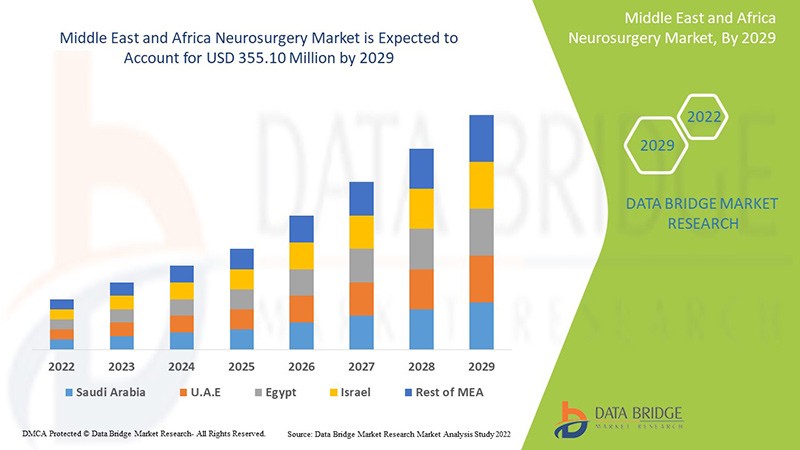
Market Size The Middle East and Africa neurosurgery market was valued at approximately USD 355.10 million in 2024 and is projected to grow at a CAGR of 11.2%, reaching over USD 670 million by 2032. Neurosurgery devices account for the largest revenue share, driven by rising patient volumes and technological upgrades. South Africa and UAE lead in adoption, while countries like Egypt and Saudi Arabia are rapidly expanding their neurosurgical infrastructure.
Factors Driving Growth
-
Rising Neurological Disease Burden: Stroke, traumatic brain injury, epilepsy, and Parkinson’s disease are increasing across the region.
-
Technological Advancements: Image-guided surgery, neuromodulation, and robotic systems improve outcomes and reduce risks.
-
Government Initiatives: National health strategies and funding programs support neurosurgical expansion.
-
Medical Tourism and Private Investment: High-quality care and competitive pricing attract international patients.
-
Improved Diagnostics: MRI, CT, and intraoperative imaging enhance early detection and surgical planning.
-
Cross-Industry Collaborations: Partnerships between medtech firms and hospitals accelerate innovation and training.





