

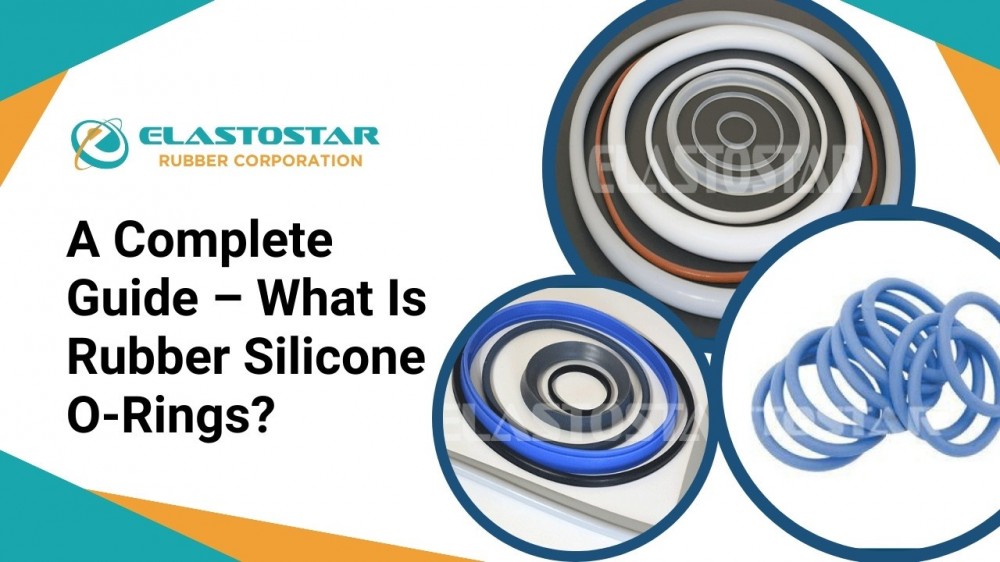
Rubber silicone O-rings are circular mechanical gaskets designed for a wide range of industrial uses. Shaped like a torus—a 3D ring formed by rotating a circle around an axis—these O-rings are made from silicone polymers that contain methyl and vinyl groups bonded to the main silicone chain.
One of the standout qualities of rubber silicone O-rings is their ability to endure extreme temperatures and repeated thermal cycling. This process involves exposing a material to alternating high and low temperatures to test its durability and detect potential manufacturing defects early. It's an essential part of stress testing for long-term product reliability.
These silicone rings are used in both static and dynamic applications. Static uses include gas and fluid sealing, where no movement occurs between surfaces. In dynamic applications—where motion is involved—rubber silicone O-rings perform well due to their resistance to heat and friction. Common dynamic uses include hydraulic cylinder pistons and rotating pump shafts, where durability and flexibility are critical.

Thanks to their versatility and dependability, rubber silicone O-rings are widely used across industries. They are cost-effective, easy to produce, and offer simple installation methods. With their reliable sealing performance and minimal complexity, they remain one of the most preferred sealing solutions in demanding environments.
How Are Rubber Silicone O-Rings Made?
Rubber silicone O-rings are manufactured using premium silicone compounds known for their flexibility, strength, and ability to withstand extreme temperatures. The process starts with carefully selected raw silicone, which is blended with curing agents and additives to enhance specific performance characteristics.
The prepared material is then shaped into the classic O-ring seal form using either compression molding or injection molding techniques. After molding, the O-ring rubber parts are cured using heat—this step helps to set their shape and improve their long-term durability.
Once cured, each silicone O-ring undergoes a thorough quality inspection to ensure it meets industry requirements for precision and performance. The result is a reliable sealing component that performs consistently across a wide range of demanding applications.
Varieties of O-Rings

At Elastostar Rubber Corporation, we offer a wide selection of fluorosilicone rubber O-rings and rubber silicone O-rings, available in a variety of shapes, sizes, and specifications. Each O-ring is defined by its inner and outer diameter to suit specific industrial applications. Since different environments require different sealing solutions, it's important to choose the O-ring that offers the best performance and durability for your specific needs.
Advantages of Rubber Silicone O-Rings
Extruded silicone rubber O-rings offer a range of benefits that make them a preferred choice across many industries:
-
Outstanding versatility and flexibility
-
Excellent resistance to extreme heat
-
Reliable performance in cold temperatures as low as -50°C
-
Durable in applications exposed to physical wear
-
Strong resistance to ozone, UV rays, and various oils
-
Low compression set for consistent sealing over time
-
Optional flame-retardant formulations
-
Can be engineered for electrical resistance or conductivity
-
Cost-effective sealing solution for high-performance needs
These qualities make rubber silicone O-rings an efficient and dependable choice for a wide range of demanding applications.
Types of Rubber Silicone O-Rings
We provide several specialized types of rubber silicone O-rings, including:
-
FDA Silicone O-Rings
-
Vulcanized Silicone O-Rings
-
Rubber Silicone O-Rings
-
Custom Silicone Rubber O-Rings
-
Mate Datatable Silicone O-Rings
Below is a closer look at some of these commonly used options:
1. FDA Silicone O-Rings
While the FDA does not directly approve O-rings, it does issue guidelines for materials considered safe for food and pharmaceutical contact. FDA silicone O-rings are manufactured using these approved materials and are widely used in food processing and pharmaceutical applications. It’s the manufacturer’s responsibility to comply with these standards and ensure safety in use.
2. Vulcanized Silicone O-Rings
Vulcanized silicone O-rings are created from extruded cord stock, which is cut and bonded into a ring. Unlike molded O-rings, vulcanized types are ideal for static sealing in non-standard sizes or small-batch requirements. These O-rings can be produced from various elastomers and customized to fit a wide range of applications.
3. Rubber Silicone O-Rings
These rubber silicone O-rings are known for their wide usability and affordability. Their easy-to-install design and effective sealing capabilities make them ideal for everyday applications where cost, speed, and reliability matter. They’re simple to mount, require no complex tools, and offer dependable leak prevention.
4. Custom Silicone Rubber O-Rings
The demand for custom silicone rubber O-rings continues to rise steadily due to their ability to be tailored to meet specific application requirements. Unlike off-the-shelf options, these O-rings can be modified in size, shape, and material composition without sacrificing performance. This makes them ideal for projects that require precision sealing without compromise.
These O-rings are produced using a variety of silicone-based materials and plastic compounds, allowing for complete customization to suit both standard and highly specialized applications. Whether you're in the automotive, industrial, or medical sector, custom silicone rubber O-rings provide a reliable and adaptable sealing solution.
5. Hollow O-Rings
Hollow O-rings offer an alternative to traditional solid O-rings and are best suited for situations that require a lower closing force. These O-rings are especially useful in static applications where pressure is low and surfaces are uneven or rough. Their hollow structure makes them more flexible and compressible, which is advantageous in some sealing situations.
However, hollow O-rings are not suitable for high-pressure or dynamic environments. Despite their limitations, they remain a cost-effective option for specific low-pressure sealing tasks.
Why Silicone O-Rings Are a Preferred Choice?
Rubber silicone O-rings are known for their affordability, efficiency, and user-friendliness. They’re easy to mount and perform well under a wide range of conditions. Their ability to withstand extreme temperatures makes them especially valuable in demanding environments. In addition, rubber silicone rings are widely available in most cities, making sourcing and replacement simple and stress-free.
The combination of thermal resistance, cost efficiency, and accessibility makes these silicone-based O-rings a top choice for many industries.
Common Types of O-Rings and Their Applications
|
Type of O-Ring |
Key Characteristics |
Common Applications |
|
Silicone O-Rings |
Excellent flexibility, high-temperature resistance |
High-temp, medical, and food-grade applications |
|
Nitrile (Buna-N) O-Rings |
Good resistance to oils and fuels |
Automotive, industrial, oil-related uses |
|
Viton (Fluorocarbon) O-Rings |
Outstanding chemical resistance and heat tolerance |
Chemical processing, aerospace, automotive |
|
EPDM O-Rings |
Resistant to water, steam, and outdoor conditions |
HVAC, automotive, outdoor equipment |
|
Neoprene O-Rings |
Moderate chemical and oil resistance |
Refrigeration, air conditioning, automotive |
|
Polyurethane O-Rings |
High abrasion and wear resistance |
Hydraulic systems, heavy machinery |
|
PTFE (Teflon) O-Rings |
Excellent chemical resistance, non-stick surface |
Corrosive environments, high-temperature equipment |
|
FDA Approved O-Rings |
Made from materials that meet FDA standards |
Food and pharmaceutical applications |
|
Vulcanized O-Rings |
Bonded extruded cord stock for non-standard sizes |
Static applications with custom dimensions |
|
Custom Silicone Rubber O-Rings |
Highly customizable, cost-effective, multi-industry usage |
Industrial, automotive, and specialized sealing tasks |
|
Hollow O-Rings |
Ideal for low-pressure and uneven surface applications |
Used where low closure force is needed |
Why Choose Silicone O-Rings?
Silicone rubber O-rings are not only cost-effective but also highly efficient. They’re known for their ability to withstand extreme temperatures, making them ideal for both high and low-temperature environments. Their accessibility and ease of installation add to their appeal—these O-rings are widely available and simple to use in both standard and custom applications.
O-Ring Types and Their Characteristics
|
Type of O-Ring |
Key Characteristics |
Common Applications |
|
Silicone O-Rings |
Excellent flexibility, high-temperature resistance |
High-temperature, medical, and food-grade applications |
|
Nitrile (Buna-N) O-Rings |
Good resistance to oils and fuels |
Automotive, industrial, and oil-related applications |
|
Viton (Fluorocarbon) O-Rings |
Excellent chemical resistance, high-temperature stability |
Chemical processing, aerospace, automotive |
|
EPDM O-Rings |
Good resistance to weather, water, and steam |
Automotive, HVAC, outdoor sealing applications |
|
Neoprene O-Rings |
Moderate chemical and oil resistance |
Refrigeration, air conditioning, automotive |
|
Polyurethane O-Rings |
High abrasion and wear resistance |
Hydraulic systems, heavy-duty machinery |
|
PTFE (Teflon) O-Rings |
Outstanding chemical resistance, non-stick surface |
High-temperature, corrosive environments |
|
FDA Approved O-Rings |
Safe for food and pharmaceutical contact |
Food processing, pharmaceutical equipment |
|
Vulcanized O-Rings |
Custom sizes, formed from bonded cord stock |
Static sealing, non-standard applications |
|
Custom Silicone Rubber O-Rings |
Customizable, reliable, and cost-efficient |
Automotive, industrial, and specialized sealing uses |
|
Hollow O-Rings |
Require low closing force, flexible sealing |
Low-pressure static sealing, irregular surfaces |
How to Maintain and Care for Silicone O-Rings?
Proper care is key to getting the most out of your silicone O-rings. Regular maintenance not only extends their service life but also ensures they perform reliably in demanding environments.
Cleaning
To clean your O-rings, use mild soap and warm water to gently remove dust, dirt, and debris. Avoid using harsh chemicals or solvents, as they can degrade the silicone rubber seal and affect performance over time.
Storage
When storing silicone O-rings, choose a cool, dry location away from direct sunlight, heat, and ozone-generating equipment. Lay them flat without any tension to help preserve their shape and elasticity.
Inspection
Inspect your O-rings periodically for cracks, brittleness, or other signs of wear. Replacing damaged O-rings promptly helps prevent failure and maintains an effective seal in your application.





