
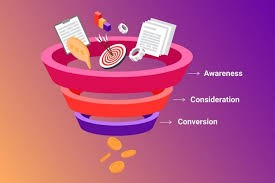
In today’s hyper-competitive online landscape, businesses can no longer afford to rely on fragmented or one-dimensional marketing efforts. Whether you're an established brand or a startup trying to gain traction, the key to sustainable growth lies in implementing a Full-Funnel Digital Marketing Strategy. This approach ensures that your marketing tactics are aligned with each stage of the customer journey—from awareness to consideration to conversion and even loyalty.
A well-structured full-funnel strategy doesn't just cast a wide net; it delivers the right message, to the right audience, at the right time. In this article, we'll explore how to build and execute a comprehensive digital marketing strategy that drives measurable results across all stages of the funnel.
Understanding the Funnel: From Awareness to Advocacy
Before diving into the actual construction of your full-funnel strategy, it’s essential to understand the stages of the marketing funnel. At the top is awareness, where potential customers first discover your brand. The consideration stage is where they start evaluating your products or services against alternatives. Then comes conversion, where the lead turns into a paying customer. Finally, there’s retention and advocacy, where satisfied customers become repeat buyers and brand ambassadors.
Traditional marketing approaches often emphasize only one or two stages of this journey. However, a full-funnel strategy aligns your digital marketing efforts to all stages, thereby increasing not just conversions but lifetime customer value.
Laying the Foundation: Audience Research and Persona Development
The cornerstone of any successful digital marketing initiative is a deep understanding of your target audience. This goes beyond demographics—it includes behavior patterns, digital preferences, motivations, and pain points. Start by analyzing data from your website analytics, social media insights, and customer feedback. Tools like Google Analytics, Facebook Audience Insights, and CRM platforms can provide valuable information on how different user segments interact with your brand.
From this data, develop detailed buyer personas representing different audience groups. For example, your brand might target mid-level marketing managers in SaaS companies, each with unique needs and decision-making processes. Crafting campaigns tailored to each persona helps to ensure message relevance across every stage of the funnel.
Top-of-the-Funnel: Building Awareness with High-Value Content
At the top of the funnel, your goal is to attract as many qualified prospects as possible. This is where content marketing plays a vital role. Blog posts, YouTube videos, social media campaigns, and SEO-optimized articles can position your brand as an authority and attract organic traffic. Instead of pushing your products directly, focus on providing educational or entertaining content that addresses common problems or trends within your niche.
Search engine optimization (SEO) is indispensable in this phase. Target keywords that align with informational search intent, and distribute your content through multiple platforms, including organic and paid channels. Collaborating with influencers or thought leaders can also help to expand your reach, particularly if you're entering a saturated market.

Middle-of-the-Funnel: Nurturing Leads with Value-Driven Campaigns
Once you've captured attention, the next step is nurturing interest and guiding potential customers toward a buying decision. Email marketing, remarketing ads, lead magnets, webinars, and case studies are particularly effective at this stage. Here, personalization is crucial. Tailoring your content and messaging based on user behavior can significantly improve engagement and lead quality.
Marketing automation platforms like HubSpot, Marketo, or Mailchimp can help you track user interactions and deliver the right message at the right time. This is where storytelling can be powerful—showcasing how your product or service has solved real-world problems builds trust and credibility.
Establishing yourself as a thought leader through whitepapers, eBooks, or hosting virtual events can also make a significant impact. These assets not only inform but also signal that your brand is committed to adding value beyond just selling a product.
Bottom-of-the-Funnel: Driving Conversions with Precision
At the bottom of the funnel, the prospect is close to making a purchase decision. This stage demands high-converting landing pages, strong call-to-actions (CTAs), live chat support, and product demos or free trials. Testimonials, case studies, and third-party reviews can act as social proof and reduce hesitation.
Retargeting ads are particularly effective here, especially when combined with dynamic content tailored to the individual’s previous behavior. For example, if a user visited a specific product page but didn’t purchase, a retargeting ad offering a limited-time discount can encourage them to complete the transaction.
It’s also important to reduce friction in the buying process. Simplify your checkout experience, ensure mobile responsiveness, and offer multiple payment options. Optimizing these touchpoints can make a dramatic difference in your conversion rates.
Beyond Conversion: Retention and Advocacy
The journey doesn’t end at conversion. A Full-Funnel Digital Marketing Strategy extends into post-sale activities that encourage repeat purchases and brand advocacy. This includes email sequences that onboard new customers, loyalty programs, and personalized product recommendations. Engaging with customers on social media, gathering reviews, and providing exceptional customer service also play a vital role in maintaining brand equity.
Happy customers can become your most effective marketers. Encourage them to share their experiences, leave reviews, and refer friends or colleagues. User-generated content and referral programs can help turn loyal customers into brand advocates, closing the loop on your full-funnel approach.
Integrating Analytics and KPIs at Every Stage
One of the biggest advantages of digital marketing is its measurability. However, tracking success at each funnel stage requires tailored KPIs. For the awareness phase, track impressions, reach, and traffic. In the consideration phase, focus on engagement metrics like time on site, bounce rate, and lead form submissions. At the conversion stage, monitor cost-per-acquisition (CPA), return on ad spend (ROAS), and conversion rate.
Use tools like Google Analytics 4, Hotjar, and CRM dashboards to visualize performance and uncover bottlenecks. Data-driven decision-making allows you to optimize campaigns in real time and allocate resources more effectively.
Keeping Your Strategy Agile and Up-to-Date
Digital marketing is not static. Consumer behavior, algorithms, and platform dynamics are constantly evolving. Therefore, your strategy must be agile. Regular audits, A/B testing, and staying updated with the latest trends—such as AI-driven personalization, privacy regulations, and voice search optimization—are essential.
If you're new to these concepts or looking to deepen your knowledge, enrolling in a certified Digital Marketing Course can equip you with the tools and frameworks necessary to build and scale a full-funnel strategy effectively. It’s an investment that pays off through improved performance and strategic clarity.
Final Thoughts
Creating a successful Full-Funnel Digital Marketing Strategy is not about jumping on every digital trend or trying to be everywhere at once. It’s about being intentional—understanding your audience, crafting the right messages, and delivering them at the right time in their journey. By focusing on the entire funnel and not just individual channels or metrics, you create a holistic and sustainable approach to growth.
The most effective digital marketing strategies are those that are customer-centric, data-driven, and adaptable. Whether you're nurturing new leads or turning buyers into brand evangelists, a well-orchestrated full-funnel plan ensures that every marketing dollar is spent with purpose.





