

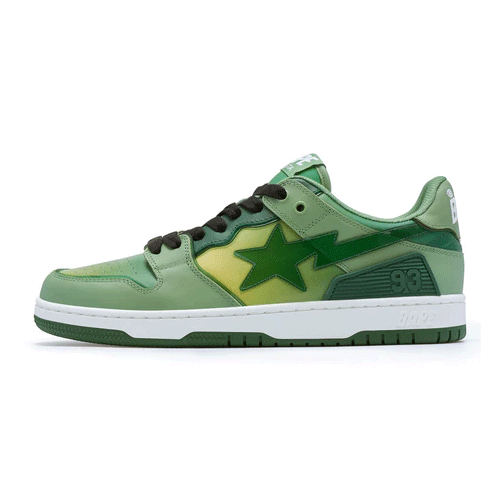
When it comes to legendary sneakers that helped shape the culture of streetwear, few silhouettes carry as much iconic energy as the Bapesta. Born from the creative powerhouse of A Bathing Ape (BAPE), the Bapesta isn't just a sneaker—it’s a statement. With bold designs, unmistakable branding, and a history tied to hip-hop, pop culture, and urban fashion, this shoe has held a strong place in the hearts of sneakerheads for over two decades.
Whether you’re new to the sneaker game or a seasoned collector, understanding the journey and significance of the Bapesta gives you a deeper appreciation of streetwear history. Let’s break down what makes the Bapesta a timeless icon.
Origins of the Bapesta: A Bathing Ape’s Statement Piece
The Bapesta was first introduced in the early 2000s by Nigo, the founder of A Bathing Ape. At a time when Japanese streetwear was beginning to gain global traction, Nigo saw an opportunity to blend American hip-hop culture with Japanese design philosophy.

The design of the Bapesta drew immediate comparisons to the Nike Air Force 1. In fact, its silhouette is nearly identical—on purpose. But Nigo gave it a distinctly BAPE twist. The traditional Swoosh was replaced by the iconic lightning star (STA) logo, and the uppers were made from glossy patent leather, often in eye-popping colors and bold patterns like camo, metallics, and even shark graphics.
Unlike the minimalist tones common in early 2000s sneakers, the Bapesta was loud. It was brash. And that’s exactly why it caught on.
Bapesta and Hip-Hop: A Powerful Collaboration
While the design alone made the Bapesta stand out, its rise to global prominence came from strategic placement in hip-hop culture. Early fans and collaborators included Pharrell Williams, Kanye West, and Lil Wayne—all of whom helped bring the Bapesta from the streets of Tokyo to the sidewalks of New York, London, and beyond.
Kanye’s early Bapesta collabs, especially the College Dropout-themed pairs, are now grail-level pieces for collectors. Pharrell’s Billionaire Boys Club and Ice Cream brands—also born out of a partnership with Nigo—shared BAPE’s playful aesthetic, further reinforcing the synergy between hip-hop and Japanese streetwear.
The Bapesta became a cultural badge of honor. Wearing it meant you were tapped into the underground, ahead of the curve, and unafraid to make a fashion statement.

Design Evolution: From Retro Vibes to Modern Collabs
While the original Bapesta design was unmistakably influenced by the Air Force 1, BAPE didn’t stop there. Over time, the brand evolved the silhouette, introducing new materials, themes, and limited-edition collabs that kept the Bapesta fresh and relevant.
Some of the standout collaborations over the years include projects with Marvel, DC Comics, Undefeated, and high-fashion names like Coach and Comme des Garçons. Each drop brought a new story, often told through vibrant colors, wild prints, and collectible packaging.
Modern iterations of the Bapesta now feature more subtle branding, luxe materials like suede and tumbled leather, and cleaner silhouettes, reflecting a shift in fashion towards more understated streetwear. But they never lose the DNA of the original.
Bapesta vs. Air Force 1: Inspiration or Imitation?
The comparison between the Bapesta and Nike’s Air Force 1 is inevitable. The similarities are obvious—same midsole shape, same paneling, same overall build. But the intent was never to copy. In fact, within Japanese fashion culture, reinterpretation is a common form of homage.
Nigo has openly credited the Air Force 1 as the inspiration behind the Bapesta, but he also sought to reimagine it through a different lens—more colorful, more expressive, more experimental. At the time, Nike wasn’t doing bold patent leather colorways or camo print panels. BAPE was.
This divergence is what made the Bapesta special. It was familiar, yet totally different. It was rooted in something classic, yet unapologetically rebellious. And in the world of streetwear, that blend is gold.
Why the Bapesta Still Matters Today
The sneaker game is constantly evolving. New silhouettes, fresh collabs, and emerging brands flood the market every month. Yet the Bapesta continues to have a firm place in the conversation. Why?
Part of it is nostalgia. For those who lived through the golden era of BAPE in the 2000s, the Bapesta represents a time when streetwear felt like a secret society—exclusive, creative, and culturally rich.
But it’s also about what the Bapesta represents. It’s not just a shoe; it’s a piece of history. A reminder of when fashion and music collided in the most explosive ways. A nod to Japanese craftsmanship and fearless design.
In recent years, younger sneakerheads have started rediscovering the Bapesta, thanks to its re-releases, modernized versions, and high-profile collabs. It proves that even in a fast-paced world, a strong identity stands the test of time.
Styling the Bapesta: How to Rock It Today
The beauty of the Bapesta lies in its versatility. Whether you lean into retro fashion or prefer a minimalist street look, there’s a way to incorporate Bapesta into your rotation.
For a classic vibe, pair colorful patent leather Bapestas with baggy jeans, a vintage graphic tee, and a trucker cap—an homage to early 2000s streetwear. If you’re going for something more modern, opt for a tonal or monochrome pair with straight-leg trousers, a structured jacket, and clean accessories.
What you wear with your Bapestas matters less than how you wear them. Confidence is key. The Bapesta is not a background shoe—it demands attention. Own it.
The Collector’s Market: Is the Bapesta an Investment?
If you're into sneakers not just for style but also for collecting, the Bapesta holds solid value. OG colorways, especially those co-signed by Pharrell or Kanye, are now fetching thousands on resale platforms. Limited-edition releases, rare Japan-exclusives, and early 2000s drops are all hot commodities.
With the recent resurgence of Y2K fashion and vintage streetwear, older Bapestas are in high demand. That said, the market can be volatile. Rarity, condition, and provenance all play roles in determining value.
Still, if you're thinking long-term, adding a few key Bapestas to your collection could be a smart move—financially and culturally.
Final Thoughts: The Legacy of Bapesta
The Bapesta is more than just a sneaker. It's a cultural artifact, a fashion disruptor, and a creative expression all wrapped into one. Its journey from Tokyo side streets to global streetwear stardom is a testament to the power of vision, collaboration, and individuality.





