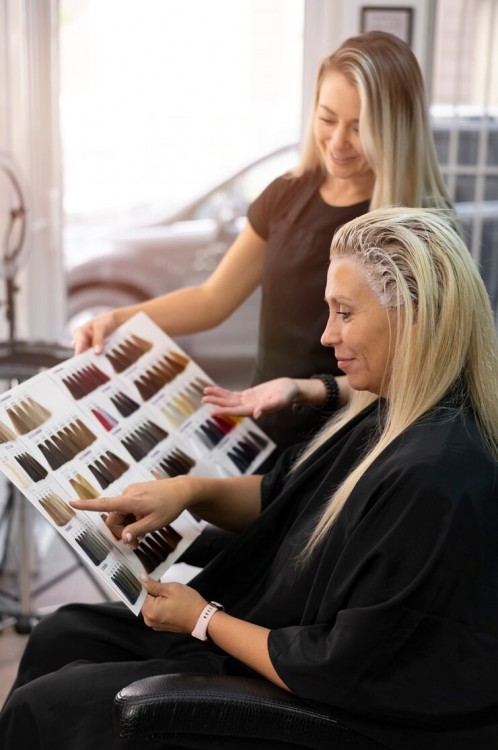
If you’ve ever walked into a color hair salon and felt overwhelmed by terms like foil highlights, balayage, all over hair color, and glossing — you're not alone. Hair coloring is both an art and a science, and understanding how different techniques work can help you make the right choice for your hair goals.
In this blog, we’ll dive into the technical side of hair foil highlights and all over hair color, exploring how they work, the chemistry behind them, and when you should choose one over the other. Whether you’re after a complete transformation or a subtle refresh, knowing what happens in the stylist’s chair will help you make more informed decisions.
Understanding the Hair Coloring Process
Hair color isn’t just about mixing dye and applying it to your hair. It’s a chemical process that involves:

-
Opening the hair cuticle
-
Depositing or lifting pigment
-
Sealing the cuticle back to lock in the new color
At a professional color hair salon, expert stylists use this knowledge to create beautiful, healthy color results with minimal damage. They also assess your hair’s porosity, density, and natural undertone before recommending any service.
What Are Hair Foil Highlights?
Hair foil highlights involve sectioning out strands of hair and applying a lightening formula, then wrapping those sections in foil. The foil traps heat and prevents the lightener from bleeding onto surrounding hair, allowing for clean, controlled lifting.

The science behind it:
-
Foil creates an insulated environment, accelerating the lifting process.
-
Stylists can control the level of brightness by adjusting processing time, product strength, and placement.
-
Because foils are isolated, multiple tones can be applied in a single session without interference.
Foil Highlight Variations Include:
-
Traditional Highlights – evenly spaced, uniform strands
-
Babylights – very fine strands for subtle brightness
-
Lowlights – darker tones to add depth
-
Peekaboo Highlights – hidden color for a bold, trendy touch
What Is All Over Hair Color?
All over hair color is exactly what it sounds like — one uniform color applied from roots to ends. It’s ideal for those looking for complete coverage, rich tones, or to cover gray hair.
The science behind it:
-
Permanent color lifts the cuticle and deposits new pigment deep into the hair shaft.
-
Semi-permanent color only coats the hair and fades over time without a harsh line of demarcation.
-
Toners and glosses are sometimes applied afterward to adjust undertones and enhance shine.
This technique is commonly used for:
-
Going darker or changing tone (e.g., cool blonde to warm honey)
-
Covering grays
-
Enhancing shine or richness
When to Choose Foil Highlights
At glosshairlounge-wi, we often recommend hair foil highlights for clients who want a dimensional, sun-kissed look without changing their entire base color. It’s perfect for enhancing natural hair shades or giving dull hair new life.
You should consider foil highlights if:
-
You want lighter sections to frame your face
-
You like a soft, blended grow-out
-
You want to avoid root lines between appointments
-
You’re transitioning from dark to light gradually
Bonus: Foil highlights can be paired with lowlighting to create a more natural or lived-in look — especially for brunettes or clients with grays.
When to Choose All Over Hair Color
If your goal is uniformity, richness, or a bold change, all over hair color is likely your best bet. It’s especially useful for:
-
First-time color clients
-
Covering stubborn grays
-
Trying new seasonal shades (like warm caramel in fall or icy blonde in winter)
-
Correcting uneven color or brassiness
At glosshairlounge-wi, we specialize in personalized color mapping — meaning we consider your skin tone, eye color, and undertones when selecting your perfect shade.
How to Maintain Your Color
No matter which option you choose, maintenance is key. Here’s what your stylist may recommend:
-
Color-Safe Shampoo & Conditioner: Sulfate-free formulas preserve tone and prevent fading.
-
Deep Conditioning Treatments: Helps restore moisture lost during the coloring process.
-
Gloss/Toner Appointments: Every 4–6 weeks for highlights, especially blondes.
-
Root Touch-Ups: Every 4–8 weeks for all over color or gray coverage.
Regular salon visits and home care can extend the vibrancy and health of your hair color — saving you time, money, and stress.
Combining Both Techniques for the Best Results
One trend that’s gaining popularity in salons across the country is combining all over color with foil highlights. This hybrid method adds depth, shine, and contrast to your base color.
For example:
-
A brunette client might get a rich chocolate base with golden foil highlights.
-
A blonde might enhance their light base with icy babylights for a multidimensional effect.
These blended looks are especially beautiful and easy to maintain when crafted by a trained colorist.
Final Thoughts
Whether you’re leaning toward hair foil highlights for natural dimension or all over hair color for a dramatic refresh, choosing a trusted color hair salon is the most important step. Expert stylists not only understand the science of color but also tailor their techniques to your hair type, lifestyle, and desired outcome.
If you're in the Madison, WI area, visit glosshairlounge-wi to schedule a consultation. Our professional team will help you discover the best color strategy to bring out your best self — from subtle highlights to bold transformations.