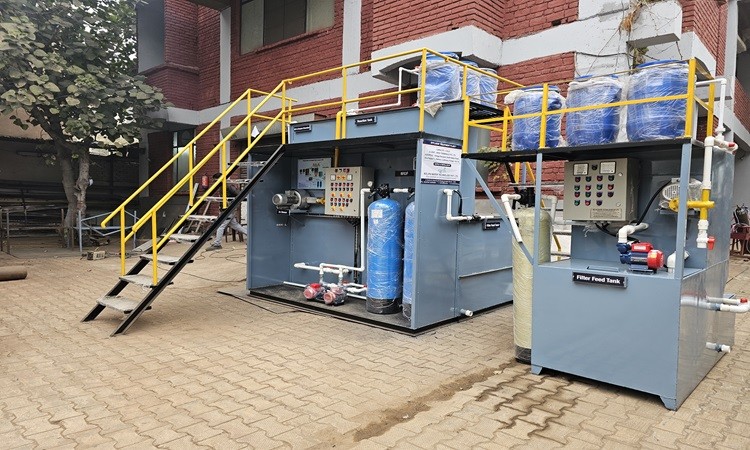
In an era where environmental protection is a global priority, managing industrial wastewater responsibly has become crucial. Effluent, the liquid waste discharged from factories, industries, and commercial operations, contains a variety of harmful pollutants. If released untreated, it can contaminate soil, rivers, groundwater, and pose severe health risks. That’s where Effluent Treatment Plants play a vital role.
An Effluent Treatment Plant is a facility designed to treat industrial wastewater by removing harmful contaminants, making the water safe for discharge or reuse. Leading companies like Kelvin Water Technologies Pvt. Ltd. are at the forefront of delivering high-performance ETPs across India, ensuring regulatory compliance and environmental sustainability.
What is an Effluent Treatment Plant?
An Effluent Treatment Plant (ETP) is a system used to treat wastewater generated by industries and commercial establishments. Unlike domestic sewage, industrial effluent often contains hazardous chemicals, oils, heavy metals, and organic pollutants that require specialized treatment.
The primary objective of an ETP is to:
- Remove toxic and non-toxic substances
- Neutralize harmful chemicals
- Separate solids and oils
- Ensure treated water meets CPCB/SPCB discharge norms
Types of Industries That Require ETPs
Effluent Treatment Plants are crucial for various industries, including:
- Chemical & Pharmaceutical Industry
- Textile & Dyeing Units
- Paper & Pulp Industry
- Oil Refineries & Petrochemical Plants
- Food & Beverage Processing
- Steel & Metal Industry
- Leather Tanneries
- Paint & Pigment Factories
Effluent Treatment Process – Step-by-Step
ETPs usually operate in three or four major stages, depending on the type and level of pollutants present.
- Preliminary Treatment
The first step removes large solids, grit, and oil from the effluent.
- Screening: Removes large particles like plastic, rags, etc.
- Grit Removal: Allows sand, stones, and other heavy materials to settle.
- Oil & Grease Trap: Removes floating oils and fats.
- Primary Treatment
This involves physical and chemical processes to remove suspended solids and organic load.
- Coagulation and Flocculation: Chemicals like alum or PAC are added to bind small particles.
- Sedimentation: Settles down the flocculated solids as sludge.
- Equalization Tank: Ensures consistent flow and load for downstream treatment.
- Secondary (Biological) Treatment
This is the heart of the ETP where microbial action breaks down dissolved organic matter.
- Activated Sludge Process (ASP)
- Moving Bed Biofilm Reactor (MBBR)
- Sequential Batch Reactor (SBR)
- Membrane Bio-Reactor (MBR)
Air is supplied through blowers to support the growth of aerobic bacteria, which decompose the organic pollutants.
- Tertiary Treatment (Polishing)
The final stage ensures the treated water meets quality standards for discharge or reuse.
- Filtration (Sand, Carbon)
- Disinfection (UV, Chlorination, Ozonation)
- Reverse Osmosis (if high purity is required)
Technologies Used in ETPs
Kelvin Water Technologies Pvt. Ltd. specializes in designing and manufacturing ETPs based on:
- MBBR (Moving Bed Biofilm Reactor)
- SBR (Sequencing Batch Reactor)
- MBR (Membrane Bio-Reactor)
- ASP (Activated Sludge Process)
- FBR (Fluidized Bed Reactor)
Components of an Effluent Treatment Plant
A typical ETP comprises:
- Screening Chambers
- Oil & Grease Traps
- Equalization Tanks
- pH Correction Tanks
- Coagulation & Flocculation Units
- Primary & Secondary Clarifiers
- Aeration Tanks
- Biological Reactors (MBBR/SBR/MBR)
- Filtration Units (Pressure Sand Filter, Activated Carbon Filter)
- Disinfection System
- Sludge Handling Units (Drying Beds, Filter Press)
Advantages of Installing an ETP
- Environmental Protection
Prevents pollution of rivers, lakes, and soil. - Regulatory Compliance
Meets discharge standards set by CPCB and SPCBs. - Water Reuse
Treated effluent can be reused in gardening, cooling towers, or flushing. - Reduced Operational Risk
Prevents factory shutdowns due to environmental violations. - Improved Corporate Image
Demonstrates commitment to sustainability and green practices. - Cost Savings in Long-Term
Reduces dependency on freshwater sources and avoids penalties.
Applications of Treated Effluent
- Cooling Towers
- Boiler Feed (after RO treatment)
- Toilet Flushing
- Irrigation or Landscaping
- Floor and Vehicle Washing
- Firefighting Water Reservoirs
Why Choose Kelvin Water Technologies Pvt. Ltd.?
Kelvin Water Technologies Pvt. Ltd. is a leading ETP manufacturer and supplier in India, known for delivering tailor-made, high-efficiency effluent treatment systems.
Key Strengths:
- GeM-Registered & ISO-Certified
- Complete In-House Design, Manufacturing & Installation
- Use of Latest Technologies – MBBR, SBR, MBR, FBR
- Capacity Range: 1 KLD to 1 MLD and above
- Customized ETPs for All Types of Industries
- Strong After-Sales Support and AMC Services
- Pan-India Delivery and Service Network
Whether it’s a small factory or a large industrial plant, Kelvin offers reliable, cost-effective, and environmentally compliant solutions.
Case Study: Successful ETP Installation
A chemical manufacturing unit in Bhiwadi approached Kelvin Water Technologies for a 100 KLD ETP. Their effluent contained high COD, BOD, and oil content. Kelvin designed a hybrid ETP using oil separation, coagulation-flocculation, and MBBR technology.
Results achieved:
- 95% reduction in COD and BOD
- Water reused for floor washing and cooling towers
- CPCB compliance within 60 days of installation
- Reduced tanker disposal costs significantly
This case reflects Kelvin’s commitment to technical excellence and environmental responsibility.
Maintenance of ETPs
Effluent Treatment Plants require regular upkeep for optimal performance:
- Daily monitoring of inlet/outlet parameters (pH, COD, BOD, TSS)
- Timely sludge removal and handling
- Pump, blower, and sensor checks
- Cleaning of filters and dosing systems
- Record keeping and monthly performance audits
Government Regulations and Compliance
The Central Pollution Control Board (CPCB) and respective State Pollution Control Boards (SPCBs) have made ETP installation mandatory for specific industries.
Key requirements include:
- Regular testing and submission of effluent samples
- Logbooks for daily flow and treatment efficiency
- Installation of Online Effluent Monitoring System (OCEMS) for large plants
- Submission of Environmental Statements
Kelvin ensures that all their ETP systems are designed to comply with the latest CPCB norms and local environmental laws.
Conclusion
As industrialization continues to grow, so does the challenge of managing wastewater effectively. Effluent Treatment Plants (ETPs) are essential to safeguard our water bodies, preserve resources, and ensure industries operate within environmental regulations.
Choosing an expert manufacturer like Kelvin Water Technologies Pvt. Ltd. ensures not just compliance but also long-term cost savings, technical reliability, and sustainability. Whether you're setting up a new plant or upgrading an existing one, Kelvin offers complete, end-to-end solutions tailored to your specific needs.