Introduction: The Winter Question Everyone Asks
Every winter, students, parents, and teachers face the same big question: “Will there be a snow day tomorrow?” In the past, the answer relied on rumors, radio announcements, or early-morning news broadcasts. But thanks to technology, we now have a smarter way to find out — the Snow Day Predictor.
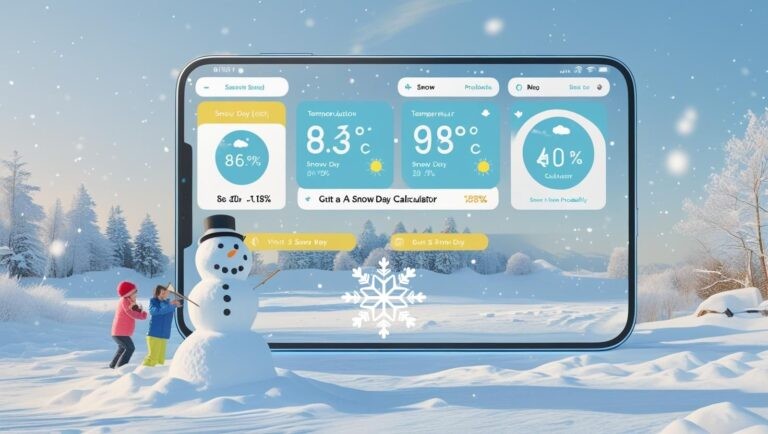
A snow day predictor is an online tool or app that uses weather data, location, and historical trends to estimate the probability of school closures due to snowstorms. It’s more than just a fun guessing game — it’s a practical, data-driven way to plan ahead during snowy months.
What Is a Snow Day Predictor?
A snow day predictor is a web-based calculator or mobile app that uses algorithms to forecast the likelihood of schools being closed in a specific area. These tools analyze multiple factors such as:

-
Weather forecasts (snowfall amount, wind speed, temperature)
-
Historical school closure patterns in your region
-
Geographical factors (elevation, road safety conditions)
-
School district policies regarding closures
The result? A percentage score showing your chances of enjoying a snow day. For example, you might see a “75% chance of a snow day” based on predicted weather and past closure trends in your area.

How Does It Work?
While each snow day predictor has its own algorithm, most follow a similar process:
-
Location Input – You enter your zip code or city name so the tool can gather local weather and school data.
-
Weather Data Analysis – The predictor checks real-time and forecasted snowfall levels, wind chill, and icy conditions from trusted meteorological sources.
-
Historical Data Matching – The tool compares the forecast with past situations where schools in your district were closed.
-
Probability Calculation – Based on the severity of the upcoming storm and historical closure patterns, it gives a percentage chance of cancellation.
This data-driven approach means you get more than just a random guess — you get an informed estimate that helps you prepare.
Why People Love Snow Day Predictors
Snow day predictors have become popular for a variety of reasons:
-
For Students – They provide excitement and hope for an unexpected day off.
-
For Parents – They help with planning childcare, work schedules, and travel.
-
For Teachers – They allow time to adjust lesson plans or prepare remote learning.
By knowing the chances of a snow day ahead of time, families can avoid last-minute chaos and make the most of the winter season.
Factors That Influence Snow Day Predictions
Not all snowstorms lead to school closures. Snow day predictors consider several important variables:
1. Snowfall Amount
Heavy snowfall is the most obvious factor. Many school districts have a threshold (e.g., 6 inches or more) that triggers closures.
2. Timing of the Snowstorm
A storm that hits overnight or early in the morning has a higher chance of closing schools compared to one that starts in the afternoon.
3. Road Conditions
Icy roads and poor visibility increase closure likelihood, even if snowfall is minimal.
4. Geographic Location
Areas accustomed to heavy snow may remain open during storms that would shut down schools elsewhere.
5. School District Policies
Some districts prioritize safety above all else, while others push to stay open unless absolutely necessary.
Benefits of Using a Snow Day Predictor
1. Better Planning
Knowing the probability of a snow day lets parents arrange childcare, students plan activities, and teachers adjust their schedules.
2. Reduced Stress
Instead of staying up late waiting for news or setting alarms for early-morning announcements, you can check the predictor the night before.
3. Fun and Excitement
For students, checking the snow day chance becomes part of the winter ritual — a mix of science and hope.
Popular Snow Day Predictors
Some well-known snow day calculators and predictors include:
-
Snow Day Calculator – One of the most popular tools, created by a student and now widely used across North America.
-
AccuWeather Snow Day Forecast – Integrates with AccuWeather’s extensive weather data for accurate predictions.
-
Local News Station Predictors – Many regional TV stations have their own snow day forecast features.
Each has its own unique formula, but all aim to give you an accurate heads-up.
Tips for Using a Snow Day Predictor Effectively
-
Check Multiple Sources – Compare results from different predictors for a more accurate picture.
-
Stay Updated – Weather changes quickly, so refresh predictions the night before and early morning.
-
Don’t Rely Solely on Predictions – Even a 90% chance doesn’t guarantee a closure — final decisions rest with your school district.
-
Combine with Local Knowledge – You know your area best; factor in typical responses to winter weather.
The Science Behind the Predictions
Snow day predictors rely heavily on meteorology, machine learning, and statistical modeling. Over time, they collect large datasets about snowfall patterns and school closures, then use these patterns to make predictions.
For example:
-
Machine learning models identify patterns between certain weather conditions and closure decisions.
-
Statistical analysis assigns weights to each factor, such as snowfall depth, ice warnings, and wind speed.
-
Real-time updates adjust predictions as new weather data arrives.
The Limitations of Snow Day Predictors
While incredibly useful, snow day predictors are not perfect. Limitations include:
-
Unexpected Weather Changes – Forecasts can shift dramatically within hours.
-
Different School Policies – Neighboring districts may make opposite decisions based on the same conditions.
-
Technical Errors – If weather data is incomplete or delayed, predictions may be less accurate.
This means you should treat them as a guide, not an official announcement.
Making the Most of a Snow Day
If your snow day predictor is right and school is canceled, here are some fun and productive ideas:
-
Build a snowman or have a snowball fight
-
Enjoy hot chocolate by the fireplace
-
Catch up on reading or hobbies
-
Spend quality family time
-
Tackle indoor projects you’ve been putting off
Conclusion: Embracing the Magic of Snow Days with Technology
The snow day predictor blends technology, meteorology, and a bit of childhood wonder into a single tool. It not only helps families plan ahead but also adds a spark of excitement to winter nights. While no prediction is perfect, these tools give us a much better idea of what’s coming — so we can prepare, stay safe, and maybe, just maybe, enjoy an extra day off.
Whether you’re a student hoping for sledding and hot cocoa or a parent trying to juggle schedules, the snow day predictor can make winter a little easier and a lot more fun.