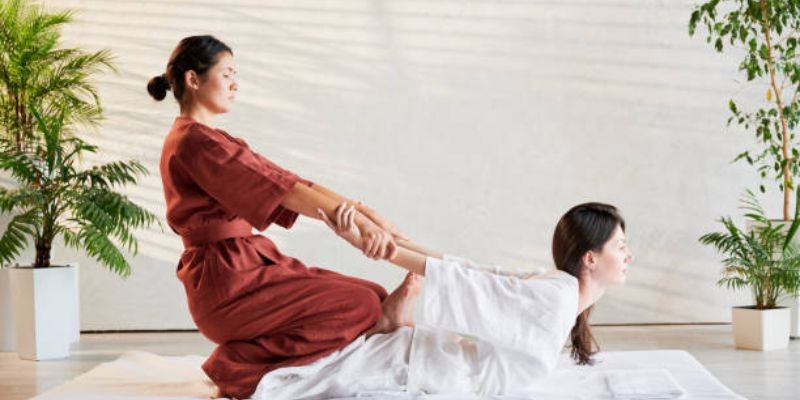
Most people assume flexibility comes only from regular stretching or yoga. Yet, Thai massage often called “lazy yoga” offers a unique way to achieve flexibility without a single self-directed stretch. Unlike conventional massages, Thai massage combines assisted movements, pressure techniques, and rhythmic compressions to lengthen muscles and improve joint mobility.
A Brief History of Thai Massage
Thai massage dates back over 2,500 years, rooted in Ayurvedic medicine and Buddhist traditions. Unlike Swedish or aromatherapy massages, it is performed on a floor mat with the recipient fully clothed. Instead of oil-based strokes, practitioners use their hands, elbows, knees, and even feet to guide the client’s body through passive yoga-like positions. Experiencing Thai Massage in Chennai brings this traditional practice closer to modern urban lifestyles. This historical foundation explains why Thai massage is more dynamic and movement-based compared to other massage styles.
The Desk Worker’s Experience
Consider the example of an IT professional who spends 8–10 hours daily at a desk. After months of sitting, the hamstrings tighten, shoulders hunch forward, and flexibility decreases. A series of Thai massage sessions can:
- Open the hip joints through assisted stretches.
- Release shoulder stiffness with compressions.
- Improve spinal mobility through guided twists.
Within weeks, clients often notice improved flexibility and ease of movement even if they have never practiced yoga.
Expert Commentary
Wellness practitioners and physiotherapists point out that Thai massage is not just stretching. The technique:
- Enhances blood circulation, allowing muscles to relax naturally.
- Stimulates energy lines (Sen lines in Thai tradition), which relieves blockages causing stiffness.
- Promotes muscle elasticity by engaging the nervous system to reduce tension.
Dr. Peter Wayne, a researcher in integrative medicine at Harvard, highlights that passive movement therapies often produce results similar to active stretching, particularly for individuals with limited mobility.
Common Questions About Thai Massage
Can Thai massage improve flexibility for non-athletes?
Yes. Unlike sports stretches, Thai massage benefits everyday individuals, especially those with sedentary lifestyles. The therapist guides the body safely without requiring prior flexibility.

How does it compare to yoga or stretching?
Yoga requires active participation, while Thai massage is entirely passive. This makes it ideal for people recovering from injury or those who cannot engage in regular physical activity.
Is it painful?
When performed by a trained therapist, Thai massage should not be painful. Some pressure may feel intense initially, but it usually results in a sense of lightness and freedom of movement afterward.
Beyond Flexibility: Additional Benefits
Although flexibility is the most discussed outcome, Thai massage also provides:
- Improved posture by realigning the spine and hips.
- Reduced stress levels through rhythmic breathing and mindful touch.
- Enhanced body awareness by connecting physical and mental states.
Many clients who experience Thai Massage in Velachery describe the session as both physically energizing and mentally calming.
The Science Behind the Stretch-Free Flexibility
Research in physical therapy shows that passive stretching techniques activate the Golgi tendon organs, sensors that prevent muscles from over-contracting. Thai massage leverages this mechanism, helping muscles release tension safely. In simple terms, the body gains flexibility without the effort of active stretching.
Practical Recommendations
- Frequency: A session once every 2–3 weeks maintains long-term flexibility.
- Duration: A 90-minute session provides enough time for full-body work.
- Who Benefits Most: Desk workers, athletes during recovery, older adults with stiffness, and even beginners to fitness.
Flexibility Without the Strain
Thai massage is not about sweating on a yoga mat or forcing a hamstring stretch. Instead, it provides a safe, guided way to improve flexibility, mobility, and relaxation all while the recipient remains completely passive. For anyone seeking easier movement and reduced stiffness, Le Bliss Spa offers this ancient therapy as an effortless path to flexibility without stretching.