

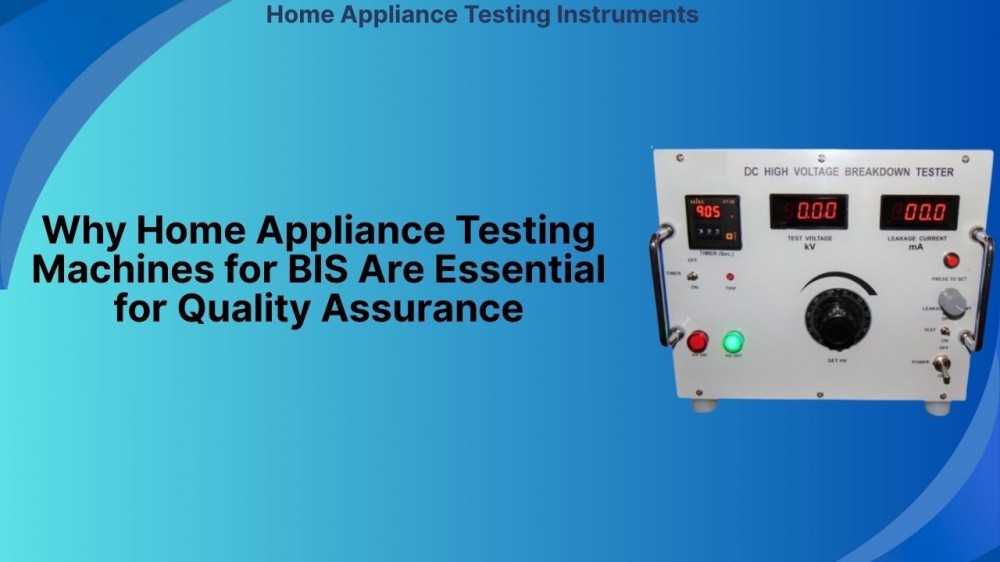
In today’s competitive market, consumers demand not just innovation and performance in home appliances but also safety, durability, and energy efficiency. To meet these expectations and comply with regulatory frameworks, manufacturers must adhere to stringent quality standards. In India, the Bureau of Indian Standards (BIS) plays a pivotal role in setting these benchmarks. One of the most critical elements in achieving compliance and ensuring product reliability is the use of specialized home appliance testing machines for BIS certification. These machines are indispensable tools that validate the quality, safety, and performance of household appliances before they reach the market.
Understanding BIS Standards in Home Appliances
The BIS is the national standard-setting body in India, ensuring that products meet specific safety, performance, and environmental standards. For home appliances such as refrigerators, air conditioners, washing machines, microwave ovens, and electric irons, BIS certification is not just recommended — it's mandatory. Manufacturers must get their products tested in NABL-accredited labs using standardized testing procedures aligned with BIS norms.
Compliance with these standards assures customers that the appliance they are purchasing is reliable, energy-efficient, and free from manufacturing defects. Failing to meet these regulations can lead to legal complications, product recalls, and reputational damage. Therefore, investing in testing infrastructure is no longer optional for manufacturers aiming to build trust and scale sustainably.

The Role of Testing Machines in BIS Certification
Home appliance testing involves a series of rigorous evaluations under controlled conditions. These tests measure key performance indicators like energy consumption, noise levels, electrical safety, insulation resistance, heating performance, and more. Such accuracy and consistency can only be achieved through high-quality, automated testing machinery designed for specific appliances.
For example:
- Microwave ovens are tested for power output, microwave leakage, and cooking efficiency.
- Refrigerators undergo insulation testing, energy efficiency assessment, and cooling time checks.
- Air conditioners are evaluated for refrigerant leakage, noise, cooling efficiency, and durability under varying voltage conditions.
These tests are only effective when performed using machines that meet BIS-approved methodologies. That’s where home appliance testing machines for BIS become a vital asset. They not only ensure the products meet legal and safety standards but also aid in the research and development phase, helping manufacturers innovate while staying compliant.

Benefits of Using BIS-Approved Testing Equipment
Precision and Accuracy
Testing machines designed for BIS compliance deliver repeatable and highly accurate results. This is critical in identifying defects or inconsistencies early in the production cycle, reducing the risk of defective products reaching consumers.
Time and Cost Efficiency
Automated testing systems reduce the time needed for each evaluation, enabling faster quality checks and quicker time-to-market. In the long run, they help manufacturers save costs associated with manual errors, retesting, and post-sale service claims.
Regulatory Compliance and Certification
Using certified testing machines makes it easier for manufacturers to clear BIS audits and inspections. These machines often come pre-calibrated and meet all technical requirements necessary for standard certifications, streamlining the approval process.
Consumer Trust and Brand Reputation
When products are tested using BIS-standard equipment, it reflects in their performance and durability. This instills confidence among consumers and helps brands position themselves as reliable, quality-first manufacturers.
Support for Product Innovation
With robust appliances testing equipments in place, R&D teams can experiment with new technologies and materials. Testing machines can simulate various environmental and usage conditions, offering valuable insights into product resilience and innovation feasibility.
Features to Look for in Testing Machines
When selecting testing machines for home appliances, manufacturers should ensure the equipment includes:
- Fully automatic test cycles
- Programmable settings for variable test parameters
- High-resolution sensors and digital displays
- User-friendly control interfaces
- Compliance with ISO, IEC, and BIS standards
- Durable construction for long-term use
Additionally, local support for installation, calibration, and maintenance is essential for seamless operations and minimum downtime.
Choosing the Right Equipment Partner
With the growing emphasis on domestic manufacturing under the "Make in India" initiative, several Indian manufacturers now offer advanced and BIS-compliant testing machines. When choosing a supplier, it's important to consider their experience, technical support, customization capabilities, and proven client base in the home appliance sector.
A reputed equipment provider not only supplies machines but also offers consultation on setting up test labs, maintaining quality logs, and achieving long-term compliance goals.
Conclusion
Quality assurance in the home appliance industry has never been more critical. As consumers become more informed and regulatory bodies more vigilant, the margin for error continues to shrink. Investing in home appliance testing machines for BIS is an essential step for manufacturers who prioritize compliance, safety, and customer satisfaction. Coupled with reliable appliances testing equipments, these machines form the backbone of a solid quality control system-ensuring every product that reaches the consumer is safe, efficient, and trustworthy.





