

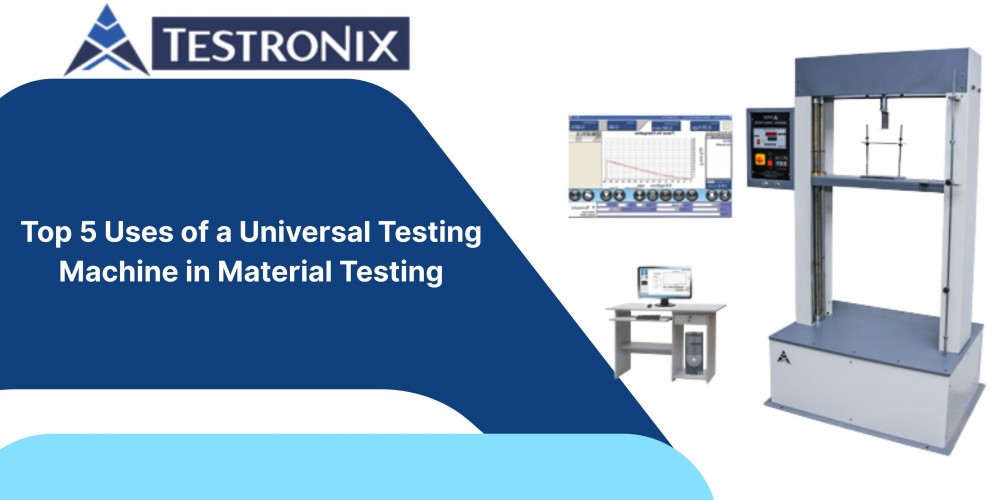
Material testing plays a crucial role in determining the reliability, durability, and overall performance of products across industries. From construction to automotive, every sector relies on accurate testing to ensure that materials meet the required standards before they are used in production. A universal testing machine is one of the most versatile tools designed for this purpose.
As the name suggests, it can test a wide range of materials under different conditions, making it a valuable investment for laboratories and manufacturing units. In this article, we will explore the top five uses of a universal testing machine in material testing and how it supports quality assurance.
Uses of Universal Testing Machine in Material Testing
Before diving into its specific uses, it is important to understand why this machine is widely adopted. A universal testing machine is capable of performing both tensile and compressive tests, providing manufacturers with a clear picture of how materials behave under stress. This ability to replicate real-world conditions ensures that only safe and durable materials make it to the market. By using such equipment, industries can avoid costly product failures and maintain compliance with international standards.

Testing Tensile Strength
One of the most common uses of a universal testing machine is to measure the tensile strength of a material. Tensile strength testing determines how much pulling force a material can withstand before it breaks. This is especially critical in industries such as construction, aerospace, and automotive, where structural integrity directly impacts safety. By performing tensile strength tests, companies can select the right materials for different applications, reducing the chances of unexpected failures.
Measuring Compression Strength
Another vital use of a universal testing machine is to test compression strength. This process evaluates how well a material can resist being crushed or compressed under load. Materials like concrete, metal, and plastics often undergo compression testing to determine their durability. Such tests help engineers design products that can handle heavy loads and pressures, ensuring long-lasting performance in practical applications.
Flexural and Bend Testing
Flexural or bend testing is another key application of a universal testing machine. This type of test examines how a material reacts when subjected to bending forces. It is commonly used in testing plastics, composites, and metals to determine their stiffness and resistance to deformation. Bend testing is crucial in industries like construction and manufacturing, where materials are often exposed to bending stresses during usage.
Shear Strength Testing
A universal testing machine is also used to measure shear strength, which indicates how well a material can withstand forces applied parallel to its surface. Shear testing is particularly useful in evaluating adhesives, joints, and layered materials. This form of testing helps manufacturers ensure that bonded parts remain intact even under heavy operational stress, thereby preventing breakdowns and improving product reliability.
Conducting Peel and Adhesion Tests
In addition to strength testing, a universal testing machine is also used for peel and adhesion tests. These tests evaluate how well coatings, adhesives, or laminated materials bond to surfaces. Adhesion strength plays a significant role in packaging, electronics, and automotive industries, where materials need to maintain a strong bond under different environmental conditions. Reliable adhesion ensures product safety and enhances customer satisfaction.

Trusted Manufacturers in Providing Universal Testing Machines
While the applications of a universal testing machine are vast, the accuracy of results greatly depends on the quality of the equipment used. Manufacturers like Testronix instruments have established themselves as reliable providers of advanced testing solutions. Their universal testing machines are designed with precision and durability in mind, making them suitable for laboratories, production units, and research facilities. By choosing the right machine from a trusted provider, industries can achieve consistency in their testing processes and maintain high product standards.
Conclusion
A universal testing machine is an indispensable tool in material testing, offering multiple uses such as tensile, compression, flexural, shear, and adhesion testing. Each of these applications plays a crucial role in ensuring that materials meet the required quality and safety standards. By integrating this machine into their testing processes, industries can improve product reliability, reduce risks, and maintain compliance with global benchmarks. With trusted manufacturers like Testronix instruments providing advanced and precise machines, businesses can confidently invest in solutions that enhance both efficiency and accuracy in testing.





