Introduction: A Hat Like No Other
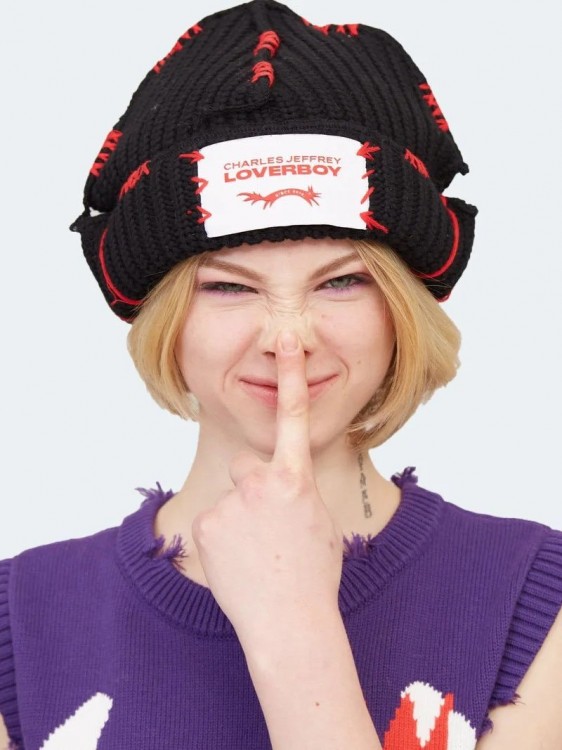
The Loverboy hat is not just an accessory—it is a symbol. At first glance, it may appear playful or even absurd to the uninitiated, but to those who understand the deeper pulse of contemporary fashion, it represents a radical reclaiming of self-expression. Born from the imaginative world of designer Charles Jeffrey, the Loverboy hat isn't merely an item of clothing—it's wearable art. It speaks the language of identity, queerness, punk, and protest, all while maintaining an unmistakable flair for fantasy. It’s a hat that dares you to be seen, to be loud, to be unfiltered.
The Origin of the Icon: Charles Jeffrey’s Vision
To understand the magic of the Loverboy hat, one must first dive into the ethos of the brand itself. Charles Jeffrey LOVERBOY emerged from London’s club scene, where fashion and nightlife intertwined into a subculture of creativity and rebellion. Jeffrey, a Central Saint Martins graduate, carved a space where queerness and chaos could flourish in harmony with theatrical fashion. The Loverboy hat, with its whimsical ears, exaggerated proportions, and wild textures, perfectly reflects that mission.

It's not an accident that the hat has such a childlike yet surreal appearance. It channels the energy of DIY club nights, drag artistry, and anti-fashion sensibilities, all while remaining impeccably crafted. Jeffrey’s hats are theatrical but not costume. They are political but not preachy. Every stitch whispers rebellion, and every silhouette challenges norms. Wearing one is to declare allegiance to individuality.
The Design: Between Fantasy and Function
At the heart of the Loverboy hat’s appeal is its daring design. These hats don’t follow trends—they demolish them. With pointy ears, wild colors, and exaggerated forms, they feel like something out of a fashion-forward fairytale. The materials range from soft wool and faux fur to vibrant knits, sometimes clashing textures in a way that feels like punk couture. Some hats feature ear flaps that trail dramatically, while others hug the head like a beanie sculpted in another universe.
What makes the design genius is its fearless fusion of absurdity and elegance. It isn’t simply about standing out—it’s about expressing a feeling, a vibe, an untamed part of yourself that doesn’t usually get to come out and play. These hats make no apologies for their loudness, their queerness, their strangeness. They ask you to do the same.
The Cultural Relevance: A New Symbol of Queer Expression
The Loverboy hat has transcended fashion to become a cultural emblem. In a world that often boxes in queerness or sanitizes it for mainstream palatability, the hat acts as a form of defiance. It is queerness in its most authentic and artistic form—flamboyant, challenging, and fiercely imaginative.
It’s no coincidence that many who wear the Loverboy hat are deeply immersed in queer nightlife, art, or fashion scenes. The hat feels like a queer heirloom passed down from the club kids of the ’90s, the gender-bending icons of New York’s ballroom culture, and the punks of London’s Camden Market. It contains multitudes: a dash of drag, a sprinkle of rave, and a whole lot of attitude.

Jeffrey himself has described fashion as a means of survival and expression, particularly for marginalized communities. The Loverboy hat lives and breathes that philosophy. When you wear it, you are not simply making a style statement—you are carrying a legacy of resistance, joy, and radical self-love.
Celebrities, Runways, and Street Style: Widening the Audience
While the Loverboy hat originated in niche underground scenes, its reach has now extended far beyond. Celebrities such as Harry Styles, Ezra Miller, and Olly Alexander have all been seen sporting the brand’s signature headpieces, bringing a high-profile visibility to its daring aesthetic. But even on global red carpets or Instagram feeds, the hat never loses its subversive edge.
The runway shows of Charles Jeffrey are often performance art in themselves—loud, emotional, and chaotic in the most intentional way. The Loverboy hat regularly plays a starring role, capping off avant-garde looks with mischievous charm. But perhaps more telling is the hat’s popularity in street fashion. Worn with casual fits or outrageous ensembles, it maintains its integrity. It adapts to the wearer, not the other way around.
This versatility is part of its charm. Whether worn with a tailored coat or oversized hoodie, the Loverboy hat brings personality to the forefront. It forces fashion to be fun again.
The Psychology of Wearing It: Liberation Through Style
There is something deeply psychological about putting on a Loverboy hat. It’s not like slipping on a baseball cap or pulling up a hoodie. It’s a moment of transformation. The instant it’s on your head, you become a heightened version of yourself—bolder, weirder, freer. That transformation isn’t accidental. It’s engineered into the design, stitched into the DNA of the brand.
People often describe fashion as armor, but the Loverboy hat feels more like a spell. It disarms and disorients expectations. You walk differently with it on. People look at you differently. And the best part? You no longer care what they think. The hat gives you permission to be unapologetically you, in whatever form that takes on a given day.
Streetwear Meets Surrealism: A Fresh Hybrid
What sets the Loverboy hat apart from other headwear in the fashion landscape is how it seamlessly blends streetwear accessibility with high-fashion surrealism. While it has all the hallmarks of streetwear—comfort, bold branding, cultural roots—it refuses to be basic or predictable. It operates on another plane, one where boundaries between fantasy and reality blur.
This fusion is precisely what modern fashion lovers crave. In an age where self-curation on platforms like TikTok and Instagram is paramount, pieces like the Loverboy hat become more than garments—they’re moments. They’re viral without trying, meme-worthy without being gimmicky. They are strange in the best way possible.
Sustainability and Craftsmanship: More Than Just Aesthetic
In a world increasingly focused on sustainability and ethical production, the Loverboy hat also stands strong. Charles Jeffrey has been vocal about the need for more responsible practices in fashion, and the brand reflects that with carefully sourced materials and support for local production. These aren’t mass-produced fast fashion pieces; each hat feels unique, almost like a relic from another world—crafted, not churned out.
This matters. Fashion today must have a soul, a story, a sense of responsibility. The Loverboy hat embodies that. It isn’t just a look—it’s a labor of love, and that love shows in every detail.
The Future of the Loverboy Hat: A Legacy in the Making
The Loverboy hat is not a passing trend. It’s the kind of item that will be revisited in retrospectives, studied in fashion history classes, and treasured by collectors. As the fashion industry continues to evolve, the Loverboy brand—hat and all—stands as a beacon for what the future of fashion can be: expressive, inclusive, radical, and fun.
It opens doors for more genderless designs, more theatrical silhouettes, and more space for individuality. And in a world that’s often obsessed with fitting in, the Loverboy hat reminds us of the power of standing out.
Final Thoughts: Why It Matters
The Loverboy hat is more than headwear. It is a statement, a flag, a celebration. It reclaims fashion from the realm of the ordinary and returns it to its rightful place: as a tool of storytelling, of self-creation, of rebellion. Whether you wear it in a club, on the street, or just for yourself in front of a mirror, the message remains the same: you are seen, you are valid, and you are fabulous.
In a world where fashion often feels repetitive, the Loverboy hat offers a breath of weird, wild air. And maybe that’s exactly what we all need right now—a reminder to play, to dream, and to wear our identities proudly on our heads.