

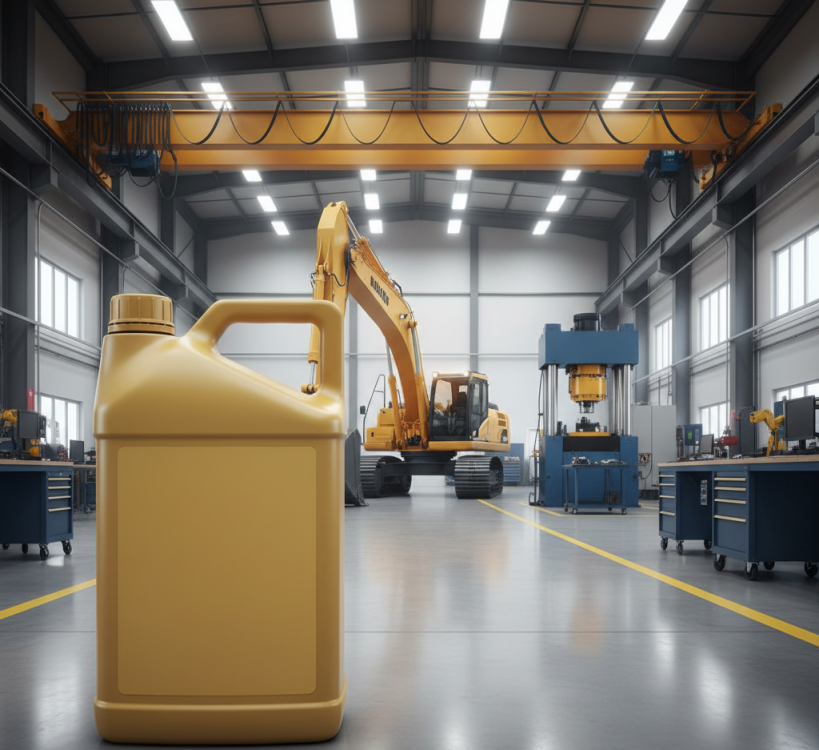
Every moving machine needs a lubricating oil that keeps it running smoothly without any cranky sounds and unpredictable breakdowns. Many modern heavy-duty machines used in construction, manufacturing, automotive, and agricultural industries depend on hydraulic oils to stay productive over time. You might not notice the change in the performance pattern of the machinery immediately but in real-time, this fluid protects your machinery from wear and tear, ultimately extending its lifespan and securing your investment
In this article, we will learn about how hydraulic oils work and why it is so essential across industries. Moreover, you will also get a detailed insight on the types, uses, and benefits that make it an irreplaceable part of countless operations.
What Are Hydraulic Oils?
Hydraulic oil is a specialized fluid that is used to transfer power within hydraulic machinery and systems. It serves as both a lubricant as well as an energy medium that allows machines to function with a smooth and controlled motion. They are not like ordinary lubricants. Hydraulic oils are engineered to withstand pressure, resist wear, and operate under a wide range of temperatures.

In simple terms, hydraulic systems use this fluid to transmit power. When pressure is applied to hydraulic oil in a closed system, it creates a force that moves mechanical components such as pistons, cylinders, or motors.
Functions of Hydraulic Oil
Hydraulic oils are not just responsible for moving different machine components. They also perform several crucial roles which guarantees long term performance and efficiency of the equipment.
1. Power Transmission
The primary role of this oil is to transmit hydraulic energy that enables machines to perform heavy-duty industrial tasks lifting, and pushing tasks.
2. Lubrication
Hydraulic oil reduces friction between moving components and makes sure that machine parts move freely while operating with minimum wear and tear.
3. Heat Dissipation
Hydraulic systems generate a lot of heat while operating. The oil absorbs and carries away this heat, preventing damage to the internal mechanical system which can be caused as a result of overheating.

4. Protection Against Corrosion
High-quality hydraulic oils form a protective layer over metal surfaces that reduce the risk of rust and chemical degradation in the mechanical parts.
Types of Hydraulic Oils
Hydraulic oils are not one-size-fits-all. The kind of hydraulic oil you should buy depends on the kind of machinery you are using and its operating conditions. Based on that, there are three types of hydraulic oils.
1. Mineral-Based Hydraulic Oil
Derived from refined crude oil, mineral-based hydraulic oils are the most commonly used. They are cost-effective and suitable for standard machinery where extreme conditions are not involved.
2. Synthetic Hydraulic Oil
These are chemical-infused fluids that are designed to perform under extreme pressure, high temperatures, or harsh environments. Synthetic oils generally offer better stability and a longer lifespan than mineral-based options.
3. Biodegradable Hydraulic Oil
As industries have started focusing more on sustainability, biodegradable hydraulic oils have gained popularity. These oils are made from renewable sources, are eco-friendly and safer for use in environmentally sensitive areas like marine applications and agriculture.
Where Are Hydraulic Oils Commonly Used?
Hydraulic oils are everywhere, from industrial plants to agricultural farms. Let’s take a look at some areas where they are most commonly used.
-
Construction and Heavy Machinery
Excavators, cranes, loaders, and bulldozers rely on hydraulic oil for lifting heavy loads and precise movement. Without it, the efficiency and safety of these machines would be compromised.
-
Transport and Automation
Braking systems, power steering, and hydraulic clutches, all depend on hydraulic oils for smooth and controlled operations.
-
Manufacturing and Industrial Applications
Hydraulic presses, injection molding machines, and robotic systems need hydraulic oil to deliver consistent performance under high pressure.
-
Agriculture
Tractors, harvesters, and other agricultural equipment use hydraulic oil to operate lifting systems, steering controls, and attachments.
-
Aviation and Marine
In airplanes and ships, hydraulic oils are essential for steering, landing gear and other moving components.
What Are The Benefits of Using Hydraulic Oil?
Now that you have got to know where hydraulic oil is commonly applied, it's time to take a look at the benefits that make it indispensable across industries.
-
Smooth Operation and Enhanced Efficiency
Hydraulic oil enables precise and consistent power transmission, making sure that your industrial machinery functions smoothly. This increases efficiency, reduces downtime, and boosts productivity for your operations.
-
Extended Equipment Lifespan
Timely lubrication and minimizing friction reduces wear on moving components. This not only protects expensive machinery but also significantly extends its operational life.
-
Reliability in Demanding Conditions
Hydraulic systems often operate under high pressure and varying temperatures. The right hydraulic oil maintains performance stability in these environments. This guarantees consistency in operations even under challenging conditions.
-
Reduced Maintenance and Cost Savings
Poor quality oils can lead to malfunctioning and can be expensive in the long run. So, always go for branded or OEM hydraulic oils. This lowers the risk of system failures and minimizes repair requirements. Over time, this also results in reduced maintenance expenses, fewer breakdowns, and improved energy efficiency.
How To Choose the Right Hydraulic Oil for Your Needs?
Before choosing hydraulic oil for your machinery, there are certain things you need to look for to measure the genuinity of the oil.
1.Viscosity
Viscosity indicates how thick or thin the oil is. It needs to be suitable for your machine’s operating conditions. Too thick oil consistency may cause sluggish performance; while too thin composition may not provide enough lubrication.
2.Additives
Hydraulic oils often contain additives that improve performance such as anti-wear agents, rust inhibitors, or anti-foaming agents.
3.Operating Conditions
High temperatures, environmental exposure, or heavy-duty use may require synthetic or specialized oils over mineral-based ones. So check the bottle before buying whether it will serve your purpose or not.
Final Thoughts
Hydraulic oil is far more than a simple lubricant; it is the driving force behind modern hydraulic systems. They may not be visible to you during daily operations, but its impact is undeniable. When you choose wisely, you’re not just protecting equipment, you’re saving time and securing your long-term investment.
So the next time you hear the steady hum of your machinery, remember that hydraulic oils are working tirelessly behind the scenes to keep everything running. This keeps you free from being stressed about sudden halt in operations.





