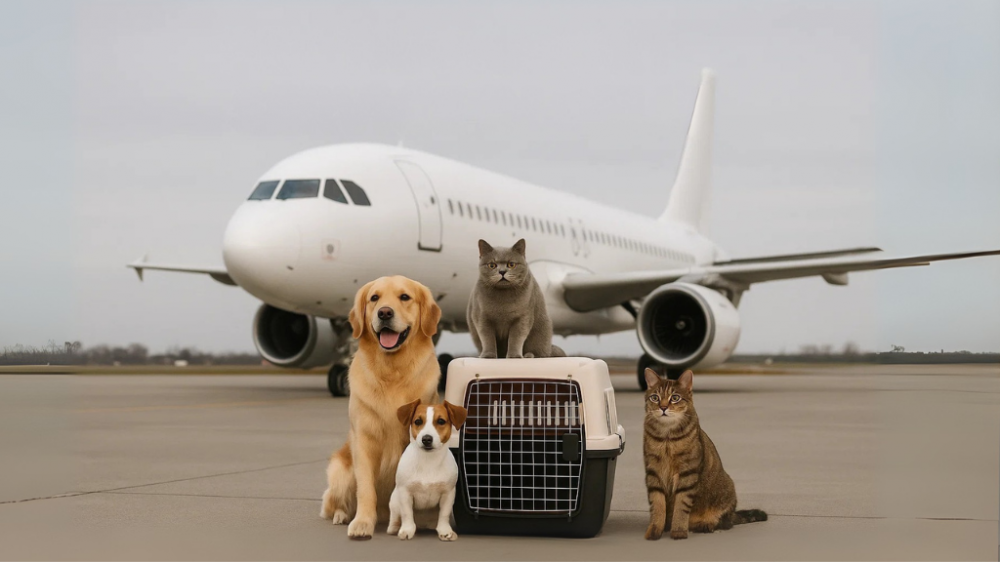
Pet travel is no longer a rare occurrence. Families relocating for work, study, or lifestyle changes increasingly want their animals to stay with them, whether within India or across borders. This shift has led to a surge in demand for professional pet travel services—structured solutions that combine compliance, safety, and welfare in transit.
Expanding Market and Demand
The pet travel services market in India was valued at USD 82.6 million in 2024 and is projected to reach nearly USD 154.6 million by 2030, growing at a steady 11.2% CAGR (Grand View Research). This growth reflects a deeper change: pets are no longer seen as companions that can be left behind, but as family members who must be included in relocation plans.

Domestic airlines are adapting as well. Akasa Air’s “Pets on Akasa” initiative, launched in 2022, has already transported over 6,200 pets. Recent updates increased the in-cabin weight limit to 10 kg (including the carrier) and extended veterinary certificate validity to 15 days (ET Travel). Such moves signal a clear response to rising demand from pet parents.
Regulatory Framework
The Government of India maintains strict guidelines for importing and exporting pets. The Animal Quarantine and Certification Service (AQCS) requires microchipping, updated vaccinations, health certificates, and advance No Objection Certificates for incoming dogs and cats (AQCS India). Similarly, customs rules allow up to two pets per passenger, provided documents are in order and clearance is obtained from quarantine officers.
These frameworks are designed to safeguard animal health and public safety, but they also underline the need for meticulous preparation.
Why Families Depend on Professional Pet Transport Services
Managing pet relocation independently can be overwhelming. International destinations impose different timelines for rabies antibody testing, quarantine stays, and entry permits. Airlines apply varying restrictions on breeds, crate dimensions, and seasonal acceptance. Families often rely on professionals because the margin for error is small—missed paperwork or mistimed vaccinations can lead to delays or denied boarding.
Professional services bring structure to this process. They align schedules, ensure regulatory compliance, and manage logistics, reducing stress for both pets and owners. Families value this expertise because it provides peace of mind during what is already a disruptive transition.
Emotional Drivers
Statistics reveal practical growth, but emotion is just as powerful a driver. A Skyscanner 2025 report found that 11% of Indian travellers plan to take their pets on international holidays, up from just 4% in 2024 (Mid-Day). This reflects how pets are increasingly woven into family decisions. For many, leaving them behind is no longer an option.
The Evolving Landscape
India’s pet population has risen from 26 million in 2019 to more than 42 million in 2024, with projections of further growth in the years ahead (Global Pet Industry). As ownership rises, so does the demand for structured and humane travel solutions. Airlines, regulators, and service providers are likely to continue adapting—expanding capacity, improving welfare standards, and offering greater transparency.
Summary
The choice to use professional pet travel services is not driven by luxury, but by necessity. The combination of complex regulations, airline policies, and the emotional bond families share with their pets makes structured support the practical option. In Delhi and across India, organizations such as AirPets Relocation Services Pvt Ltd are part of this growing ecosystem, helping families ensure their pets travel safely and comfortably.