

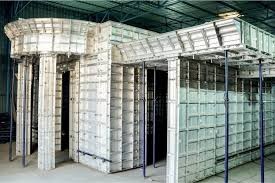
In modern construction, monolithic formwork has emerged as a revolutionary solution for building durable, high-quality structures efficiently. This innovative system allows for the casting of walls, slabs, and columns in a single continuous process, minimizing construction time and ensuring structural integrity. As the construction industry continues to evolve, adopting advanced formwork technologies has become crucial for builders and contractors seeking efficiency and reliability.
What is Monolithic Formwork
Monolithic formwork is a construction technique where a structure is cast as a single unit rather than separate components. Unlike traditional brick-and-mortar construction, monolithic systems create walls, floors, and ceilings in one continuous pour, which eliminates joints and reduces the risk of structural weaknesses. This method is particularly suitable for high-rise buildings, residential complexes, and commercial projects requiring consistent quality and speed.
Benefits of Monolithic Formwork
Faster Construction Time
One of the primary advantages of monolithic formwork is the speed of construction. Since walls and slabs are cast simultaneously, labor time is significantly reduced. This efficiency translates to quicker project completion, which is especially beneficial in urban areas where time constraints are critical.

Superior Structural Strength
Monolithic formwork ensures uniformity in walls and slabs, resulting in improved load-bearing capacity. Continuous pouring without joints enhances the structural integrity of the building, making it more resistant to seismic activities and natural wear over time.
Cost-Effective Solution
While the initial setup cost of monolithic formwork may be higher than traditional methods, it reduces labor costs and material wastage over time. Its efficiency minimizes the need for secondary finishes, lowering overall project expenditure.
Enhanced Thermal and Acoustic Insulation
Buildings constructed using monolithic formwork exhibit better thermal and acoustic insulation compared to traditional construction. The seamless structure prevents gaps that allow heat or noise to pass through, improving comfort and energy efficiency for occupants.
Applications of Monolithic Formwork
Monolithic formwork is versatile and can be applied across various construction projects. Some common applications include:
-
Residential Buildings: Rapid and consistent wall construction makes it ideal for apartments, villas, and townships.
-
Commercial Projects: Office complexes and shopping centers benefit from the reduced construction timeline and enhanced structural stability.
-
Industrial Structures: Factories and warehouses can utilize monolithic systems for durable and cost-effective construction.
-
High-Rise Buildings: The technique provides superior strength and stability necessary for tall structures.
Why Choose Shriconst Aluform for Monolithic Formwork
Shriconst Aluform is a trusted name in providing advanced formwork solutions across India. Their monolithic formwork systems combine durability, precision, and efficiency, ensuring high-quality construction outcomes. Contractors looking for reliable aluminium formwork system suppliers can leverage Shriconst Aluform’s expertise for customized solutions tailored to specific project requirements.
Key Features of Monolithic Formwork by Shriconst Aluform
-
Lightweight Aluminium Panels: Easy to handle and assemble, reducing labor fatigue.
-
Reusability: Panels can be reused multiple times, making the system eco-friendly and cost-efficient.
-
Precision Engineering: Provides smooth finishes, eliminating the need for extensive plastering.
-
Safety and Durability: High-quality materials ensure long-term performance and minimal maintenance.
Installation Process of Monolithic Formwork
-
Design Planning: Determine the layout and dimensions of the structure.
-
Formwork Assembly: Lightweight panels are arranged according to the design.
-
Pouring Concrete: Continuous concrete casting ensures uniformity and strength.
-
Curing and Panel Removal: After the concrete sets, panels are safely removed for reuse in the next section.
Conclusion
Adopting monolithic formwork in construction projects offers significant advantages, from faster timelines to superior structural quality. Builders and developers aiming for efficiency, durability, and cost-effectiveness can rely on Shriconst Aluform’s expertise and advanced systems to achieve high-quality construction results. As modern construction demands innovative solutions, monolithic formwork continues to set new benchmarks in the industry.





