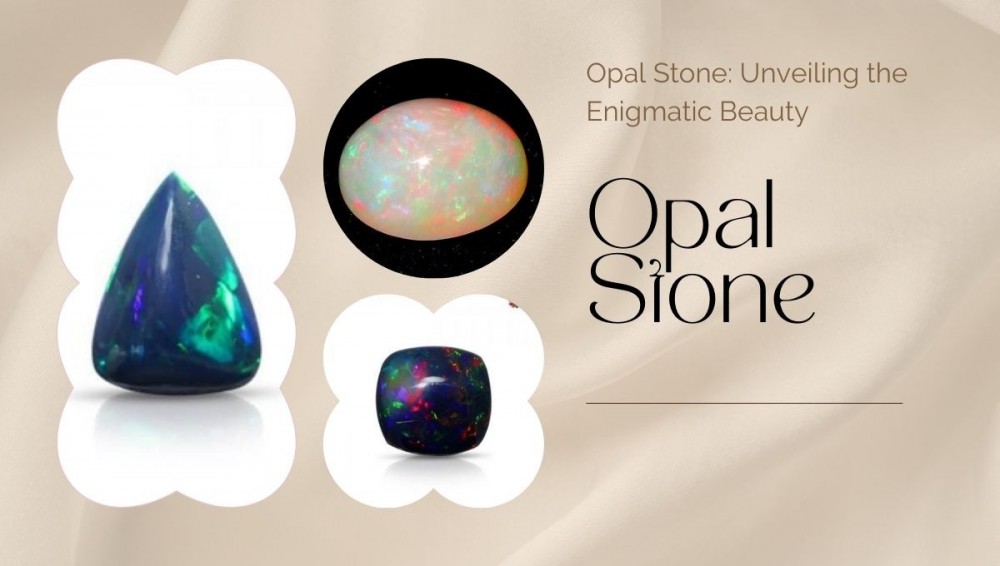
The natural opal stone is one of the most enchanting gemstones in the world, admired for its iridescent play of colors that shift with every angle of light. With a rich history, deep astrological significance, and a unique geological formation, opal has captivated gem enthusiasts, healers, and jewelry lovers for centuries. In this guide, we will explore everything about natural opal gemstones, from their origin and varieties to their astrological benefits, care, and investment value.
What is Natural Opal Stone?
Opal is a hydrated amorphous form of silica that contains water molecules within its structure. Unlike crystalline gemstones such as sapphire or ruby, opal does not have a fixed crystal lattice. This unique composition allows light to diffract and create the mesmerizing play-of-color effect, making each stone truly one of a kind.
Natural opals are mined directly from the earth without synthetic enhancements. They are found in a range of colors, from milky white and translucent varieties to fiery opals with intense flashes of red, green, blue, and yellow.
Origins and Sources of Natural Opal
Opals are primarily formed in areas rich in silica. Over millions of years, water carrying silica seeps into cracks and voids in rocks, depositing layers of opal. Some of the most famous opal mining locations include:
-
Australia – Known as the “Opal Capital of the World,” producing more than 90% of the world’s natural opals, including the highly valued black opal.
-
Ethiopia – Famous for its hydrophane opals that can absorb water and display brilliant color patterns.
-
Mexico – Renowned for fire opals, which exhibit vibrant orange to red body colors.
-
Brazil and Honduras – Producers of unique varieties like crystal opals and matrix opals.

Varieties of Natural Opal Stones
There are several types of natural opal, each with its distinct charm and value. The major varieties include:
1. White Opal
Characterized by a milky base color with flashes of rainbow hues. It is one of the most common types and is widely used in jewelry.
2. Black Opal
The rarest and most valuable opal, with a dark body tone that enhances the vivid play-of-color. Black opals are highly prized among collectors.
3. Fire Opal
Originating mostly from Mexico, fire opals display bold body colors like orange, red, or yellow. Some may or may not exhibit play-of-color.
4. Boulder Opal
Found in Queensland, Australia, boulder opals are formed within ironstone boulders. They display striking color patterns against a natural dark matrix.
5. Crystal Opal
These transparent or semi-transparent opals allow light to pass through, enhancing their inner fire and brilliance.
Astrological Benefits of Natural Opal
In Vedic astrology, natural opal stone is associated with the planet Venus (Shukra), symbolizing love, luxury, beauty, and creativity. Wearing opal is believed to bring several benefits:
-
Enhances relationships – Promotes harmony, loyalty, and emotional stability in marriage and partnerships.
-
Attracts wealth and luxury – Strengthens Venus energies, bringing prosperity, financial growth, and a luxurious lifestyle.
-
Boosts creativity – Helps artists, writers, and performers enhance imagination and artistic expression.
-
Improves health – Believed to support reproductive health, kidney function, and regulate hormonal imbalances.
-
Emotional healing – Calms anxiety, reduces depression, and brings inner peace.
Astrologers often recommend wearing natural opal gemstones to individuals with a weak or afflicted Venus in their birth chart.
How to Identify a Genuine Natural Opal
With the increasing demand for opals, synthetic and treated stones are also available in the market. To ensure authenticity, here are some identification tips:
-
Play-of-color – Genuine opals display shifting rainbow colors under different lighting conditions.
-
Body tone – Check for natural variations in body color and transparency.
-
Internal structure – Natural opals may have inclusions, patterns, or irregularities, unlike synthetic ones, which often appear too perfect.
-
Hydrophane test – Ethiopian opals absorb water and temporarily change appearance, which is a natural characteristic.
It is always recommended to purchase certified natural opals from reputable gemstone dealers.
Uses of Natural Opal in Jewelry
Opals are highly valued in the jewelry industry for their vibrant colors and unique charm. They are commonly used in:
-
Rings – Engagement and statement rings often feature opals as the centerpiece.
-
Necklaces and Pendants – Opal pendants are admired for their glowing beauty.
-
Earrings – White and crystal opals are widely used in elegant earring designs.
-
Bracelets – Opals add a luxurious touch to bangles and charm bracelets.
Due to their relatively soft structure (5.5–6.5 on the Mohs scale), opals require careful handling in jewelry settings.
How to Wear Natural Opal for Astrology
To harness the astrological benefits of opal, Vedic astrologers suggest specific guidelines:
-
Best metal – Opal is usually set in silver, platinum, or white gold.
-
Finger – Traditionally worn on the ring finger of the right hand.
-
Day and time – Best worn on a Friday morning during the rising moon, after proper energization rituals.
-
Carat weight – A minimum of 4–6 carats is recommended for astrological purposes.
-
Purification – Before wearing, dip the opal ring in a mixture of honey, milk, and Ganga water for cleansing.
Caring for Natural Opal Stones
Opals are delicate gemstones that require proper care to maintain their brilliance:
-
Avoid exposure to harsh chemicals, perfumes, and detergents.
-
Store separately in a soft pouch to prevent scratches.
-
Keep away from extreme heat or dry conditions, as opals may crack due to water loss.
-
Clean gently with a soft cloth and mild soapy water.
Investment Value of Natural Opals
Natural opals, especially black opals and high-quality fire opals, are considered excellent investment gemstones. Their rarity and increasing demand contribute to rising market prices. Collectors often seek opals with unique color patterns, strong play-of-color, and minimal inclusions.
Conclusion
The natural opal stone is more than just a gemstone—it is a symbol of beauty, love, luxury, and spiritual power. From its unique geological formation to its dazzling play-of-color, opal has remained one of the most cherished gemstones across cultures. Whether you wear it for astrological benefits, fashion, or investment, owning a natural opal brings timeless elegance and positive energy.