
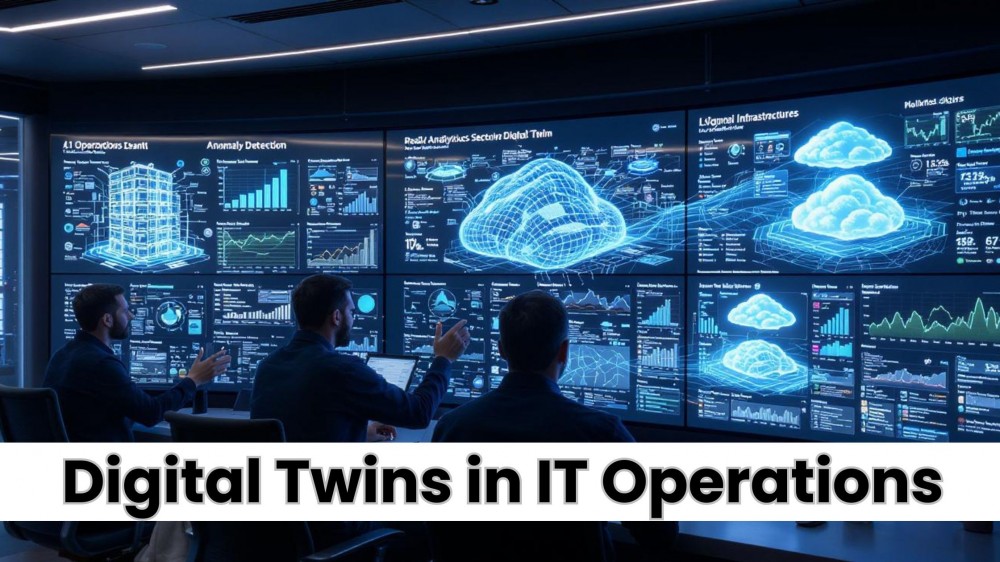
As enterprises increasingly rely on complex, distributed technology environments, the pressure on IT Operations to maintain performance, resilience, and security has never been higher. Amid these challenges, digital twins are quietly emerging as the technology that will define the future of IT Operations. By creating virtual, real-time replicas of infrastructure, networks, and applications, digital twins empower teams to predict, simulate, and optimize without disrupting live systems. Businessinfopro Company recognizes digital twins as a key enabler for intelligent, proactive, and strategic IT management.
Digital twins are not static models; they are dynamic systems that evolve with the underlying infrastructure. By continuously ingesting data from sensors, logs, and monitoring tools, digital twins mirror real-world behavior and provide actionable insights. This approach transforms IT Operations from reactive troubleshooting to forward-looking management, fundamentally reshaping how enterprises maintain digital ecosystems.
Moving IT Operations from Reactive to Predictive
Traditionally, IT Operations have been reactive, resolving incidents only after service disruptions occur. Digital twins shift this model toward predictive operations. By identifying anomalies early and simulating potential interventions, IT teams can prevent problems before they affect users.

For instance, unusual spikes in network traffic or storage utilization can be detected by a digital twin. IT Operations teams can then test load balancing, rerouting, or capacity adjustments in the twin before implementing changes in production. This predictive approach reduces downtime, mitigates risk, and improves overall operational efficiency.
Predictive Maintenance for Critical Infrastructure
One of the most valuable applications of digital twins is predictive maintenance. Servers, storage systems, and networking devices are prone to failure, but anticipating issues has historically been difficult. Digital twins continuously monitor performance metrics, alerting IT Operations to early warning signs.
By simulating scenarios such as hardware degradation or system bottlenecks, teams can implement maintenance proactively. This minimizes unplanned downtime, reduces repair costs, and extends the lifespan of IT assets, ultimately improving the reliability of IT Operations.
Strengthening Cybersecurity and Threat Preparedness
Cybersecurity is an essential aspect of IT Operations, and digital twins enhance security strategies by creating controlled testing environments. Organizations can model ransomware attacks, phishing campaigns, and DDoS threats within a twin to evaluate system resilience.
This enables IT teams to identify vulnerabilities, test mitigation strategies, and optimize response protocols without risking live systems. Digital twins thus strengthen cybersecurity defenses, ensuring IT Operations are prepared for both known and emerging threats.

Optimizing Data Center Operations
Data centers are central to IT Operations but are often expensive and resource-intensive. Digital twins improve efficiency by modeling energy consumption, cooling performance, and server utilization.
Simulating different configurations allows IT Operations teams to optimize airflow, reduce power usage, and design more sustainable infrastructures. This not only lowers operational costs but also supports environmental sustainability initiatives, reinforcing corporate social responsibility goals.
Simplifying Multi-Cloud and Hybrid IT Environments
Managing hybrid and multi-cloud infrastructures presents significant challenges for IT Operations. Digital twins create unified, real-time models that span on-premises systems, private clouds, and public cloud platforms.
These models allow IT teams to simulate migrations, forecast resource requirements, and optimize workload distribution. By providing a comprehensive view across diverse environments, digital twins simplify governance, reduce operational complexity, and improve performance consistency.
AI Integration: Smarter IT Operations
Artificial intelligence (AI) enhances the capabilities of digital twins by enabling predictive analytics, anomaly detection, and automated remediation. By combining AI with digital twins, IT Operations teams gain actionable insights in real time.
For example, if a digital twin detects abnormal latency patterns, AI can analyze historical data to determine if it is a potential threat or a routine anomaly. IT Operations teams can then take immediate, informed action, or automate the resolution process, improving operational agility and responsiveness.
Accelerating Incident Management
Incident response and root cause analysis are often resource-intensive for IT Operations teams. Digital twins accelerate these processes by offering virtual replicas where issues can be simulated and analyzed.
This approach allows IT teams to pinpoint problems quickly, test solutions, and implement fixes without impacting live systems. Reduced mean time to resolution (MTTR) improves reliability, reduces downtime, and ensures smoother operational workflows.
Enhancing DevOps and Continuous Delivery
DevOps relies on rapid development and deployment, but speed can introduce risks to IT Operations. Digital twins provide safe environments to test updates, patches, and new applications before production deployment.
Simulating production conditions allows IT Operations to validate performance and stability, reducing deployment risks. This enhances collaboration between development and operations teams while ensuring innovation does not compromise system reliability.
Business Continuity and Disaster Recovery
Business continuity is a core KPI for modern IT Operations. Digital twins enhance disaster recovery planning by enabling simulation of power failures, network outages, and cyber incidents.
IT Operations teams can observe how infrastructure responds, refine recovery strategies, and implement preventive measures. This proactive approach minimizes disruption during real-world events, ensuring consistent service delivery and operational resilience.
Overcoming Adoption Challenges
Despite their transformative potential, digital twins come with challenges such as high implementation costs, legacy system integration, and the need for accurate data streams.
Organizations can mitigate these challenges by starting with targeted initiatives like predictive maintenance or cloud migration simulations. Demonstrating early value helps build organizational support and justify broader adoption. Businessinfopro Company highlights the importance of aligning digital twin initiatives with strategic business goals for maximum ROI.
Real-World Adoption Examples
Digital twins are increasingly deployed across industries worldwide. Telecom providers optimize networks and reduce latency. Banks simulate transaction systems to maintain uptime during peak demand. Healthcare organizations manage critical IT infrastructure securely and efficiently.
These cases demonstrate that digital twins are not hypothetical tools—they are practical solutions driving measurable improvements in IT Operations globally.
The Future of IT Operations with Digital Twins
Emerging technologies such as 5G, IoT, and edge computing will further expand the capabilities of digital twins. They will provide faster analytics, richer data, and more autonomous operational management.
The vision of self-optimizing IT environments—where systems detect, resolve, and enhance themselves—will become increasingly attainable. Digital twins will be at the heart of this transformation, enabling IT Operations teams to maintain agility, resilience, and strategic alignment with business objectives.
Read Full Article : https://bizinfopro.com/blogs/it-blogs/how-digital-twins-are-quietly-disrupting-it-operations/
About Us : BizInfoPro is a modern business publication designed to inform, inspire, and empower decision-makers, entrepreneurs, and forward-thinking professionals. With a focus on practical insights and in‑depth analysis, it explores the evolving landscape of global business—covering emerging markets, industry innovations, strategic growth opportunities, and actionable content that supports smarter decision‑making.





