
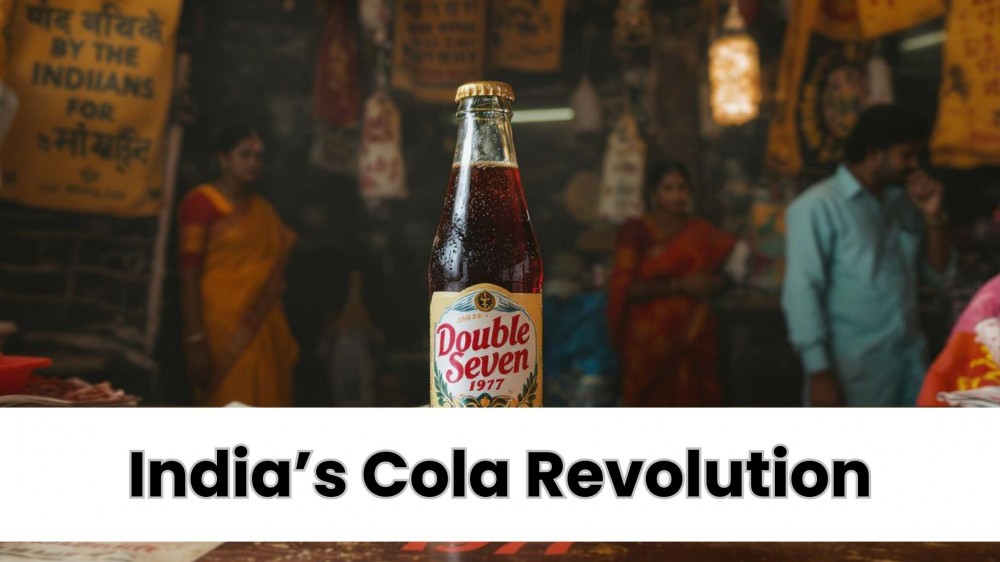
The Indian soft drink market underwent a historic transformation during the late 1970s, widely referred to as India’s Cola Revolution. Coca-Cola’s abrupt exit in 1977 left millions of consumers searching for a replacement, creating a rare opportunity for domestic brands. Double Seven emerged as the prominent player, filling this void while symbolizing national pride and self-reliance. Beyond taste and availability, the brand became a cultural icon, reflecting the interplay of politics, marketing, and consumer behavior in a pivotal period of India’s economic history.
Coca-Cola’s Exit: The Catalyst
Coca-Cola had been a household name in India since the 1950s, synonymous with Western modernity, quality, and aspirational lifestyle. However, regulatory changes under the Foreign Exchange Regulation Act (FERA) forced multinational companies to dilute ownership and reveal secret formulas. Coca-Cola refused to comply, resulting in its departure from India in 1977. This sudden exit left a significant gap in the cola market, both in supply and consumer confidence, setting the stage for Double Seven to emerge as the leading domestic alternative.
Launching Double Seven: Seizing the Moment
Double Seven was launched by Modern Food Industries in 1977, strategically timed to capitalize on Coca-Cola’s exit. Its name symbolized the year of transformation, tying the brand to a narrative of change and self-reliance. Backed by government support, Double Seven had credibility, wide distribution, and instant recognition. Its primary goal was to replicate the taste of Coca-Cola while offering an Indian alternative that could instill pride in consumers. This dual focus on flavor and nationalism helped the brand quickly gain acceptance.
Marketing and Branding Strategies
Double Seven’s marketing approach was instrumental to its success. The brand deployed print, billboard, and television campaigns emphasizing patriotism, modernity, and lifestyle appeal. Celebrity endorsements helped attract younger audiences, while slogans reinforced national pride. By connecting the product to the broader socio-political context, Double Seven established itself as more than a beverage—it became a cultural symbol representing India’s Cola Revolution and self-reliance.
Distribution and Accessibility
Widespread availability played a critical role in Double Seven’s success. Leveraging government-backed channels, the cola reached both urban centers and rural towns, ensuring comprehensive market penetration. Unlike private competitors who initially focused on metropolitan areas, Double Seven became accessible to a broad demographic. Its reach not only enhanced consumer adoption but also reinforced the brand’s positioning as the national cola during a time of market disruption.
Taste and Consumer Experience
Double Seven’s flavor profile was carefully designed to mirror Coca-Cola, offering a smooth transition for existing cola drinkers. Sweetness, carbonation, and a refreshing finish were calibrated to satisfy consumer expectations. This attention to taste was crucial in retaining loyalty, ensuring that consumers felt no compromise while switching to a domestic alternative. The familiar flavor, combined with nationalistic branding, strengthened its market position.
Competitive Landscape
Despite its early success, Double Seven faced competition from brands like Thums Up, Campa Cola, and Gold Spot. Thums Up, in particular, gained popularity for its bolder flavor and energetic branding, appealing to younger audiences. Nevertheless, Double Seven’s early entry, government support, and strong emotional appeal helped it maintain a leadership position during the crucial years following Coca-Cola’s exit, establishing a model for national brand success in India.
Political Context and Branding
Double Seven’s rise was deeply intertwined with politics. The Janata Party government promoted indigenous industries and self-reliance, framing the brand as a representation of these values. Purchasing Double Seven became both a practical choice and a symbolic act of patriotism. The alignment of policy, culture, and consumer behavior reinforced brand loyalty and strengthened its influence in the cola market.

Cultural Significance
The cultural impact of Double Seven extended beyond taste and availability. It demonstrated that Indian brands could compete with multinational giants and succeed on both quality and emotional resonance. The cola became a household staple, reinforcing national pride and cultural identity. Double Seven’s prominence in stores and advertisements served as a constant reminder of India’s Cola Revolution, making the brand synonymous with a historic era in Indian consumerism.
Market Challenges and Decline
Despite its initial success, Double Seven faced challenges in sustaining market leadership. Competitors like Thums Up introduced bolder products and innovative marketing, while Coca-Cola’s re-entry in 1993 intensified competition. Double Seven struggled to innovate and maintain aspirational appeal among younger consumers, limiting its long-term market relevance. However, its early achievements left a lasting imprint on India’s soft drink industry.
Legacy of Double Seven
Double Seven’s legacy lies in its role as a pioneer during India’s Cola Revolution. It demonstrated that domestic brands could rise to fill gaps left by global companies, leveraging timing, government support, and emotional branding. Its success fostered confidence in Indian-made products, influenced marketing strategies, and reshaped consumer expectations. Double Seven remains a case study in how political, cultural, and economic factors converge to create iconic brands.
Lessons for Modern Marketers
Contemporary brands can learn valuable lessons from Double Seven’s journey. Aligning products with cultural identity, leveraging existing distribution networks, using emotional storytelling, and responding to market voids are strategies that remain relevant. Double Seven highlights the importance of connecting with consumers on multiple levels—taste, emotion, and national pride—to build lasting brand impact.
Consumer Behavior and Influence
India’s Cola Revolution, with Double Seven at its forefront, reshaped perceptions of local brands. It encouraged trust, loyalty, and pride in Indian-made products, proving that domestic enterprises could compete with global giants. Beyond flavor and distribution, Double Seven symbolized innovation, resilience, and self-reliance, leaving a permanent mark on India’s beverage industry and consumer mindset.
Read Full Article : https://bizinfopro.com/news/marketing-news/indias-cola-revolution-how-double-seven-replaced-coca-cola/
About Us : BizInfoPro is a modern business publication designed to inform, inspire, and empower decision-makers, entrepreneurs, and forward-thinking professionals. With a focus on practical insights and in‑depth analysis, it explores the evolving landscape of global business—covering emerging markets, industry innovations, strategic growth opportunities, and actionable content that supports smarter decision‑making.





