

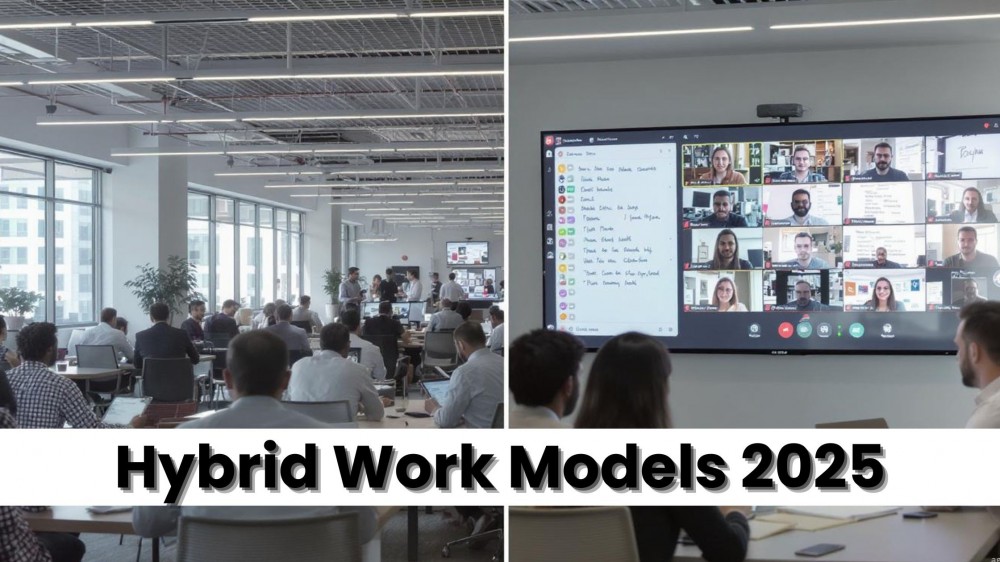
The modern workplace is shifting, and Hybrid Work Models 2025 are becoming essential for organizations looking to combine flexibility with high productivity. Hybrid work allows employees to split their time between remote and in-office environments, providing autonomy while maintaining alignment with business objectives. Organizations that implement hybrid models strategically can boost employee engagement, streamline operations, and foster innovation across teams.
Understanding Hybrid Work in 2025
Hybrid work is a combination of remote and in-office work, enabling employees to choose the environment in which they perform best. In 2025, hybrid work is more than a flexible option—it requires structured processes, strong technology support, and a collaborative culture. Employees gain autonomy and improved work-life balance, while organizations focus on outcomes, efficiency, and fostering innovative teamwork.

Benefits of Hybrid Work Models
Hybrid work provides numerous advantages. Flexibility enhances employee satisfaction, reduces stress, and improves retention. Companies gain access to a broader talent pool without geographical constraints. Cost savings on office space and operational expenses are significant. A results-driven culture encourages accountability and efficiency. Hybrid work also strengthens collaboration as teams leverage technology and defined workflows to remain aligned and productive.
Challenges in Hybrid Work Implementation
Hybrid work is not without its challenges. Dispersed teams may face communication gaps and reduced collaboration. Cybersecurity risks increase as employees access sensitive information remotely. Managers may find it difficult to monitor performance and maintain accountability. Overcoming these challenges requires clear policies, strong technology, and leadership practices that focus on trust, engagement, and alignment.
Best Practices for Productivity and Flexibility

1. Define Clear Policies: Establish guidelines for remote and in-office work, including schedules, responsibilities, and communication expectations. Transparent policies reduce confusion and align teams with organizational objectives.
2. Utilize Collaboration Tools: Leverage platforms such as Microsoft Teams, Slack, Zoom, and Asana for communication, task management, and project tracking across hybrid teams.
3. Prioritize Employee Well-being: Flexible schedules, wellness programs, and mental health initiatives enhance engagement, reduce burnout, and improve overall productivity.
4. Results-Oriented Management: Focus on measurable outcomes instead of hours worked. Clear performance metrics encourage accountability and efficient work practices.
5. Regular Communication and Feedback: Routine check-ins, team meetings, and feedback sessions maintain alignment, address issues promptly, and strengthen team cohesion.
Technology and Infrastructure for Hybrid Work
A robust technological foundation is crucial. Cloud-based applications, secure remote access, and collaboration platforms enable seamless workflows. Cybersecurity measures protect sensitive data, while ergonomic home office setups support employee efficiency. Investing in technology ensures hybrid work is productive, secure, and scalable.
Building a Collaborative Culture
Hybrid work thrives in a culture that encourages collaboration and inclusion. Virtual brainstorming sessions, cross-team projects, and knowledge-sharing initiatives strengthen engagement. Recognition programs and team-building activities help remote employees feel valued. A strong collaborative culture drives innovation and reinforces organizational identity.
Training and Upskilling
Continuous training ensures employees can adapt to hybrid workflows. Programs focused on digital tools, communication, and remote productivity build resilience and competence in hybrid teams. Organizations investing in training create agile workforces capable of achieving business goals efficiently.
Measuring Hybrid Work Success
Performance metrics help organizations evaluate hybrid work effectiveness. Key indicators include productivity, engagement, project completion, and employee satisfaction. Tracking these metrics allows for informed decisions, strategy refinement, and optimization of hybrid workflows.
Leadership in Hybrid Work Environments
Effective leadership is key. Managers must demonstrate empathy, transparency, and a results-focused approach. Recognizing achievements, providing growth opportunities, and fostering innovation build trust and engagement. Leaders who empower teams to collaborate across locations create high-performing hybrid organizations.
Optimizing Hybrid Workspaces
Hybrid-friendly offices include collaboration hubs, flexible seating, and technology-enabled spaces. Virtual workspaces should mirror these opportunities for remote employees. Well-designed hybrid environments improve productivity, engagement, and team cohesion.
Legal and Compliance Considerations
Hybrid work policies must comply with labor laws, remote work regulations, and data privacy requirements. Collaboration between HR and legal teams ensures protection for employees and organizations, mitigating risk and building trust.
Emerging Trends in Hybrid Work
In 2025, hybrid work will continue evolving with AI-enhanced productivity tools, advanced communication platforms, and a stronger focus on employee experience. Organizations adopting these trends will attract talent, optimize workflows, and maintain competitiveness in an evolving business landscape.
Driving Hybrid Work Success
Implementing Hybrid Work Models 2025 effectively requires clear policies, robust technology, and a culture of collaboration and flexibility. Organizations prioritizing employee well-being, communication, and results-oriented management can create hybrid environments that maximize productivity, engagement, and long-term business growth.
Read Full Article : https://bizinfopro.com/blogs/hr-blogs/hybrid-work-models-2025-best-practices-for-flexibility-and-productivity/
About Us : BizInfoPro is a modern business publication designed to inform, inspire, and empower decision-makers, entrepreneurs, and forward-thinking professionals. With a focus on practical insights and in‑depth analysis, it explores the evolving landscape of global business—covering emerging markets, industry innovations, strategic growth opportunities, and actionable content that supports smarter decision‑making.





