

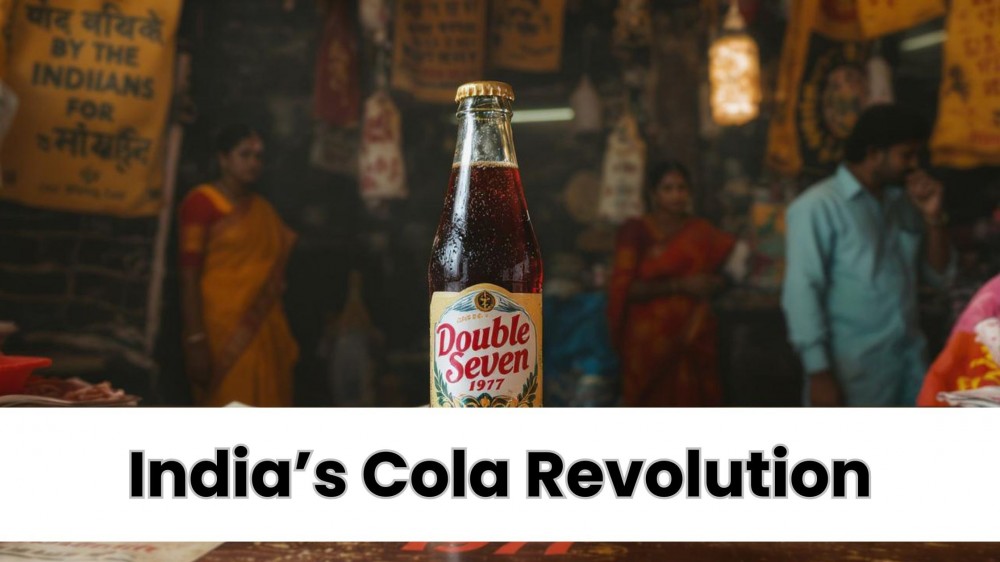
Coca-Cola’s exit from India in 1977 created an unprecedented opportunity for domestic brands to enter the soft drink market. Among them, Double Seven emerged as a government-backed cola that symbolized national pride and economic self-reliance. This pivotal moment marked the start of India’s Cola Revolution and demonstrated that locally produced beverages could compete with international giants while appealing to Indian consumers. Double Seven became more than a drink; it represented a statement of independence, industrial growth, and consumer confidence in homegrown products.
Origins and Concept of Double Seven
Modern Food Industries, a government-owned company, launched Double Seven in 1977 to commemorate the year and signify a new era of industrial optimism. The beverage was formulated at the Central Food Technological Research Institute in Mysore, ensuring it met high standards of quality while appealing to Indian taste preferences. The brand aimed to offer a flavorful, affordable, and widely accessible alternative to foreign colas, reinforcing the country’s drive for self-reliance.
Government Support and Distribution Expansion
The Janata Party government provided significant backing to ensure Double Seven’s success. Production, distribution, and marketing initiatives were supported through incentives to regional bottlers, enabling the cola to reach urban markets as well as smaller towns and rural areas. This not only ensured wide availability but also created employment and stimulated local economies. Government involvement was key in establishing Double Seven as a credible and accessible option for Indian consumers.

Marketing and Branding Approach
Double Seven’s marketing strategy emphasized patriotism and economic self-reliance. Print, radio, and outdoor campaigns highlighted the brand’s Indian origin and encouraged consumers to support local industry. The logo featuring “77” and the patriotic color scheme reinforced its identity, making the brand visually memorable and culturally significant. By leveraging national pride, Double Seven created a strong emotional connection with consumers, aiding early adoption and brand loyalty.
Consumer Reception and Popularity
The beverage was enthusiastically embraced by consumers across India. Urban centers stocked Double Seven in offices, schools, and retail outlets, while regional bottlers expanded availability to smaller towns. The cola became a staple for daily refreshment, celebrations, and social gatherings. Families favored Double Seven not only for its taste but also as a patriotic choice, reflecting pride in supporting a domestic product during a period of economic nationalism.
Challenges and Market Competition
Despite early popularity, Double Seven faced stiff competition from private domestic brands such as Thums Up and Campa Cola, which proved more agile in marketing, innovation, and distribution. Political changes in 1980, including the return of Indira Gandhi, resulted in reduced government support, impacting the cola’s market position. Additionally, evolving consumer preferences, influenced by exposure to international beverages, gradually shifted demand toward competitors, highlighting the challenges of sustaining market dominance.
Impact on India’s Beverage Industry
Double Seven’s rise demonstrated that domestic brands could compete with multinational corporations. It encouraged private enterprises to invest in product innovation, branding, and distribution networks. The cola’s success contributed to a competitive market, greater consumer choice, and overall growth in India’s soft drink industry. Double Seven played a pivotal role in shaping the India’s Cola Revolution, fostering trust in local products and inspiring future entrepreneurs.
Cultural Significance
Beyond commercial achievements, Double Seven became a symbol of India’s self-reliance and national pride. The beverage was featured in media stories, public events, and social gatherings, embedding itself in the collective memory of a generation. It symbolized India’s industrial capability and aspirations, representing a successful effort to produce world-class products locally.

Lessons for Contemporary Brands
The story of Double Seven provides key insights for modern marketers and policymakers. Government-backed initiatives can catalyze market entry but require sustained innovation, product quality, and adaptability to maintain competitiveness. Cultural and emotional narratives can drive adoption, but long-term success depends on consistent product performance and availability. Understanding consumer preferences and market dynamics is essential for brand sustainability in a competitive environment.
Legacy and Nostalgia
Although Double Seven eventually lost prominence, its legacy remains significant. The brand is remembered as a symbol of India’s Cola Revolution and a pioneering example of domestic success in a market previously dominated by multinational corporations. Nostalgia for Double Seven continues to influence discussions around retro products and potential revival strategies. Its cultural and emotional impact highlights the enduring significance of homegrown innovations in India’s beverage industry.
Read Full Article : https://bizinfopro.com/news/marketing-news/indias-cola-revolution-how-double-seven-replaced-coca-cola/
About Us : BizInfoPro is a modern business publication designed to inform, inspire, and empower decision-makers, entrepreneurs, and forward-thinking professionals. With a focus on practical insights and in‑depth analysis, it explores the evolving landscape of global business—covering emerging markets, industry innovations, strategic growth opportunities, and actionable content that supports smarter decision‑making.





