

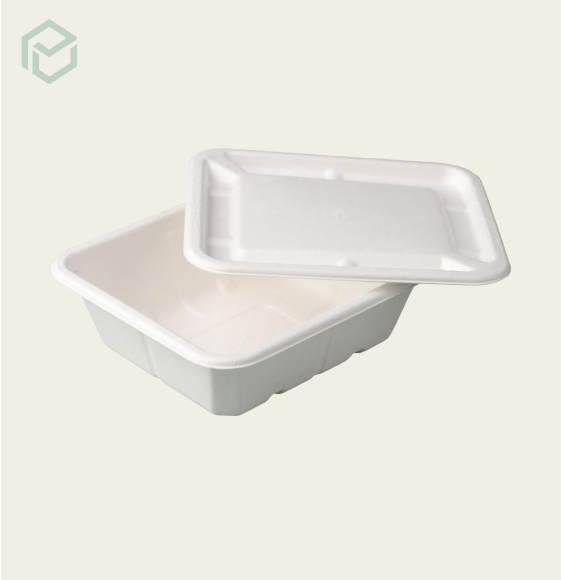
When it comes to eco-friendly food packaging, most consumers think of those classic paper plates that have been around for a long time. They're light, familiar, and seem like the obvious sustainable choice. But what's becoming popular is that a much smarter alternative has been gaining momentum: bagasse containers.

Bagasse comes from something that would usually be discarded anyway, that fibrous material left behind after extracting juice from sugarcane. What's fascinating is how this agricultural waste transforms into substantial food containers that outperform traditional paper plates in almost every way.
What Are Bagasse Containers?
Bagasse containers are eco-friendly food packaging products made from the fibrous by-product of sugarcane processing. When sugarcane stems are crushed to extract juice, what's left behind is a dry, pulpy residue known as bagasse. Manufacturers mold it into sturdy, biodegradable containers for food storage and serving instead of letting that residue go to waste or burning.

What's particularly impressive is the variety available! These containers come in clamshell boxes, trays, plates, and bowls, making them ideal for restaurants, caterers, and home use. Also, their performance and sustainability balance make sugarcane bagasse containers truly stand out. Unlike paper or plastic alternatives, bagasse doesn't require petroleum-based materials or virgin tree pulp.
What Are The Pros Of Using Sugarcane Bagasse Containers?
Businesses and consumers are shifting towards better packaging options, and bagasse containers are the most sustainable choice. The specialty of these containers outperforms traditional options like paper plates in ways that matter for daily use.
1. Strong and Sturdy
The best feature of these containers is their strong structural integrity. Compared to paper plates that break down under the weight of food, sugarcane pulp containers are denser and therefore stronger. This strength allows these containers to stay intact even if there is a generous amount of food. This makes them ideal for take-out meals or catered functions.
2. Heat and Liquid Resistant
Bagasse can handle heat and liquids well. Most paper plates absorb and wet out, therefore becoming soggy or leaking. Bagasse, on the other hand, does not absorb water, oil, or grease. There's no need for synthetic coatings to keep it functional. These containers also perform safely in microwaves and freezers, allowing food to be heated or stored without worry. This is why they are convenient for customers and food service professionals.
3. Made From Agricultural Waste
Rather than requiring virgin wood pulp (contributing to deforestation), bagasse is produced using a by-product of sugar production. This turns agricultural waste (often burned or discarded) into something useful and valuable. By choosing bagasse, you reduce the use of trees and increase the use of eco-friendly materials that also build your brand image among environmentally-conscious consumers.
4. Completely Biodegradable
What's truly impressive is that sugarcane bagasse containers are fully biodegradable. These can break down in naturally composting conditions. Unlike paper plates that often contain plastic or wax coatings, bagasse leaves no toxins or microplastics behind. This means the waste can return to the soil in a valuable form of nutrient-rich compost instead of staying in a landfill for years.
5. Works for Every Business
What's particularly noteworthy is how bagasse containers adapt across different settings. From street food stalls to high-end catering services, they come in a wide range of designs: single trays, bowls, multi-compartment clamshells, catering to all types of meals and serving styles. Their heat resistance makes them suitable for hot and cold foods, while their sturdy construction allows them to be stacked and transported without damage. All this without compromising sustainability or aesthetics.
6. Better Food Presentation
There’s something undeniably attractive about bagasse containers. Their natural off-white color and slightly textured feel provide a clean, earthy look compatible with any food style or concept. Whether plating a fine-dining dish or a casual takeout order, bagasse adds a quality that flimsy paper or plastic options can't match.
How To Find The Right Food Container For Your Business?
The packaging choice directly affects food quality, safety, and how people perceive the brand. Sustainability, convenience, and presentation have all become deal-breakers, so getting the container choice right can set a business apart from the competition.
-
Food Type Determines Container Needs
What's crucial to understand is that different types of food require different insulation, structure, and leak resistance levels. Hot or greasy items like curries and stir-fries demand containers that can handle heat and moisture without falling apart, like bagasse or compostable bioplastics. Lightweight paper or kraft options may suffice for cold foods or dry snacks. The key point is matching the container's performance to the specific demands of what's being served.
-
Delivery and Transport Requirements
Always select the stackable, spill-proof, and strong enough containers that can endure damage during transportation. Clamshell containers with tight lids or compartment trays can assist in maintaining presentation and keeping food items separate.
- Balancing Cost and Practicality
Here's what smart business operators know: while eco-packaging often comes at a slightly higher cost, bulk buying or supplier partnerships can bring long-term value. Also, choosing stackable, space-efficient designs minimizes backroom clutter and improves workflow. The key point is that the most reasonable option upfront isn't always economical when considering storage space, customer satisfaction, and brand reputation.
To Conclude!
The whole point about the future of food packaging is that the industry is moving beyond the "good enough" thought toward solutions that are better in every measurable way. Bagasse containers represent this shift perfectly! They're not just the environmentally responsible choice, but the superior performance choice.
What's most encouraging is that as production scales up and technology improves, the cost difference between bagasse and paper plates continues to narrow. The industry is reaching a point where choosing the more sustainable option doesn't require compromise on performance or budget.
So, bagasse packaging isn't just outperforming paper plates; it's redefining what should be expected from disposable food packaging.
FAQs
Q.How can food stay fresh during delivery?
Answer. The key is containers with tight-fitting lids and good insulation properties. Multi-compartment designs help prevent mixing and keep textures intact.
- Can the same container work for all food types?
Answer. Not really. Different types of food have different needs, and dry items, cold salads, and hot entrees all have specific features required for the best outcome.
- Can you get branded food containers?
Answer. Absolutely. Many suppliers have custom-printed or embossed eco-friendly containers available so that businesses can reinforce brand identity while staying on the sustainable path.
- Q. Where do businesses purchase food containers?
Answer. Packaging suppliers with a long history in food service experience, eco-certifications, and bulk pricing are the best places. Checking for reviews or sample designs before deciding is a good idea.





