

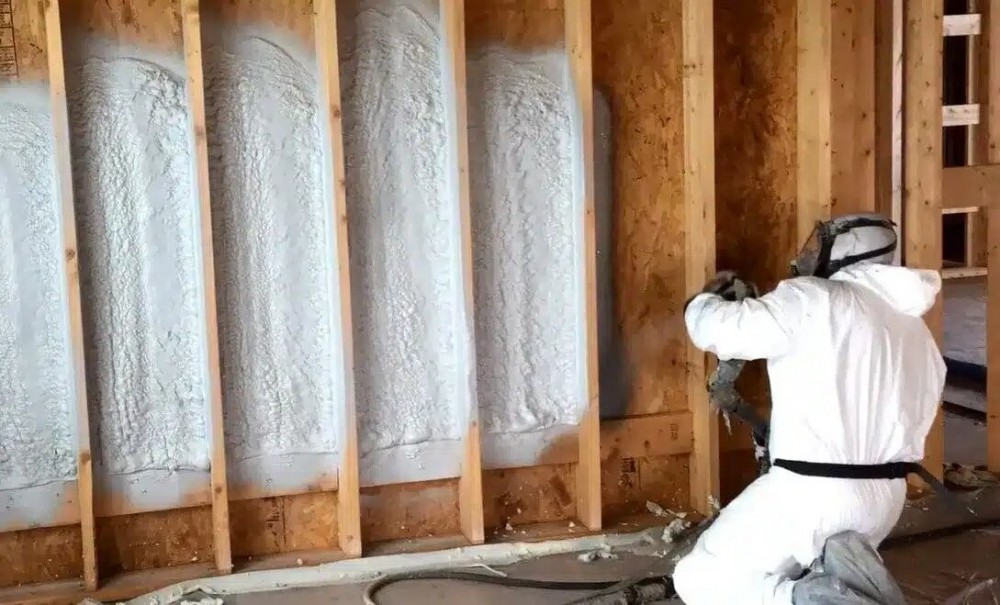
Closed-cell spray foam is a high-performance insulation, but its true value shines in solving specific, challenging problems that other materials can't handle. While it can be used throughout a house, there are five common areas where its unique properties make a huge difference: crawl spaces, foundation walls, rim joists, metal buildings, and exterior walls with limited depth. In these applications, its ability to act as an all-in-one thermal insulator, air barrier, moisture blocker, and structural reinforcer provides a level of performance that is hard to match.
Understanding where to use this powerful material is key to a smart insulation strategy. This article, drawing on the field experience of insulation experts, highlights these five areas and explains why closed-cell spray foam insulation is often the perfect solution for some of a home's most vulnerable spots.
1 Crawl Spaces
Crawl spaces are notoriously problematic. Often dark, damp, and vented to the humid Texas air, they can become a source of mold, musty odors, and poor indoor air quality for the entire house. Traditional fiberglass insulation installed under the floor often fails in this environment, absorbing moisture, sagging, and becoming a nesting ground for pests.

Closed-cell spray foam transforms a crawl space. When applied to the foundation walls and rim joists, it completely seals the space from the outside ground and air. Because it's waterproof and acts as a vapor barrier, it stops moisture from wicking through the concrete walls and prevents humid air from entering. This process, known as crawl space encapsulation, turns a damp, dirty space into a clean, dry, and semi-conditioned part of the home. This not only makes the floors above warmer and less drafty but also dramatically improves the home's overall air quality.
Bonus Tip: A properly encapsulated crawl space also protects plumbing pipes from extreme temperature swings and can significantly reduce the risk of mold growth, which is a major concern in areas with high humidity.
2 Foundation and Basement Walls
Just like crawl space walls, uninsulated basement and foundation walls are a major source of energy loss and moisture problems. Concrete has very little insulating value, so it readily transfers the ground temperature into the home. It's also porous, allowing moisture from the soil to pass through, which can lead to a damp, uncomfortable basement.
Closed-cell spray foam is an ideal solution for foundation walls because it can be applied directly to the concrete. It adheres tightly, creating a continuous layer with no gaps. This seamless barrier serves three functions at once:
- It provides a high R-value, stopping heat loss.
- It acts as a vapor barrier, preventing moisture from entering the basement.
- Its air seals the top of the foundation, where it meets the frame of the house.
Because closed-cell foam has a high R-value per inch (around R-7), it allows homeowners to achieve high levels of insulation without building thick interior walls, saving valuable floor space in a finished basement.

3 Rim Joists
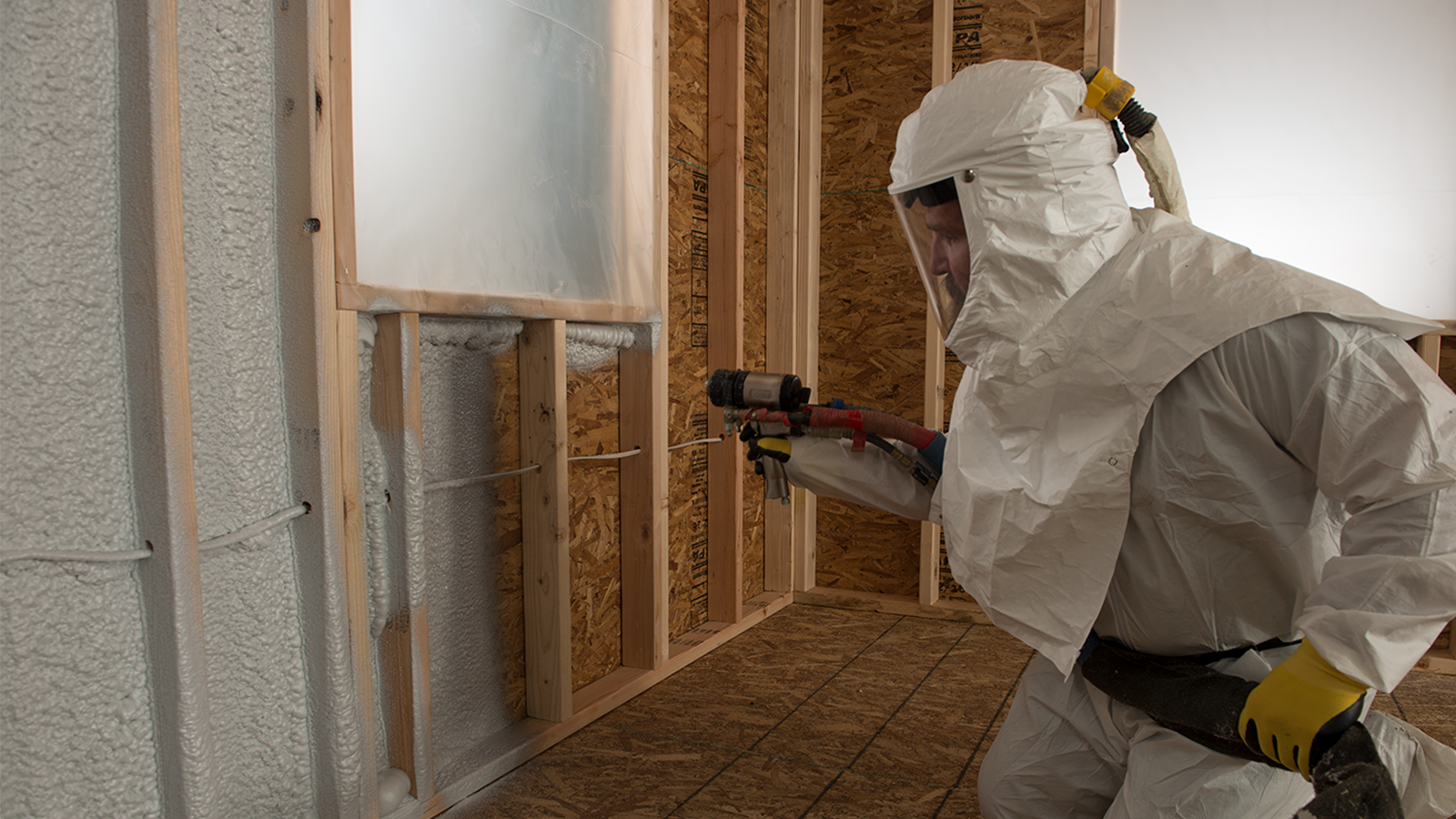
The rim joist, also known as the band joist, is the perimeter of the floor framing where it sits on top of the foundation. This small but critical area is one of the leakiest parts of a typical house. It's a complex junction of wood and concrete with many seams and gaps where air, moisture, and pests can easily enter. Insulating this area with fiberglass batts is often ineffective because it doesn't stop air movement.
Applying a few inches of closed-cell spray foam to the rim joist area is one of the most cost-effective upgrades a homeowner can make. The foam expands to fill every crack and void, completely sealing this troublesome spot. This single application stops drafts, prevents moisture from rotting the sill plate, and blocks a common entry point for insects and rodents. It’s a small area that delivers a big improvement in both comfort and energy efficiency.
4 Metal Buildings and Barns
Metal buildings are strong and cost-effective, but they have one major weakness: condensation. On a cool night, the warm, moist air inside the building comes into contact with the cold metal panels and condenses, essentially making it rain inside the structure. This "sweating" can damage stored items, rust equipment, and create a generally unpleasant environment.
Closed-cell spray foam is the undisputed champion for insulating metal buildings. Its ability to create a strong bond with the metal substrate is key. When applied to the interior of the metal panels, it creates a seamless layer that insulates the building and, more importantly, provides a vapor barrier. This prevents the warm interior air from ever touching the cold metal, completely eliminating the condensation problem. Its rigid structure also helps to reduce noise from rain and wind and adds significant structural strength to the building's thin panels.
Insulation Options for Metal Structures
|
Insulation Type |
Condensation Control |
R-Value per Inch |
Durability |
|---|---|---|---|
|
Closed-Cell Spray Foam |
Excellent (vapor barrier) |
~R-7 |
Excellent |
|
Fiberglass Batts |
Poor (can hold moisture) |
~R-3.5 |
Poor (can sag) |
|
Rigid Foam Board |
Good (but seams must be taped) |
~R-5 |
Good |
|
Bubble Wrap / Radiant Barrier |
Fair (some vapor control) |
~R-1 (very low) |
Fair |
5 Exterior Walls with Limited Space
Building codes have steadily increased the R-value requirements for exterior walls. This is easy to achieve in new construction with thick 2x6 walls, but it can be a major challenge in older homes with 2x4 framing. A standard 2x4 wall is only 3.5 inches deep, which isn't enough space for traditional insulation like fiberglass to meet modern energy standards.
This is where the high R-value of closed-cell foam becomes a problem-solver. At around R-7 per inch, a 3.5-inch application can achieve an R-value of over R-24, far exceeding what's possible with other insulation types in the same space. This allows homeowners to bring an older home up to high-performance standards without having to reframe the walls. It also adds a significant amount of racking strength to the wall assembly, making the entire structure more rigid and durable.
Bonus Tip: This application is also perfect for insulating walls around bay windows, dormers, or any other part of a home where the framing is not a standard depth and maximizing insulation in a tight space is critical.
These applications show how effective closed-cell foam can be, but it's not a universal solution for every project. Before moving forward, it's helpful to weigh a few key factors.

Things to Consider Before Making a Decision
Closed-cell spray foam insulation services is a premium product, and its use should be targeted to the areas where its specific benefits are most needed.
- Understand the Goal: Are you trying to stop moisture, achieve a high R-value in a thin space, or add structural strength? Your goal will determine if closed-cell foam is the right choice over other options like open-cell foam.
- Professional Installation is Key: The performance of closed-cell foam is entirely dependent on a correct installation. The chemical mix, temperature, and application technique must be perfect. This is not a DIY project.
- Factor in the Cost: Closed-cell foam is more expensive than other insulation types. However, in the problem areas listed above, the cost is often justified by its ability to solve multiple problems with a single product.
- Consider Ventilation: Because closed-cell foam creates an extremely tight air seal, it's important to ensure the home has adequate mechanical ventilation to maintain healthy indoor air quality.
Frequently Asked Questions About Closed-Cell Foam
Can it be used in an attic?
Yes, it can be applied to the roof deck. However, in many hot climates, open-cell foam is often preferred in attics because it allows any potential roof leaks to be detected more easily.
Does it completely stop air and water?
Yes. Closed-cell foam is recognized by building codes as an air barrier, and it is impermeable to water, making it a flood-resistant material.
How long does it last?
When installed properly, closed-cell spray foam will last for the life of the building. It does not shrink, sag, or settle over time.
How thick does closed-cell foam need to be?
The required thickness depends on the application and local energy codes. For example, 2-3 inches on a foundation wall is common, while 1-2 inches is often sufficient to stop condensation in a metal building.
Can closed-cell foam be painted or covered with drywall?
Yes. Once cured, the foam is rigid and can be trimmed flush with the studs. It can then be directly covered with drywall or, if left exposed in a place like a workshop, it can be coated with a special fire-protective paint.
Does closed-cell foam have an odor?
There is a distinct odor during the application and curing process, which is why the area must be well-ventilated and unoccupied. Once fully cured (typically in 24 hours), high-quality, professionally installed foam is inert and odorless.
Is closed-cell foam a fire hazard?
Like many building materials, spray foam is plastic and is combustible. It must be separated from the interior living space by a 15-minute thermal barrier, such as 1/2-inch drywall, as required by building codes.
Can it be used on the exterior of a foundation?
Yes, this is a common application in new construction. The foam is sprayed onto the exterior of the concrete walls before backfilling. It provides excellent insulation and waterproofing in a single step.
A Targeted Solution for Tough Problems
Ultimately, closed-cell spray foam serves as a specialist's tool in the building performance world. While it may not be the right choice for every part of a house, its unique combination of high thermal resistance, strength, and impermeability to air and moisture makes it the definitive solution for the challenging areas mentioned. By applying it strategically, homeowners can solve long-standing comfort, moisture, and energy efficiency problems for good.
Get an Expert Opinion on Your Home
To determine if closed-cell spray foam is the right solution for the problem areas in your home, a professional assessment is the best course of action. An experienced contractor can inspect your property and provide targeted recommendations. For homeowners in the greater Austin area, a company like H&R Spray Foam Insulation offers detailed consultations. They can be reached to schedule an inspection by email at info@hrfoam.com or by phone at (512)862-9637.
Author: Edith has 15 years of banking experience and has spent five years managing H&R Spray Foam Insulation. She is passionate about building strong relationships and connecting with clients to improve the health, comfort, and energy efficiency of their homes.
Reviewer: Ella Adams offered useful feedback on this post, drawing on her 7 years in the spray foam insulation business to help ensure the tips were realistic and easy to apply.





