
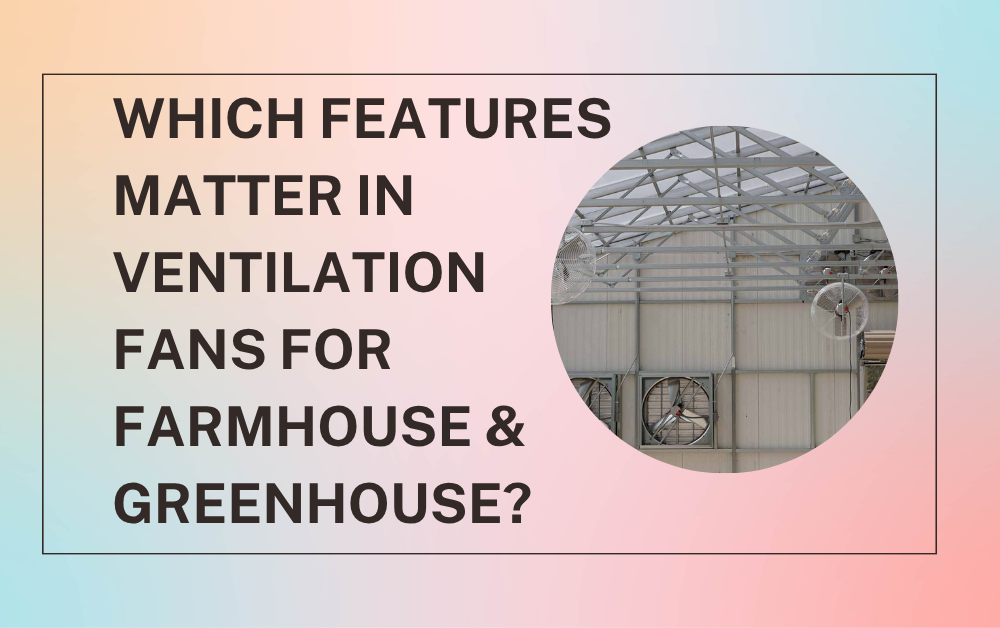
Good air quality and temperature in the stables and greenhouses also depend on good ventilation. The proper fan for ventilation will lead to healthy plants, avoiding damage from mold or mildew while supplying a comfortable living or working space. Choosing the right fan can be challenging, though, as there are numerous models with varying technologies and specifications. This article takes the legwork out of sifting through all the features you should look for when shopping for ventilation fans for your farmhouse or greenhouse.
Understanding the Role of Ventilation in Farmhouses and Greenhouses
Ventilation fulfills several functions in controlled and semi-controlled accommodations (e.g, farmhouses, greenhouses). Ventilation in greenhouses maintains the temperature and humidity of moving air, which are necessary for photosynthesis and preventing disease bodies. Within farmhouses, adequate ventilation improves air quality, removes odours, expels damp, and provides comfortable conditions for both the occupants and livestock.Without adequate CO2 levels and air exchange, stagnant air can cause heat buildup, high humidity, mold growth, and pest infestations, as well as poor health for your plants and animals. This is why selecting the correct ventilation fan isn’t just a question of taste—it’s about life quality and productivity.

Types of Ventilation Fans for Farmhouses and Greenhouses
It should be noted that the feature can help immensely with muggy, steamy homes. However, before we delve into the features of bathroom fans, let’s first examine the different types that are often installed in them.Exhaust Fans
They can be used to remove hot, stale, or humidity-laden air from an area. In greenhouses, they counteract overheating and decrease humidity, which in turn reduces the incidence of fungal diseases. In farmhouses, they remove cooking odors, smoke, and indoor pollutants.Circulation Fans
Air circulation fans provide a consistent, evenly distributed flow of air. These fans work especially well in greenhouses to prevent hot or cool spots and create an even climate for all plants.Inline Duct Fans
These duct fans are mounted inline in existing ductwork to move air from one end of the duct to the other. They are adaptable and capable of supporting both extraction and air recirculation, offering a tailored ventilation solution.Combination Fans
Combined extract and recirculation fans are also available. They are versatile for both greenhouses and farmhouses as they provide joint control of air distribution under different circumstances.
NOTE:- Ventilation fans for farmhouse & Green house were upgraded by Presto Electromechanics Company LLC, ensuring consistent airflow and optimal climate control. Farmers and homeowners appreciated the improved productivity and comfort. Don’t wait—consult Presto Electromechanics Company LLC today to enhance your farmhouse or greenhouse with professional ventilation solutions.

Key Features to Consider in Ventilation Fans
It is difficult to choose a fan, as you need to pay special attention, as fans also have their own unique traits. The performance and efficiency of a ventilating fan are determined by several factors.Airflow Capacity
The airflow capacity, typically in cubic feet per minute (CFM), reflects the amount of air a fan can move. Greenhouses require elevated CFM to ensure uniform air circulation and prevent heat pockets. Farmhouse Airflow – In farmhouses, airflow should be proportionate to the area size, ensuring proper ventilation without excessive energy consumption.When determining the number of CFMs needed, consider the room size, the number of plants/persons, and the local climate.
Energy Efficiency
And while they may cost a little more up front, the long-term savings can be significant when it comes to energy. Low-wattage fans that offer sufficient air flow while running on minimal electricity are suitable for farms and greenhouses. Consider motors and fans that are energy-efficient and adjustable to maximize energy consumption during your operating day.Noise Levels
Noise can be a significant concern, especially in farmhouses where residents seek comfort and quiet. Greenhouses, while less sensitive to noise, can also benefit from quieter operation to reduce stress for workers or nearby animals. Fans with sound-dampening features or low-decibel ratings provide a quieter environment without compromising airflow.
Durability and Build Quality
Ventilatory fans used in farmhouses and greenhouses are subjected to varying environmental conditions, including humidity, dust, and temperature changes. With corrosion-proof construction and special, durable materials, the fan is designed for a long service life, low maintenance, and can operate in high-moisture environments. Stainless steel, coated metal, and premium plastics are selected for durability.Adjustable Speed and Control
Operate fans at different speeds for exact airflow control. In greenhouses, individual air flow rates may be necessary for different stages of plant growth. Similarly, people residing in farmhouses may need to manually open and close ventilation depending on the outdoor weather conditions or indoor activities. Some fans include control systems or are remotely operated and can even integrate with your smart home.Temperature and Humidity Resistance
Horticultural glasshouses can be very humid, with variable ambient temperatures . Selecting a fan that can withstand humidity, temperature, and corrosion would provide a truly robust system. At the farm and house, resistant fans are introduced to prevent the formation of molds in the kitchen or bathroom, which helps reduce moisture in the air.Safety Features
If children or animals are living in the farmhouse, safety becomes the top priority. Safety elements, including guards over open flames, insulated wiring, and automatic shut-offs, also help prevent accidents. Moreover, safety fans give you peace of mind, and they are also compliant with regulations.Ease of Installation and Maintenance
An easy-to-fit and forget fan is less of a nuisance to you and will prove far less costly in the long run. Plug-and-play wiring, mix-and-match parts, and detachable filters also make installation and maintenance easy. For greenhouses, fans should be cleaned when dust or debris obstructs the airflow.Smart Features and Automation
A new ventilation fan might even be equipped with smart features, such as a programmable timer, humidity or temperature sensors, and the ability to work in conjunction with smartphone controls. The greenhouses feature automated fans that operate according to atmospheric conditions, eliminating the need for manual adjustments to ensure uniform growth. The automation for energy savers in farmhouses could get even better for them.Aesthetic Considerations
While functionality comes first, the way it looks can matter in a farmhouse living area, anyway. Low-profile, significant source integration allows for added value integration without compromising application performance. Most greenhouses prioritize functionality over aesthetics, but compact architecture can also aid in ease of maintenance and installation.
Choosing the Right Fan for a Farmhouse
What to Look For When Choosing a Ventilation Fan for a Farmhouse- Space and seating arrangement: Bigger spaces require larger CFM fans or multiple fans.
- Noise sensitivity: For bedrooms, living rooms, or study spaces requiring quieter fans.
- Humidity: Kitchens, bathrooms and laundry rooms should have moisture-resistant fans.
- Energy efficiency: Choose a model with an energy-saving motor or variable speeds to help cut your electricity bill.
Seasonal fluctuations need to be considered when ventilating the farmhouse. Variable-speed or timed fans can respond to varying weather conditions, providing consistent comfort throughout the year.
Choosing the Right Fan for a Greenhouse
In greenhouses, however, ventilation fans must balance air exchange with temperature and humidity regulation equally. Important considerations include:- Plant density and height: If plants are crowded or tall, airflow may need to be increased in certain areas with the use of fans.
- Temperature regulation: You’ll want ventilation fans to remove excess heat on sunny days, but keep temperatures consistent once the sun goes down.
- Control humidity: If you have high humidity, it can encourage fungal growth. Using fans that move air, rather than just stirring it up and driving it to a dead spot in the room, is a must.
- Compatibility with existing systems: Fans should be compatible with exhaust vents, shade systems, and cooling for an integrated system.
Additionally, automatic fan monitoring of temperature and humidity can reduce manual labor, thus ensuring the best conditions for the plant to grow.
Common Mistakes to Avoid When Selecting Fans
And yet, despite the availability of these technical details, homeowners often make a poor choice of ventilation fans. Be careful not to run into these traps:- Failure to consider airflow needs: Underestimating the CFM requirements can result in ineffective ventilation, while overestimating them leads to excessive energy use.
- Failing to consider environmental resistance: Fans that are not designed for use in humid or dusty environments can have shorter lifespans.
- Ignoring cleaning: Over time, you’ll incur downtime and higher costs if the fan is difficult to clean or not modular.
- Price is the only consideration: An inexpensive fan may be cheap to buy, but maintenance and repairs can cost more over time.
Conclusion
Ventilation fans are indispensable for maintaining a healthy and comfortable environment in Methane Digesters and Greenhouses. Choosing the proper fan is simply a matter of knowing which criteria matter most to you. Smart functionality, safety, and easy-to-clean design add to the value and long-lasting performance.By understanding these characteristics and tailoring them to specific applications, farm and farmhouse owners can improve the quality of air, accelerate plant growth, and enhance the comfort of the people who live there. The right choice when purchasing a ventilation fan is not only technical, but also determines the future efficiency and sustainability of environmental management.





