

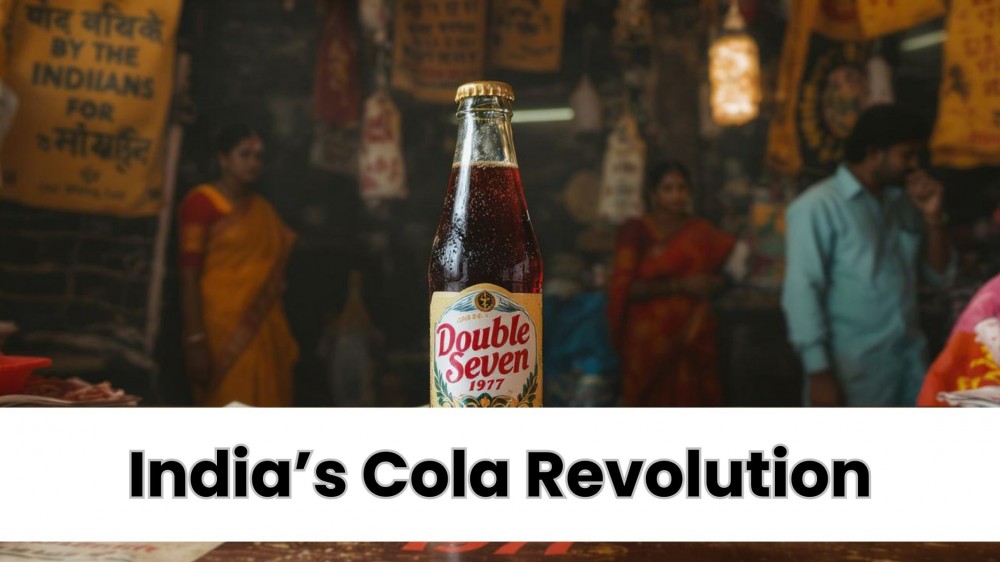
The introduction of Double Seven in 1977 represents a defining chapter in India’s Cola Revolution. Following Coca-Cola’s exit from India due to regulatory and political challenges, the government launched Double Seven as a domestic alternative that embodied national pride and economic self-reliance. More than a soft drink, Double Seven symbolized India’s ambition to compete with global brands while showcasing its manufacturing capabilities under the Janata Party government led by Morarji Desai.
Concept and Naming
Double Seven took its name from the year 1977, marking the end of the Emergency and signaling a new political era. Developed under Modern Food Industries and formulated at the Central Food Technological Research Institute in Mysore, the cola was one of India’s first state-backed consumer products aimed at competing with multinational corporations. This initiative highlighted India’s determination to reclaim market share for domestic brands while promoting self-reliance in the soft drink sector.

Marketing and Patriotic Messaging
Double Seven’s marketing strategy heavily leveraged patriotic sentiment. Advertising campaigns emphasized that the cola was made in India by Indians, appealing to consumers’ sense of national pride. Billboards, posters, and radio ads reinforced the idea that consuming Double Seven was an act of patriotism. The brand aligned itself with the “swadeshi” movement, presenting itself as an Indian alternative to global cola brands, particularly Coca-Cola, and stressing the economic benefits of supporting domestic products.
Competition from Domestic Brands
Despite strong government support, Double Seven faced stiff competition from established Indian cola brands like Thums Up and Campa Cola. These brands had loyal customer bases, robust distribution networks, and flavors that resonated with local consumers. Double Seven struggled to match consumer taste preferences, limiting its ability to capture a significant market share. Brand loyalty and consumer habits created a substantial barrier for the government-backed cola.
Distribution and Accessibility

Distribution posed another challenge for Double Seven. Although the government funded production and marketing, logistics for nationwide availability were limited. Retailers prioritized brands with established demand, leaving Double Seven underrepresented on shelves. Inconsistent availability hindered consumer adoption and prevented the brand from building a strong market presence.
Political Ties and Public Perception
Double Seven’s close association with the Janata Party government influenced public perception. Its success was linked to the political fortunes of the ruling party. As the party’s influence declined in the early 1980s, government support waned. Without sustained backing, the brand struggled to maintain consumer interest and visibility. By the mid-1980s, Double Seven had largely disappeared from stores, unable to compete effectively with both domestic and international competitors.
Cultural and Historical Significance
Although short-lived commercially, Double Seven holds an important place in India’s Cola Revolution. The brand symbolized a bold government attempt to create a homegrown product capable of competing with multinational corporations. It increased public awareness of domestic alternatives and indirectly encouraged innovation, investment, and growth in India’s soft drink sector. Collectors and historians continue to celebrate Double Seven for its unique packaging, flavor, and patriotic messaging.
Lessons Learned
Double Seven’s journey offers key lessons for marketers and entrepreneurs. Patriotic messaging alone cannot guarantee long-term success; factors such as taste, product quality, distribution, and brand loyalty are essential. The cola’s rise and fall demonstrated the importance of understanding consumer behavior and market dynamics, lessons that influenced strategies for both domestic and international beverage launches in India.
Impact on India’s Beverage Industry
Double Seven indirectly strengthened India’s beverage market by highlighting domestic alternatives to multinational brands. Its launch encouraged innovation, investment, and competition among local cola brands. Thums Up, Campa Cola, and other domestic players benefitted from increased consumer awareness, refining their marketing, distribution, and product strategies. Double Seven’s introduction acted as a catalyst for a more competitive and dynamic soft drink market in India.
Strategic Insights
The story of Double Seven illustrates the interplay between politics, regulation, and business strategy. Coca-Cola’s exit created a market gap, and the government’s intervention showed how political objectives can influence commercial initiatives. The brand also highlighted the challenges faced by state-backed enterprises in maintaining consumer interest while competing with private companies that prioritize taste, quality, and distribution.
Double Seven Cola remains a memorable chapter in India’s Cola Revolution. Though it did not achieve lasting commercial success, it symbolized national pride, self-reliance, and political ambition. Its story provides enduring lessons in marketing, distribution, consumer loyalty, and the relationship between politics and commerce. Today, Double Seven is remembered as a pioneering effort to create an indigenous cola brand and a milestone in India’s beverage history.
Read Full Article : https://bizinfopro.com/news/marketing-news/indias-cola-revolution-how-double-seven-replaced-coca-cola/
About Us : BizInfoPro is a modern business publication designed to inform, inspire, and empower decision-makers, entrepreneurs, and forward-thinking professionals. With a focus on practical insights and in‑depth analysis, it explores the evolving landscape of global business—covering emerging markets, industry innovations, strategic growth opportunities, and actionable content that supports smarter decision‑making.





