

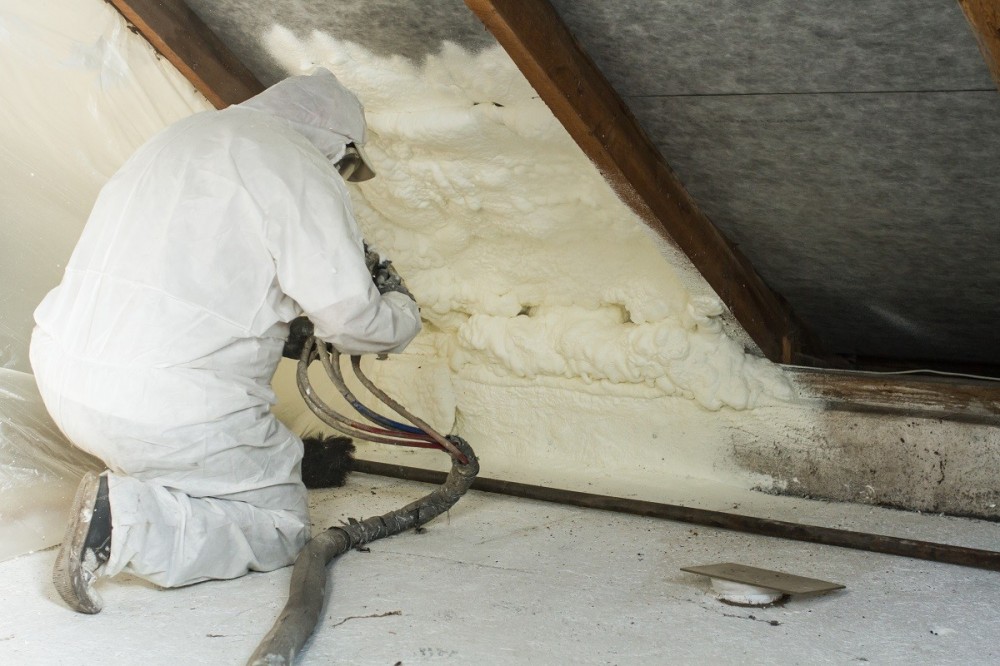
When professionally installed, spray foam insulation has a largely positive and supportive effect on the other materials in a home. It adheres directly to wood framing, sheathing, wiring, and plumbing, creating a solid, monolithic structure. This bond adds significant structural strength to walls and rooflines. Furthermore, closed-cell spray foam acts as an air and moisture barrier, protecting building materials like wood and metal from the damaging effects of humidity and condensation. While its permanence requires consideration for future access to pipes or wires, its primary interactions are protective and reinforcing.
Understanding how this powerful insulating material integrates with the rest of a building is key to appreciating its benefits. The information here is based on extensive field experience from the best spray foam insulation contractor who work with these materials every day and see their real-world performance. This article will explore the specific effects spray foam has on wood, wiring, plumbing, and roofing, providing a clear picture of how it works within a home's systems.
Interaction with Wood Framing and Sheathing
One of the most notable effects of spray foam, particularly the closed-cell variety, is its ability to strengthen the structure of a home. When sprayed into a wall cavity or against a roof deck, it expands and cures into a rigid solid, bonding the studs and sheathing together. Independent lab tests have shown this can increase the racking strength of a wall assembly by up to 300%. This added rigidity can help a home better withstand high winds and other structural stresses.

A common question is whether spray foam can trap moisture and cause wood to rot. This is a valid concern, but it stems from a misunderstanding of how the two types of foam work.
- Closed-Cell Spray Foam: This type is a certified vapor barrier. It is so dense that water vapor cannot pass through it. When applied, it prevents moisture-laden air from reaching the cold sheathing surface in the winter, which is the primary cause of condensation and rot in traditional wall assemblies. The key is that the wood must be dry at the time of installation.
- Open-Cell Spray Foam: This lower-density foam is vapor-permeable, meaning it allows moisture to pass through it. This allows the wood to breathe and dry out should it ever get wet. The choice between open-cell and closed-cell often depends on the climate and the specific application within the home.
In a humid climate like Maryland's, the moisture-blocking properties of closed-cell foam are a significant advantage in preventing mold and decay, but only if the wood is dry when the foam is applied.
Bonus Tip: To ensure this, a professional installer should use a moisture meter to test the wood framing and sheathing. Applying foam over wet wood is one of the biggest sources of installation error and future problems.
Effects on Electrical Wiring and Plumbing

Spray foam is designed to be installed around and in contact with most of the mechanical systems that run through a home's walls and ceilings. Its interaction with them is generally neutral to beneficial.

Electrical Wires
Modern, plastic-sheathed electrical wiring (like the Romex brand common in homes) is fully compatible with spray foam. The foam is chemically inert once cured and will not corrode or degrade the wire's protective jacket. Some people worry that encasing wires in foam could cause them to overheat. However, the National Electrical Code (NEC) has guidelines for running wires through insulated spaces, and standard residential circuits are well within safe operating limits. The superior air sealing provided by spray foam also reduces the amount of humid air that can come into contact with electrical boxes, lowering the risk of corrosion over time.
Plumbing Pipes
The effect on plumbing is almost entirely positive.
- Prevents Freezing: Spraying foam around water supply lines provides excellent insulation, drastically reducing the risk of pipes freezing and bursting in the winter.
- Stops "Sweating": In the summer, cold water pipes can attract condensation, which drips and can cause water damage and mold. Closed-cell foam's moisture-blocking properties prevent humid air from reaching the cold pipe surface, stopping this process.
- Reduces Noise: The foam holds pipes firmly in place, which can dampen the noise and vibration that sometimes occurs (a phenomenon known as "water hammer").
The main consideration with foam and mechanical systems is accessibility. If a wire or pipe needs to be repaired or moved, the rigid closed-cell foam must be cut away to access it. While this is more labor-intensive than moving a fiberglass batt, it's a straightforward task for a professional.
Spray Foam and Roofing Materials
Applying spray foam directly to the underside of a roof deck creates what is known as an unvented attic assembly, or a "hot roof." This has a direct and generally positive effect on roofing materials, especially asphalt shingles.
In a traditional vented attic, the space can get extremely hot in the summer, often exceeding 130°F. This intense heat bakes the shingles from below, accelerating the loss of their protective granules and making them brittle. An unvented attic insulated with spray foam becomes a conditioned or semi-conditioned space, with temperatures much closer to the rest of the house. This dramatically reduces the heat load on the shingles, which can help extend their functional lifespan.
Comparing Attic Insulation Approaches
|
Feature |
Traditional Vented Attic |
Unvented "Hot Roof" Attic |
|---|---|---|
|
Shingle Temperature |
Very high in summer due to super-heated attic air |
More stable, closer to outside air temperature |
|
Energy Efficiency |
Less efficient; HVAC ducts in attic lose energy |
More efficient; ducts are in a conditioned space |
|
Leak Detection |
Leaks may drip and be noticed quickly |
Leaks are contained by foam; may take longer to show |
|
Ice Dam Potential |
High; heat loss melts snow which refreezes at eaves |
Very low; no heat loss through the roof to melt snow |
Bonus Tip: While an unvented attic is a superior design in most cases, a flawless installation is essential. Any air leaks in the foam application could allow warm, moist air from the house to reach the cold roof deck in winter, creating a condensation problem. This critical need for skilled application leads to several other factors a homeowner should weigh before moving forward.
Things to Consider Before Making a Decision
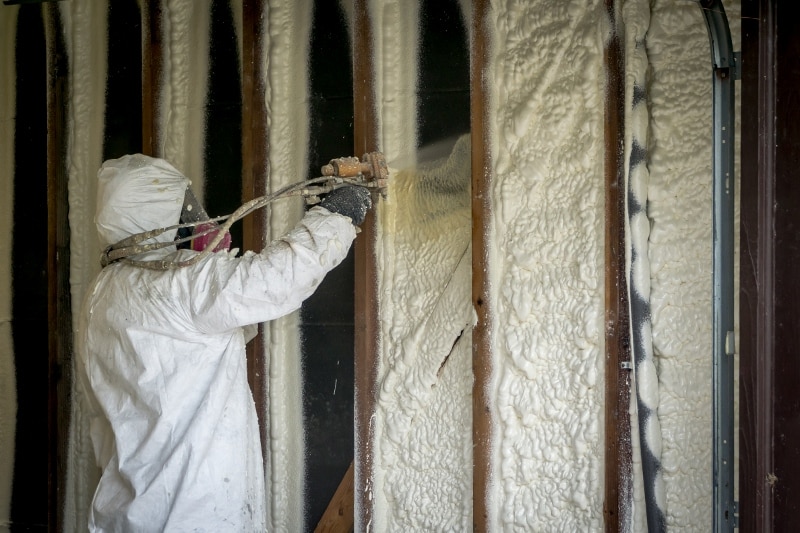
When planning to hire a proper spray foam service, homeowners should consider how it will integrate with their specific home.
The Age and Type of Materials
In very old homes, some materials may not be compatible with spray foam. The most critical example is knob-and-tube wiring, which was designed to dissipate heat into the open air and should never be encased in any type of insulation. A thorough inspection by the insulation contractor is essential.
Your Plans for Future Renovations
Think about any future projects. If you have plans to remodel a kitchen or bathroom, which might involve moving plumbing or electrical lines, you may want to wait to apply spray foam to those specific walls. The long-term energy savings from insulating other areas, like the attic or crawl space, can still be realized.
The Quality of the Installer
The single biggest factor determining whether spray foam's effects are positive or negative is the quality of the installation. A professional, well-trained crew knows how to prepare surfaces, work around mechanicals, and achieve the correct chemical ratio and thickness. Most reported problems with spray foam can be traced back to applicator error.
Questions People Ask About Spray Foam's Effects
Can spray foam be removed?
Yes, it can be removed, but it's a labor-intensive process. Open-cell foam is softer and can be scraped out. Closed-cell foam is rigid and typically needs to be cut out with saws or other tools. It's considered a permanent material, so removal is only done in rare circumstances.
Does spray foam adhere to metal?
Yes, spray foam adheres extremely well to most metals, including steel studs, ductwork, and metal siding. It can help insulate and air seal these highly conductive materials, and it also protects them from moisture and corrosion.
What about recessed lights in my ceiling?
Recessed light fixtures need to be properly prepared before spray foam is applied. Some fixtures are rated "IC" for "insulation contact," meaning foam can be sprayed directly against them. Non-IC rated fixtures require a protective box or cover to be built around them to maintain a safe clearance. An experienced installer will know how to handle this.
Will it make my house too tight?
Spray foam will make a home very airtight, which is excellent for energy efficiency. In some cases, a home can be sealed so effectively that mechanical ventilation, like an energy recovery ventilator (ERV), is recommended to ensure a steady supply of fresh air. This is part of a whole-house approach to building performance.
Does spray foam affect pests?
Spray foam acts as a physical barrier that can deter pests. Rodents and insects cannot easily burrow through or nest in rigid closed-cell foam. It also seals the small cracks and gaps that pests often use to enter a home in the first place.
A Lasting, Integrated Solution
Spray foam insulation does more than just insulate; it becomes an integral part of the home's structure. It strengthens framing, protects pipes and wires, and can even help prolong the life of a roof. While its permanence requires some forethought, its effects on the surrounding materials are overwhelmingly positive, but this success hinges on a knowledgeable professional installation.
Professional Consultation is Key
Because spray foam interacts so closely with a home's other systems, working with a contractor who understands building science is essential for a successful application. They can assess a home's specific materials and structure to ensure the job is done right. For homeowners in Maryland wanting to learn more, a company like Peninsula Insulation provides expert evaluations and can be contacted for a consultation at (410) 770-2624 or via email at wil@mdsprayfoam.net.
Author: Wil Perkins is the founder of Peninsula Insulation and a long-time resident of Easton, Maryland. With a hands-on approach and nearly five years in the insulation business, Wil leads a team known for professional service and quality work. He’s committed to providing the best spray foam insulation solutions and lasting results for every project.
Reviewer: Emily Martinez has 12 years of experience in spray foam insulation. She reviewed this article and suggested ways to make the content more useful for contractors looking to grow their customer base.





