

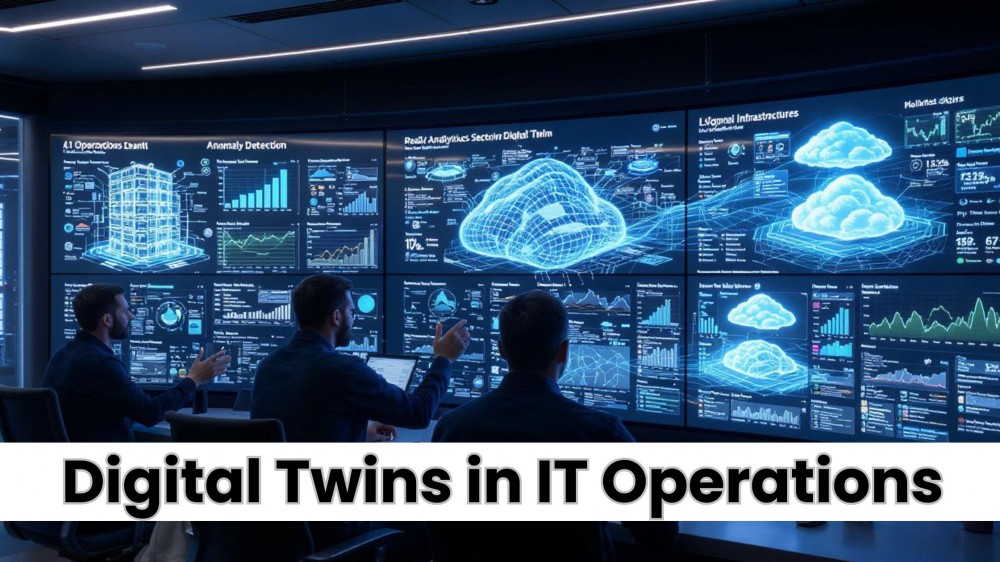
In today’s fast-paced digital world, enterprises need tools that improve efficiency, enhance reliability, and reduce operational risks. One such technology quietly transforming IT landscapes is Digital Twins in IT Operations. By creating virtual replicas of IT systems, networks, and applications, digital twins allow organizations to simulate scenarios, predict failures, and optimize performance. While often invisible to end users, their impact on IT operations is profound, enabling proactive, intelligent decision-making.
Understanding Digital Twins in IT
Digital twins are dynamic digital representations of physical IT systems. They provide real-time insights into system behavior, dependencies, and potential risks. By mirroring the IT environment virtually, digital twins enable IT teams to anticipate challenges, test solutions, and optimize processes. This proactive approach transforms traditional IT management from reactive troubleshooting to predictive, data-driven operations.
Managing Complex IT Ecosystems
Modern IT infrastructures encompass hybrid clouds, edge devices, legacy applications, and interconnected workflows. Managing these complex systems with conventional monitoring tools can be inefficient. Digital twins consolidate data and model interdependencies, giving IT teams a holistic view of the environment. This enables proactive management, issue anticipation, and optimization across the enterprise, ensuring smoother operations.

Predictive Analytics for IT Excellence
Predictive analytics is a core advantage of digital twins. By continuously analyzing historical and real-time data, digital twins can forecast system failures, performance bottlenecks, and resource constraints. For example, a digital twin might identify that a storage system will reach critical capacity during peak hours, prompting preemptive adjustments. This predictive capability reduces downtime and improves business continuity.
Enhancing Cybersecurity
Cybersecurity threats remain a major concern for enterprises. Digital twins allow IT teams to simulate cyberattacks and evaluate defenses in a virtual environment. This proactive approach identifies vulnerabilities, strengthens security measures, and mitigates risk without disrupting live systems. Digital twins provide a strategic advantage by enabling organizations to anticipate and prevent potential threats.
Optimizing Cloud and Hybrid Environments
Cloud and hybrid IT infrastructures present challenges in performance management and cost optimization. Digital twins help IT teams simulate workloads, forecast resource requirements, and optimize deployments across diverse environments. By modeling multiple scenarios, organizations can prevent overprovisioning, reduce costs, and ensure applications perform optimally, enhancing operational agility.
Infrastructure Planning and Scalability
Digital twins transform IT infrastructure planning by allowing virtual testing of expansions, upgrades, and new deployments. This reduces the risk of costly errors and ensures scalability. IT teams can model the impact of hardware additions, application rollouts, and network enhancements, making data-driven decisions that improve efficiency, cost-effectiveness, and strategic alignment.
Transforming IT Service Management
Digital twins enable predictive IT service management. By analyzing system performance and usage trends, IT teams can address issues before they impact end users. This reduces ticket volume, improves user satisfaction, and allows staff to focus on strategic initiatives. Predictive service management ensures IT resources are used efficiently, enhancing overall operational performance.
Sustainable IT Operations
Sustainability is increasingly integral to IT operations. Digital twins monitor energy consumption in data centers, networks, and devices, identifying inefficiencies and optimization opportunities. Reducing energy use lowers operational costs and environmental impact. Integrating sustainability with IT operations supports corporate responsibility objectives while improving efficiency.
Data Integration for Smarter Decisions
Digital twins break down silos by consolidating network logs, application metrics, performance data, and security alerts into a single actionable model. This holistic perspective enables faster, smarter decision-making, optimized resource allocation, and improved cross-departmental collaboration. Enterprises can respond proactively to challenges, enhancing operational excellence and IT performance.
Accessibility Across Enterprises
Initially, digital twins were mainly used by large organizations due to complexity and cost. Advances in AI, IoT, and cloud technologies have made them accessible to mid-sized and smaller enterprises. Scalable digital twin solutions allow organizations of all sizes to leverage predictive management, optimize resources, and enhance operational efficiency, democratizing access to this transformative technology.
Implementation Considerations
Deploying digital twins requires careful planning. High-quality data, seamless integration, and organizational readiness are critical for success. IT teams must adopt AI-driven analytics and embrace a proactive operational mindset. Organizations that overcome these implementation challenges gain a competitive advantage, achieving improved reliability, efficiency, and cost-effectiveness.
Disaster Recovery and Risk Mitigation
Digital twins play a vital role in disaster recovery. By simulating outages, cyberattacks, and system failures, IT teams can test recovery strategies in a virtual environment. This proactive approach ensures business continuity, minimizes downtime, and protects critical systems without impacting live operations, enhancing organizational resilience.
AI-Enhanced Self-Learning Digital Twins
Artificial intelligence strengthens digital twins by enabling continuous learning and adaptive decision-making. AI algorithms analyze data, detect anomalies, and recommend corrective actions automatically. This self-learning capability improves operational efficiency, reduces manual intervention, and creates resilient IT systems capable of adapting to evolving business demands.
Enterprise-Wide Digital Twin Strategy
The ultimate potential of digital twins lies in enterprise-wide adoption. A comprehensive virtual model encompassing all IT systems, applications, networks, and workflows enables real-time insights, predictive analytics, and automated optimization. Organizations embracing this approach gain unparalleled operational agility, efficiency, and resilience, positioning themselves for success in an increasingly digital world.
The Subtle Transformation of IT Operations
Digital twins quietly transform IT operations by monitoring, predicting, and optimizing systems continuously. Employees may not see them at work, but the impact—reduced downtime, optimized cloud usage, enhanced security, and cost savings—is significant. This subtle yet transformative power is reshaping IT strategies across enterprises worldwide.
Strategic Imperative for Modern Enterprises
Digital twins are no longer optional for organizations seeking competitive advantage. They provide predictive insights, optimize resources, enhance security, and align IT operations with broader business objectives. Businessinfopro emphasizes that implementing digital twins in IT operations enables enterprises to build intelligent, resilient, and future-ready IT infrastructures capable of thriving in a hyper-connected landscape.
Read Full Article : https://bizinfopro.com/blogs/it-blogs/how-digital-twins-are-quietly-disrupting-it-operations/
About Us : BizInfoPro is a modern business publication designed to inform, inspire, and empower decision-makers, entrepreneurs, and forward-thinking professionals. With a focus on practical insights and in‑depth analysis, it explores the evolving landscape of global business—covering emerging markets, industry innovations, strategic growth opportunities, and actionable content that supports smarter decision‑making.





