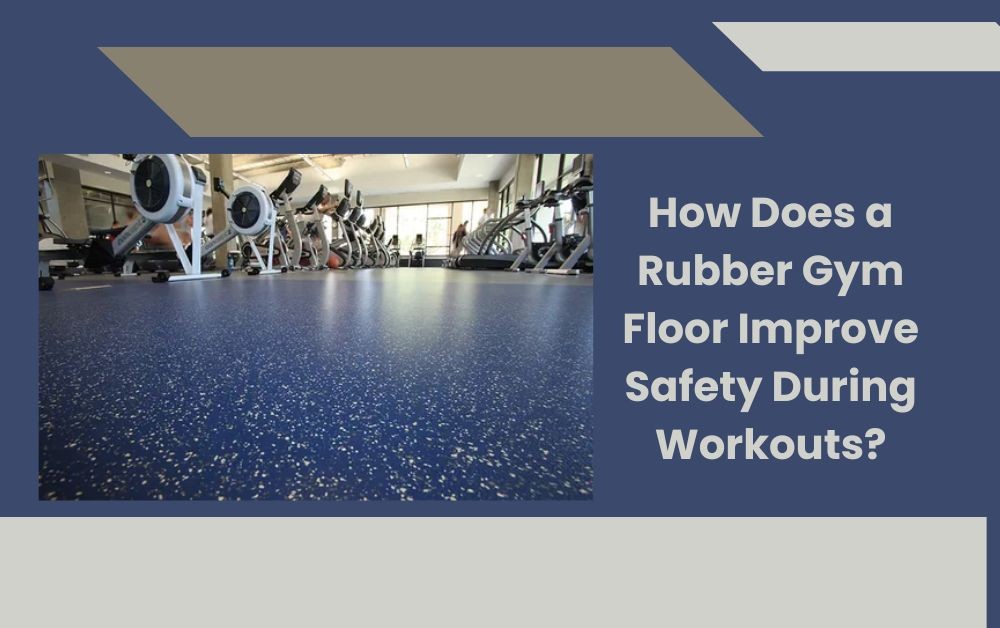
A gym is supposed to be a sanctuary for exercise. Flooring is one of the most important characteristics when it comes to preventing injury and providing a comfortable workout experience. One of the best choices for the underfoot area which we need when it comes to floors in gyms is rubber flooring. Rubber gym floors are popular among home gyms, gymnastics centers and commercial gyms because of their long lasting durability, shock absorption and safety.
In this post, we’ll discuss how a rubber gym floor enhances workout safety and why it represents a wise investment in any fitness environment.
Understanding Rubber Gym Flooring
What Is a Rubber Gym Floor?
A rubber gym floor is a flooring made of either natural or synthetic rubber, which can be sourced from the tires and other sources. Made in tiles, rolls or interlocking mats, it is infinitely versatile and simple to lay. The material is soft but sturdy and has a cushioned surface that absorbs noise while still protecting the floor and particularly your exercise instruments.

Key Features of Rubber Flooring
- Shock absorption for joints and muscles
- Slip resistance to prevent falls
- Durable and long-lasting
- Noise reduction during high-impact exercises
- Easy to clean and maintain
These features make rubber flooring an ideal choice for gyms, where safety is a top priority.
How Rubber Gym Floors Enhance Safety

1. Reduces Impact on Joints
High-impact workouts like running, jumping, or weightlifting can strain your knees, ankles, and back. A rubber gym floor provides cushioning that absorbs impact, reducing stress on your joints and lowering the risk of injuries.
Benefits for Different Exercises
- Cardio workouts: Running or jumping on rubber flooring is softer than concrete or tiles, protecting your knees.
- Weightlifting: Dropping weights on rubber flooring reduces shock and prevents equipment damage.
- Stretching and yoga: Provides a comfortable surface for poses without slipping.
2. Prevents Slips and Falls
A common cause of gym injuries is slipping on hard or wet surfaces. Rubber gym flooring has natural slip-resistant properties, giving you better traction during workouts.
Safety Advantages
- Minimizes the risk of accidents during high-intensity exercises
- Provides grip even if the floor is slightly wet or sweaty
- Keeps equipment stable and prevents sliding during use
This feature makes rubber flooring especially valuable in gyms with heavy activity or multiple users.

3. Provides Shock Absorption
Rubber flooring is designed to absorb shocks from impact. This is particularly important when using heavy weights, kettlebells, or machines. Without a shock-absorbing surface, dropped weights can damage both the floor and the equipment, and may even cause injuries.
How Shock Absorption Protects You
- Reduces the force of impact on bones and muscles
- Prevents joint fatigue during repetitive exercises
- Helps maintain balance and stability
By cushioning every step and movement, rubber flooring improves both comfort and safety.
4. Reduces Noise and Distractions
A noisy gym can be stressful and increase the risk of mistakes. Rubber flooring absorbs sound, reducing noise from jumping, running, or dropping weights.
Benefits of Noise Reduction
- Helps maintain focus during workouts
- Reduces distraction in multi-user gyms
- Creates a calmer and safer environment
A quieter gym is not only more comfortable but also less prone to accidents caused by distractions.
5. Durable and Long-Lasting
A durable floor is a safe floor. Rubber gym flooring withstands heavy traffic, weights, and equipment movement without cracking or wearing out. Unlike other surfaces, it maintains consistent cushioning and safety over time.
Why Durability Matters
- Reduces risk of tripping on damaged surfaces
- Supports heavy machines and equipment safely
- Ensures long-term safety for commercial gyms and home setups
Investing in a high-quality rubber floor means long-lasting protection and fewer hazards.
Tips for Choosing the Right Rubber Gym Floor
1. Select the Right Thickness
Rubber flooring comes in different thicknesses. Thicker mats provide more cushioning and shock absorption, ideal for high-impact areas like weight rooms. Thinner mats may be suitable for cardio zones or light exercise areas.
2. Consider Interlocking Tiles or Rolls
Interlocking tiles are easy to install and replace, while rolls cover larger areas seamlessly. Choose the format based on your gym size and layout.
3. Check Slip-Resistance and Texture
Ensure the flooring has a textured, non-slip surface to maximize safety during workouts.
4. Professional Installation
Professional installation ensures the floor is even, secure, and free of gaps, reducing trip hazards and improving safety.
Conclusion: Rubber Gym Floors Make Workouts Safer
A rubber gym floor mean more than just a fancy look for your workout studio. It cushions joints, saves the floorures from slips, absorbs sound and lasts for years. From home gyms to commercial, rubber flooring investment in comfort and safety.
By selecting the right thickness, design and method of installation you can have a safe, sound, and even cool place for your underneath home workouts.