In the healthcare industry, nurses are constantly racing against the clock. They are always multitasking, handling administrative tasks, patient care, patient check-ins, endless paperwork, medication management, facilitating treatment planning and offering support to patients with restricted mobility. While healthcare sector is leveraging virtual and telehealth services, the foundational care delivery model of nursing remains tethered to conventional model.
This constant workload pressure disrupts a nurse’s work-life balance, leads to medication errors and impacts their overall health. Additionally, the shortage of skilled nurse practitioners has further pressed healthcare industry, creating a significant challenge in managing patients. This is where the concept of virtual nursing emerged as a forward-thinking solution to significant challenges for nurses and streamline care delivery models.
Virtual Nursing: Beyond Bedside Care
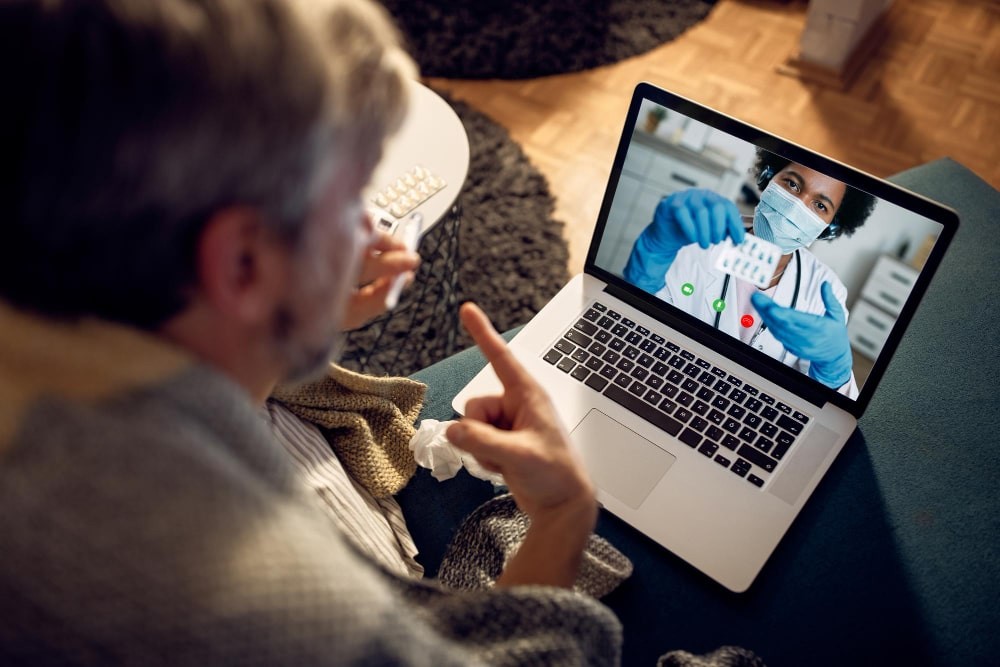
Virtual nursing is a multifaceted approach where nurses offer patient care remotely and help them manage disease conditions. It encompasses a broad spectrum of technologies, including wearable medical devices, video software, mobile apps and the internet of things for virtual consultation. The implementation of virtual nursing helps to streamline workflow by reducing paperwork, manual check-ins and travel to distant locations to offer remote care, specifically for aging patients.

This concept of virtual nursing lets in-person nurses handle other patients who require additional support to perform daily tasks. Moreover, virtual nursing reduces travel time and travel cost, and lower readmission rates, leading to better work-life balance.
Remote Patient Monitoring: Virtual Assistance to Track Vital Health Signs
Virtual nursing platforms also assist in tracking vital health signs of patients to offer remote care. Moreover, these platforms are integrated with AI-powered predictive analytical tools that are useful for identifying subtle changes in the health parameters in real-time. This real-time data interpretation approach helps nurses to personalize care planning before a patient escalates into emergency situation.
- Virtual Consultation: Save Travel Time to Monitor Patients
Specialized nurses can leverage virtual healthcare platforms to offer remote care to the patients in rural areas. This approach saves plenty of time to focus on patients in hospital settings. Moreover, with virtual consultation platforms, nurses can also participate with interdisciplinary healthcare teams for care planning and educating patients about disease management. This not only eliminates traveling but also helps nurses to spend more time in clinical operations to streamline daily care activities.
- Virtual ICUs and Acute Care Support
In digital age healthcare, virtual nurses can also centralize ICUs and offer acute care support. They are well-trained to monitor multiple ICU patients simultaneously, offer real-time support to bedside nurses, verify medications, and remotely assist with documentation. This virtual model improves patient safety, reduces load of documentation on in-person staff and provides critical backup during in-person nursing staff shortages.
- Virtual Assistance for Symptoms Management
Virtual nursing staff work as primary care providers for patients seeking medical advice to manage non-emergent conditions. Platforms, such as chatbots, video conferencing tools, and mobile applications help patients and nurses to coordinate virtually to consult about disease symptoms and receive appropriate levels of care from nurses. This new model of virtual assistance reduces unnecessary hospitals visits and empowers nurses to provide optimal care to the patients in a timely manner. Moreover, it also helps to share vital health information to educate patients about chronic conditions and symptom management independently at home.

- Post-Discharge and Transitional Care: Speed Up Patient Recovery
Patients after discharge also require nursing support to speed up recovery process. Virtual nurses also play a significant role in offering transitional care by connecting through communication tools. With these virtual assisting models, nurses can also address certain barriers that may slow down patient’s recovery. The virtual assistance not only speeds up recovery process but also helps to avoid unnecessary hospital visits.
- Mental Health and Behavioral Support
Patients with cognitive disabilities require psychiatric support to improve their cognitive function and lead a quality life. Owing to the patient’s cognitive disabilities, nurses are required to provide therapies in remote areas, which can be challenging sometimes. In such scenarios, virtual platforms provide a secure system for nurses to deliver essential behavioral support, conduct therapy sessions and help patients manage medication. These platforms make mental healthcare services more accessible to patients for behavioral and mental health support.
Virtual Nurses: Future Trends Shaping Nursing in 2026
Beyond clinical support, the virtual nursing model is continually evolving to meet modern healthcare requirements. In the future, artificial intelligence and predictive analytical tools will become more prominent in virtual nursing models to offer evidence-based care recommendations to the patients. However, the focus will be on enhancing interoperability to facilitate secure data exchange between healthcare systems, platforms, and devices. In addition, the major emphasis will be on training nursing with advanced telehealth practices, virtual care models and advanced communication technologies to upskilling nurses in virtual assessment and technology utilization.
Contributor Name
Name: Gunjan Bedi
Author Bio Data: Gunjan Bedi is a seasoned medical content writer with diverse writing experience spanning more than 5 years of experience. Her medical science background, including master’s in medical microbiology and bachelor’s in biotechnology has provided her with a solid mindset to understand latest research, innovation, and technology upgradation in healthcare industry. Throughout her professional journey, she have had the privilege of writing piece of medical contents and continue to unwind more opportunities in future.