

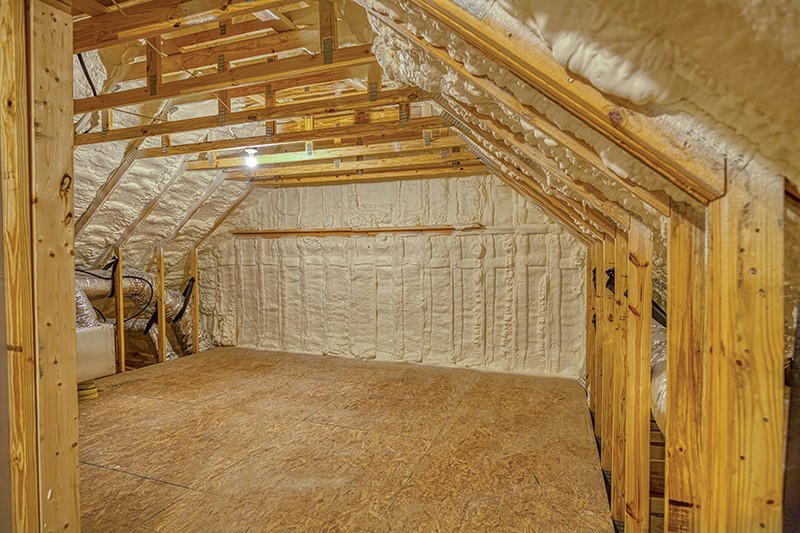
At its heart, residential spray foam insulation is the product of a simple chemical reaction with powerful results. It begins as two separate liquid components, an isocyanate and a polyol resin, which are stored in different containers. When these two liquids are mixed together under specific heat and pressure, they react instantly to create polyurethane foam. This foam expands rapidly, sometimes up to 100 times its original volume, before hardening into a solid, durable mass. It is this expansion process that allows the foam to flow into every crack, gap, and crevice, creating a continuous, airtight barrier that insulates and seals a home in a single step.
To understand its effectiveness, it's helpful to look at the science behind the expansion, the key differences between the two main types of spray foam, and how its unique structure keeps a home comfortable and energy-efficient. This explanation, guided by information from experienced insulation technicians, breaks down the process in easy-to-understand terms.
The Chemical Reaction That Builds the Barrier
The creation of spray foam insulation is a carefully controlled on-site manufacturing process. Here’s a step-by-step look at what happens:

- Preparation: The two liquid components are kept in separate, heated drums. Hoses run from these drums to a proportioner, a machine that ensures the liquids are heated to the correct temperature (often between 120-140°F) and mixed at a precise one-to-one ratio.
- Mixing: The heated liquids travel through the hoses to a spray gun. They remain separate until the exact moment they are sprayed from the nozzle, where they are mixed together.
- Expansion and Curing: The chemical reaction begins the instant the two components meet. This reaction is exothermic, meaning it generates its own heat. The heat turns a liquid blowing agent within the polyol resin into a gas, creating bubbles that cause the foam to expand. Within seconds, the foam expands and sticks to the surface, and within a few minutes, it cures, becoming a hard, stable plastic.
The precision of this process is why spray foam insulation must be installed by trained professionals. An incorrect temperature or an "off-ratio" mix can result in a foam that doesn't cure properly, leading to poor performance.
Open-Cell vs. Closed-Cell: The Microscopic Difference
Not all spray foam is the same. The two primary types, open-cell and closed-cell, have different cellular structures that give them very different properties.
Open-Cell Foam
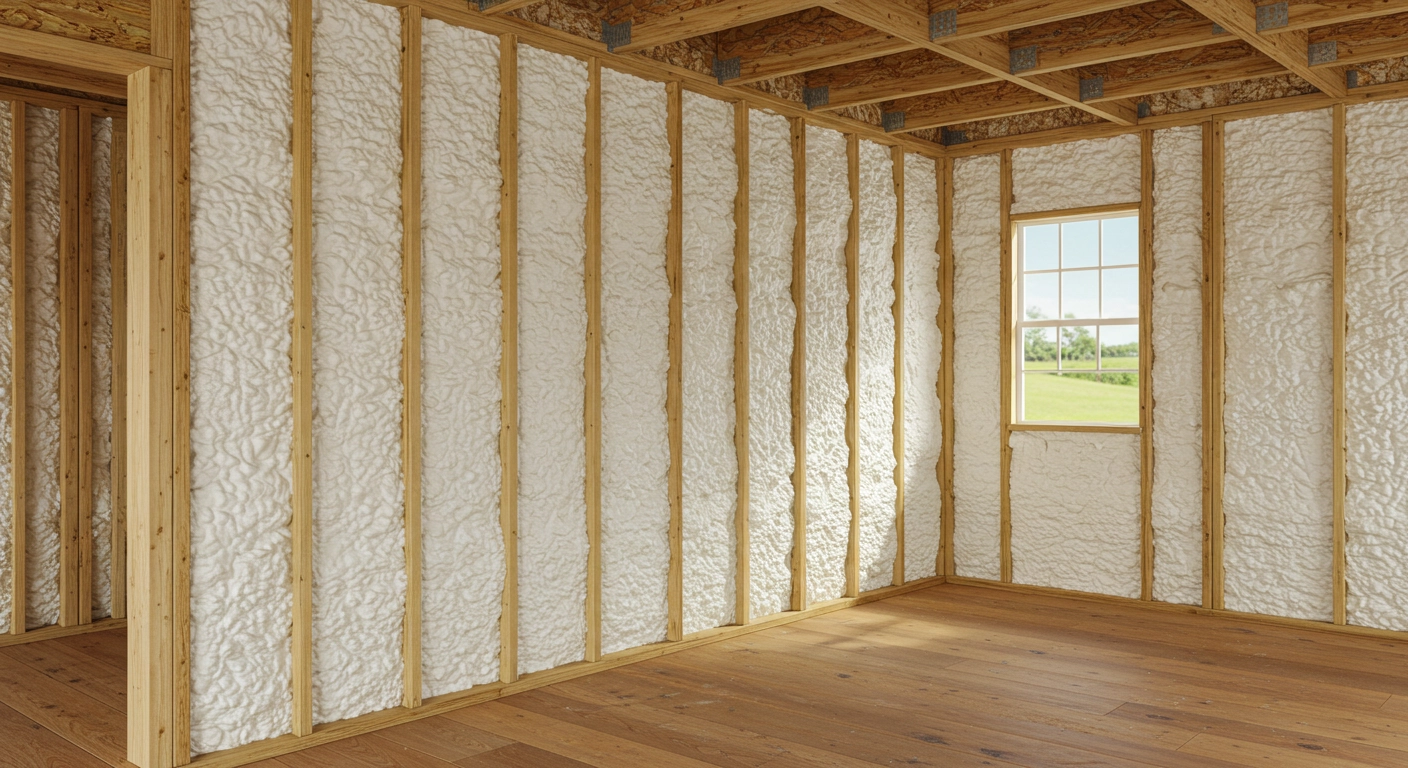
Imagine a sponge. The tiny cells in open-cell foam are intentionally left open or "broken." This makes the foam soft, light, and flexible. Because the cells are open, air fills them, which gives the foam its insulating properties. This structure also allows water vapor to pass through it, meaning the foam is vapor-permeable. It's an excellent sound absorber due to this soft, spongy texture.
Closed-Cell Foam
In closed-cell foam, the cells are completely sealed and packed tightly together. Instead of being filled with air, these cells are filled with a special gas called a blowing agent. This gas is a much poorer conductor of heat than air, which is why closed-cell foam has a much higher R-value per inch. The closed-cell structure also makes the foam rigid, strong, and completely resistant to water, effectively making it a vapor barrier.Bonus Tip: The vapor permeability of open-cell foam can be a benefit in some situations. If a leak ever occurs in a wall, open-cell foam will allow the water to pass through, revealing the leak. Closed-cell foam would block the water, potentially trapping it and hiding the problem.

Key Scientific Differences at a Glance
This table breaks down the main distinctions between the two types of foam.
|
Characteristic |
Open-Cell Spray Foam |
Closed-Cell Spray Foam |
|---|---|---|
|
Cell Structure |
Cells are open and interconnected |
Cells are closed, sealed, and gas-filled |
|
Density |
Low (~0.5 lbs per cubic foot) |
High (~2.0 lbs per cubic foot) |
|
R-Value (per inch) |
~R-3.8 |
~R-6.5 to R-7.0 |
|
Vapor Permeability |
Permeable (lets vapor pass through) |
Impermeable (blocks vapor) |
|
Physical Texture |
Soft, flexible, and spongy |
Hard, rigid, and dense |
How Foam Stops the Three Types of Heat Transfer
Heat moves in three ways: conduction, convection, and radiation. An effective insulation needs to address all three.
- Conduction: This is heat transfer through direct contact. The plastic material of the foam itself is a poor conductor of heat, and the gas trapped in the foam's cells is an even poorer one. This combination significantly slows down conductive heat transfer.
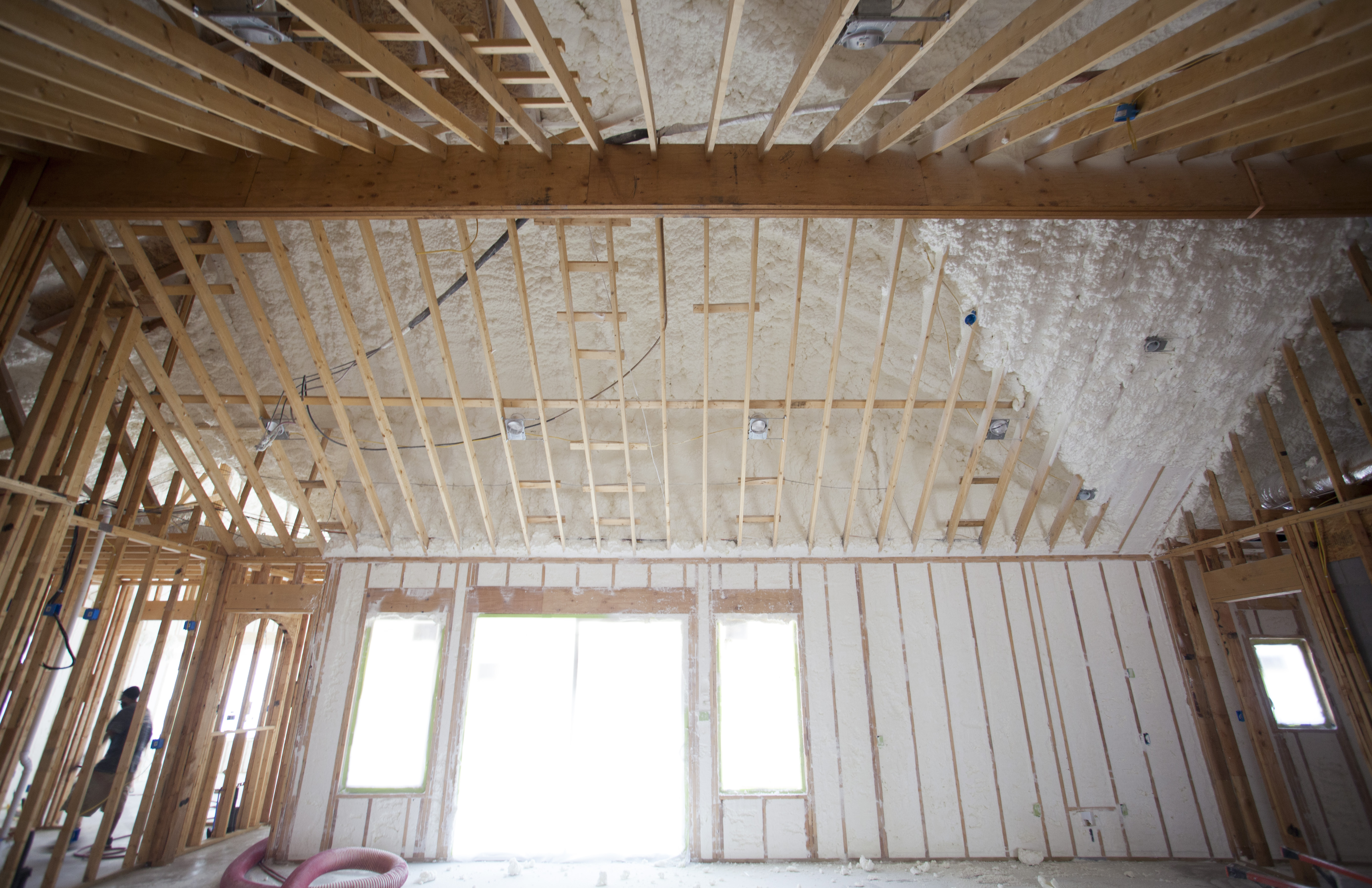
- Convection: This is heat transfer through the movement of air. This is where spray foam truly excels. By expanding to fill every gap, it creates an airtight seal that stops air movement, or convective loops, within a wall cavity. This is a major scientific advantage over traditional insulation like fiberglass, which can't stop airflow.
- Radiation: This is heat transfer through electromagnetic waves, like the heat you feel from the sun. While spray foam is not a dedicated radiant barrier, its solid, opaque surface does help to block some radiant heat.
Things to Consider Before Making a Decision
With this science in mind, it's clear that the final result is more than just the material itself. Here are a few technical points to consider that ensure a successful application and help you make an informed choice.
- The Critical Role of the Installer: The quality of the final product depends entirely on the skill of the installation crew. They are essentially manufacturing a chemical product inside your home. Ensure any contractor you consider has certified, experienced technicians.
- Substrate Condition: For the chemical reaction to work perfectly, the foam needs to be applied to a surface that is clean, dry, and within a certain temperature range. A professional crew will measure the moisture content and temperature of the surfaces before they begin spraying.
- Choosing the Right Foam for the Job: The science dictates the application. The high R-value and vapor barrier properties of closed-cell foam make it the right choice for basements, crawl spaces, and areas where space is limited. The sound-dampening and vapor-permeable nature of open-cell foam make it a great choice for interior walls and some attic applications.
- Modern Blowing Agents: The blowing agents used in closed-cell foam have evolved. The industry has moved away from older agents with high global warming potential to new HFO (hydrofluoroolefin) blowing agents that are much more environmentally friendly.
Bonus Tip: Ask your installer what type of blowing agent their closed-cell foam uses. A contractor who uses modern, low-GWP HFO agents is demonstrating a commitment to current industry best practices.
Questions People Ask About Spray Foam Science
What is R-value and why is it higher in closed-cell foam?
R-value is a measure of thermal resistance, or the ability to stop heat transfer. The R-value of closed-cell foam is higher because the trapped blowing agent gas is a far better insulator than the air that fills the cells of open-cell foam.
Does the foam shrink after it's applied?
When installed correctly by a professional, high-quality spray foam should show negligible shrinkage. Significant shrinkage is usually a sign of an improper chemical mix or poor application conditions.
Is the cured foam toxic?
No. Once spray foam has fully cured (typically within 24 hours), it becomes an inert, stable plastic. It is considered safe and does not use off-gas. The safety concerns are primarily related to the installation period, when the chemical components are still airborne.
Can spray foam be applied in the winter?
Yes, but professional installers need to take extra precautions. They often use specific foam formulations designed for colder temperatures and may need to tent and heat the work area to ensure the substrate is warm enough for the foam to adhere and cure correctly.
What does it mean for foam to be a "monolithic" barrier?
Monolithic means it forms a single, continuous, solid piece. Because it's sprayed on as a liquid, it has no seams, joints, or gaps. This is what makes it so effective as an air and moisture barrier compared to materials that are installed in pieces, like batts or boards.
From Liquid to Superior Insulation
The science of spray foam insulation is a fascinating example of chemistry at work. By combining two liquids to create a rapidly expanding solid, it forms a custom-fit barrier that provides exceptional thermal performance and air sealing. While understanding the basics of this process is helpful, applying it correctly requires professional expertise.
Consult with an Insulation Expert
To see how the science of spray foam can be applied to your specific home, it’s best to speak with a professional. An expert can assess your property and explain which type of foam is best suited for your climate and building structure. For homeowners looking for a detailed consultation, companies such as Nevada Urethane have knowledgeable teams that can provide a thorough evaluation and answer any technical questions. Their specialists can be reached by email at ihpfoam@gmail.com or by phone at (775) 500-0024.
Reviewer: Maria Lopez offered detailed feedback after reviewing this post. Her 10 years of experience in spray foam work helped guide the tone and suggestions toward realistic strategies.





