
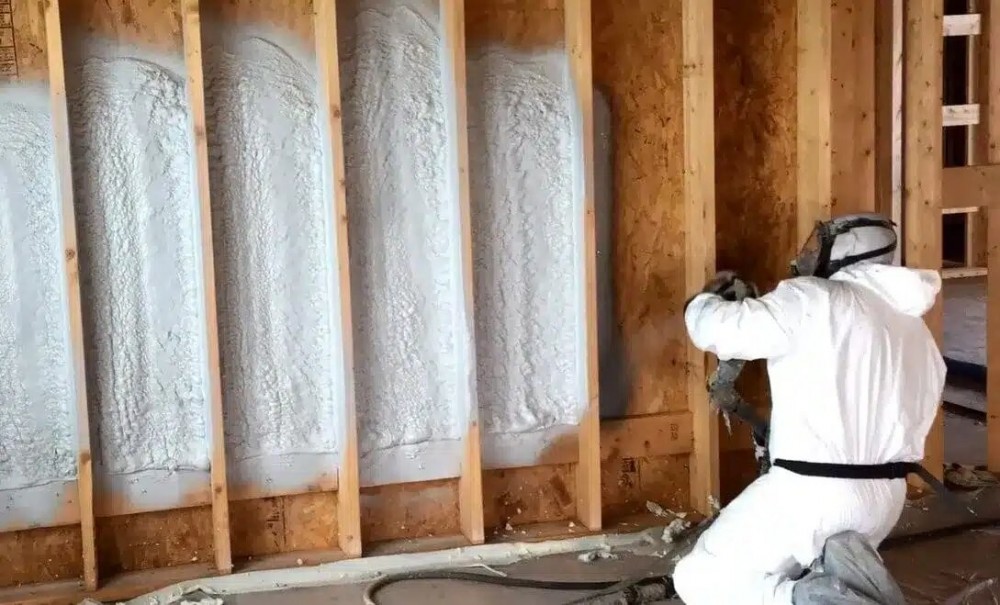
Closed-cell spray foam keeps energy bills down for years by providing a powerful defense against energy loss that doesn't degrade over time. It combines a high R-value for thermal resistance, a rigid structure for an airtight seal, and a waterproof composition that prevents moisture damage. This all-in-one application of an insulator, air barrier, and vapor barrier ensures a home performs at peak efficiency for decades.
Unlike traditional materials that sag or settle, closed-cell foam is an inert, stable material, making its long-term reliability the key to sustained energy savings. Drawing from extensive building science knowledge, this article will detail the specific features of closed-cell foam that create these lasting financial benefits for homeowners.
Three Functions in a Single Application
The long-term savings from closed-cell foam come from the fact that it performs three separate jobs simultaneously, all of which are critical for an energy-efficient home.

- A High-Performance Insulator: Closed-cell foam has one of the highest R-values per inch of any commercially available insulation, typically ranging from R-6 to R-7. This means it provides more insulating power in less space. In a standard 2x4 wall, it can deliver a much higher R-value than fiberglass batts, significantly reducing conductive heat loss in the winter and heat gain in the summer.
- An Impenetrable Air Barrier: Air leakage is a massive source of energy waste. The Department of Energy has stated that uncontrolled air leaks can account for up to 40% of a home's heating and cooling costs. Closed-cell foam expands and adheres to the building structure, creating a solid, continuous seal that stops air movement completely. This airtightness is a huge factor in reducing the workload on an HVAC system.
- A Built-In Vapor Barrier: The closed, dense cell structure of this foam makes it impermeable to water vapor. This prevents moisture from the inside of the home from getting into the wall cavities during the winter, where it could condense and cause mold or rot. By protecting the structural integrity of the home, it prevents costly future repairs. A dry building is also a more efficient and durable building.
Performance That Lasts a Lifetime
One of the biggest differences between closed-cell foam and other insulation is its longevity. Many traditional materials see their performance decline over the years, which means energy bills can slowly start to creep back up.
- Fiberglass Batts can sag and pull away from the framing over time, creating gaps that let air pass through. If they get wet, they compress and lose a significant portion of their R-value permanently.
- Blown-in Cellulose can settle and compact over decades, reducing its depth and creating uninsulated voids at the top of wall cavities.
Closed-cell spray foam insulation, once cured, is a rigid, stable plastic. It doesn't shrink, settle, or absorb water. The R-value and airtight seal it provides on the day it's installed will be the same decades later. This consistency is what locks in the energy savings for the entire life of the home.
Long-Term Performance Comparison
This table clearly shows the durability advantages of closed-cell spray foam.
|
Feature |
Closed-Cell Spray Foam 
|
Fiberglass Batts |
Blown-in Cellulose |
|---|---|---|---|
|
R-Value Stability |
Highly stable; minimal change over lifetime. |
Can degrade significantly if compressed or wet. |
Can degrade if it settles or gets saturated. |
|
Air Sealing Integrity |
Permanent air seal that does not degrade. |
Does not provide an air seal; susceptible to gaps. |
Settling can create new air leakage paths over time. |
|
Moisture Resistance |
Waterproof; acts as a vapor barrier. |
Absorbs water; promotes mold when wet. |
Can absorb water; risk of compaction and mold. |
|
Expected Lifespan |
Lifetime of the building. |
15-20 years before performance may decline. |
20-30 years before settling may become an issue. |
Structural Integrity Adds Hidden Value
Beyond its superior insulation performance, another way closed-cell foam contributes to long-term savings is by adding structural strength to the building. Its rigid nature and strong adhesion to the framing and sheathing can increase the racking strength of a wall by up to 300%. This makes the entire building stronger and more resistant to damage from high winds or seismic events.
While this doesn't show up on a monthly energy bill, it provides incredible long-term financial value by protecting the home from damage that could lead to extremely expensive repairs. It's a hidden benefit that contributes to a home's overall durability and low cost of ownership.
Bonus Tip: This added strength is particularly valuable in modern construction that might use advanced framing techniques with less lumber. The spray foam helps to compensate for this, creating a stronger and more efficient wall assembly.

Things to Consider Before Making a Decision
- Higher Upfront Cost: Homeowners should anticipate that closed-cell spray foam is a premium product with a higher initial cost than traditional insulation. This should be viewed as a long-term investment, as the significant monthly energy savings often provide a return in just a few years.
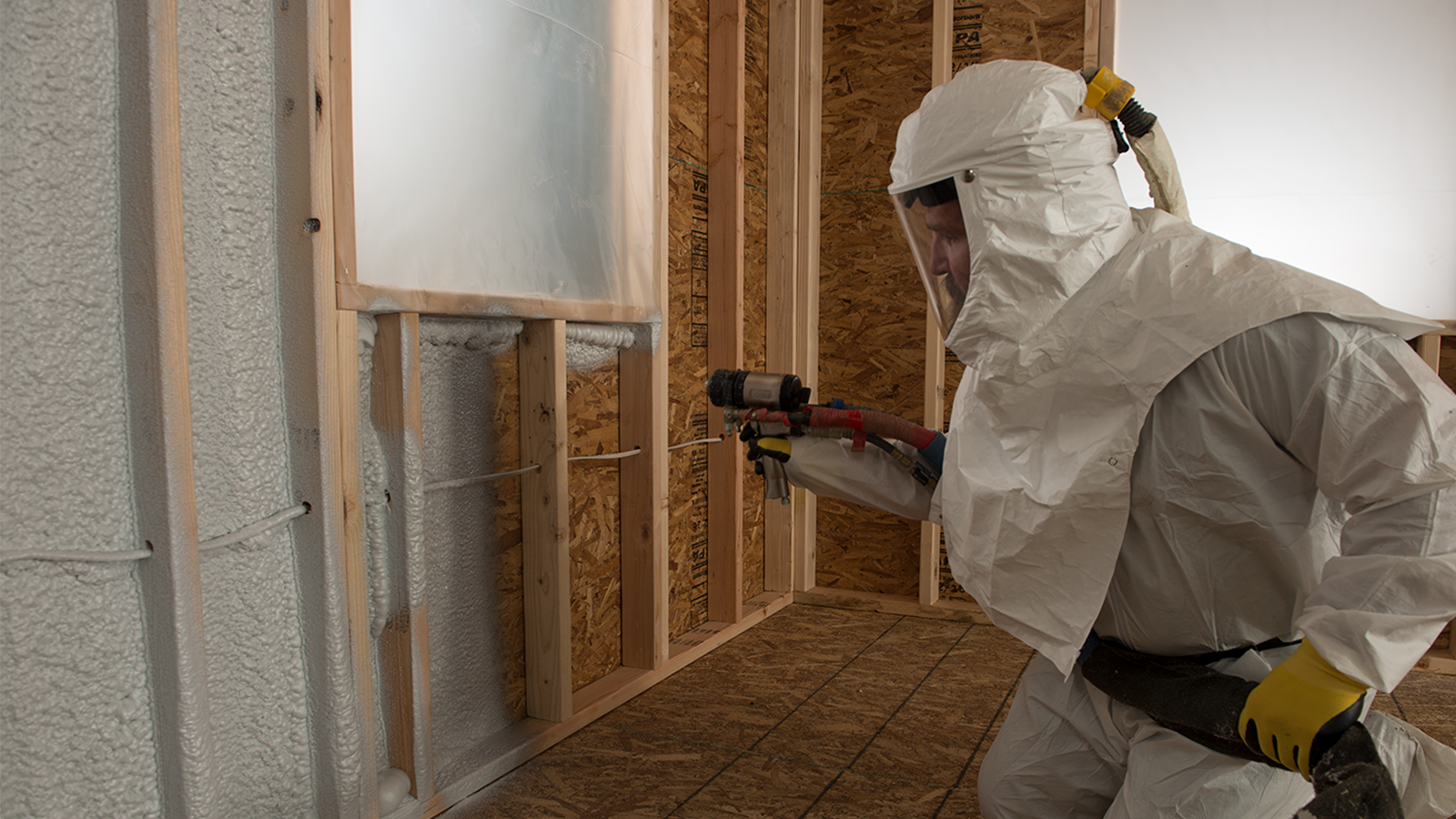
- The Importance of a Professional Installer: The final results are entirely dependent on the quality of the installation, as the chemical mixture and application technique must be precise. Homeowners should only work with certified, insured contractors who have a proven history of successful projects.
- Not a DIY Project: Applying spray foam is a complex chemical process requiring specialized equipment and extensive safety training, unlike installing fiberglass batts. For this reason, it should never be attempted as a DIY project.
Bonus Tip: Ask a potential contractor about their equipment and training. A professional company will be transparent about their crew's certifications and the quality of their machinery, which is essential for a good outcome.
Questions People Ask About Long-Term Savings
How much can I actually expect to save on my energy bills?
Savings vary depending on the home's size, age, and location, but many homeowners report saving 30-50% on their heating and cooling costs after installing closed-cell spray foam.
Will closed-cell foam ever need to be replaced or topped up?
No. It is a permanent solution. Once installed, it is designed to last for the entire life of the building without any maintenance or additional application.
Does it lose its R-value over time?
There can be a very small initial drop in R-value in the months after installation as some of the blowing agent escapes the cells, but the R-value then stabilizes and remains consistent for decades. The long-term performance is extremely reliable.
Can it be installed in an old house?
Yes, it is an excellent choice for retrofitting older homes, especially in areas like crawl spaces, basements, and attics. It can help solve many of the draftiness and moisture issues common in older construction.
Does it help with my home's resale value?
Absolutely. A home that can be marketed as highly energy-efficient, with documented low utility bills, is very attractive to modern buyers. The investment in spray foam can often be recouped at the time of sale.
Getting a Professional Analysis
The best way to understand the potential long-term savings for a specific home is to have a professional assessment. An insulation expert can evaluate the property, identify the biggest sources of energy loss, and provide a clear estimate of both the project cost and the expected return on investment through energy savings.
The team at Supreme Spray Foam-Fresno can provide expert consultations. They can be reached for more information by email at info@supremesprayfoamfresno.com or by phone at (559) 545-0800.
Reviewer: Emma Robinson contributed her knowledge from 8 years working with the spray foam industry. Her review helped ensure the content addresses the practical questions of both contractors and homeowners.





