

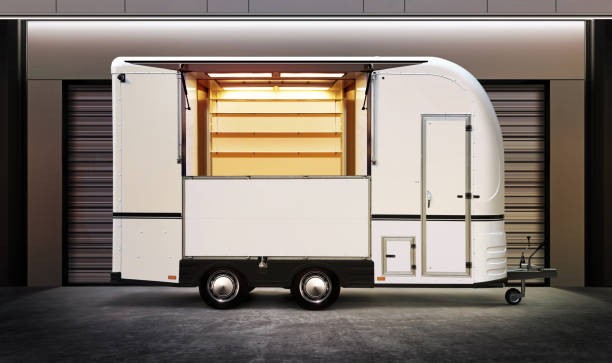
Got a buddy who bought a food trailer last year. Beautiful thing—looked like something off Pinterest. Custom paint job, LED strips, the works. Three months later? Sitting in his driveway with a busted axle and rust creeping up the wheel wells.
Spent more on repairs than he made selling burgers. Ouch.
That's the problem nobody talks about when you're shopping for these things. Everyone's focused on the Instagram aesthetic. How many outlets you got, what color's the awning, can we fit a soft-serve machine in there? Sure, those things matter. But if your trailer can't actually do its job—moving around and holding up under pressure—you've basically bought an expensive mistake.
When folks start looking into food truck customization, they get sucked into the fun stuff immediately. Logos, menu boards, interior layouts. That's where the excitement is. But the foundation? The boring mechanical stuff? That's where businesses actually succeed or completely fall apart.
Moving Your Kitchen Shouldn't Feel Like Work
Here's what I mean about mobility being crucial.
You ever try towing something that wasn't balanced right? It's miserable. Sways all over the place, feels sketchy at highway speeds, makes you grip the wheel like you're wrestling an alligator. Now imagine dealing with that every single time you need to move your business.
Some trailers pull smooth as butter. Hook 'em up, barely know they're back there. Others? Nightmare fuel from day one.
The weight thing trips people up constantly. They load up every piece of equipment they can dream of, don't think about distribution, and suddenly they've got a setup that's illegal to tow without special licensing. Or worse—legal on paper, but sketchy as hell on actual roads.

And let's talk about getting into spots. Farmers markets, street festivals, parking lots behind breweries—these aren't truck stops with acres of space. You're backing into tight areas, sometimes with crowds watching, often with other vendors giving you about six inches of clearance.
If your trailer's too long, too wide, or handles like a cargo ship? You're gonna have a bad time. Miss out on good spots because you literally can't fit. I've watched it happen.
Good mobility means you show up to opportunities. That festival three towns over that pays premium rates? You can go. Corporate lunch event with short notice? Done. Your regular spot gets double-booked? Find another one quick. Bad mobility means you're stuck, limited, making excuses why you can't make money.
Durability Separates Winners from Broke Folks
Now durability—this is where people get absolutely wrecked.
First few weeks, everything seems fine. Then reality hits. Temperature swings mess with materials. Moisture gets into places it shouldn't. Road vibration loosens things you didn't know could loosen. Grease finds its way onto surfaces you swear you cleaned.
Cheap trailers start showing cracks fast. And I don't just mean cosmetic stuff—though that happens too. I mean structural problems. Seams splitting. Floors getting soft. Electrical systems acting weird because moisture got where it shouldn't be.
Met a lady at a food truck rally last summer. She'd bought from some manufacturer I won't name (but they were cheap, that's for sure). Floor started rotting after eight months. EIGHT MONTHS. Turned out they used regular plywood instead of marine-grade materials. Every time she cleaned, water soaked in bit by bit. By the time she noticed something was wrong, the damage was serious.
Cost her almost as much to fix as she'd paid for the original build. Plus all the lost revenue being shut down.
That's the hidden cost of going cheap. Yeah, you save four or five grand upfront. Then you're hemorrhaging money on repairs, losing work days, dealing with stress you didn't sign up for. False economy—that's what my dad would call it.
Quality materials cost more, period. Stainless steel that's actually thick enough. Welds done by someone who knows what they're doing, not some apprentice's first week on the job. Proper insulation. Sealed seams that actually keep weather out.
Think about what these trailers endure though. Hot grills running for hours. Cold storage right next to those hot areas. Constant moisture from cooking, cleaning, condensation. Slamming doors. Equipment vibrating. Then you hitch up and bounce down the road, subjecting everything to forces it wasn't designed for—if the builder cut corners.
Where Most Folks Mess Up
The biggest mistake? Shopping on price alone.
Can't even count how many times I've heard: "Found one for $8,000 less than everyone else!" Cool. What's it made from? Who built it? What's the warranty situation? Can you actually get parts if something breaks?
Crickets.
Look, I understand budgets are real. Starting a mobile food business isn't cheap, and every dollar counts. But there's a difference between being smart with money and being penny-wise, pound-foolish.
Trailers that move right and last aren't accidents. They're engineered that way. Proper frame construction. Axles rated for the actual weight, not just barely enough. Suspension that handles real-world roads, not just smooth parking lots. Materials chosen for the specific hell that is food service.
When you're comparing concession trailer manufacturers, don't just look at photos and prices. Dig deeper. What's the frame made of—steel or aluminum, and what grade? How thick is the exterior metal? Are the seams welded or riveted? What about the floor—is it actually waterproof or just "water-resistant" (huge difference)?
Ask about their failure rate. How often do units come back for repairs? What typically breaks first? A good manufacturer will tell you honestly. Sketchy ones will dodge the question.
What Actually Matters
End of the day, your trailer is your business.
Can't make money if you can't get to where customers are. Can't build a reputation if you're constantly closed for repairs. Can't scale up if your equipment's falling apart and eating your profits.
Mobility and durability sound boring compared to talking about menu concepts and branding. Nobody's posting excited Instagram stories about axle ratings and steel gauges. But this stuff determines whether you're still in business two years from now or selling a broken-down trailer on Craigslist at a massive loss.
Seen both outcomes plenty of times. The folks who invested in quality from the start? They're out there crushing it, expanding to second units, making real money. The ones who went cheap and hoped for the best? Half of them aren't around anymore.
Build on a solid foundation—literally. Get something that moves when you need it to and holds up under real conditions. Then worry about making it look cool. That order matters more than people think.





