
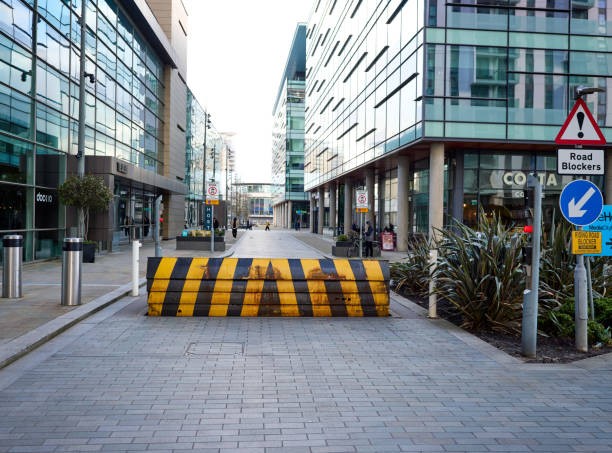
Cities are living, breathing organisms, constantly evolving in response to population growth, technological advances, and societal needs. One of the most fascinating trends reshaping urban life is the use of expanding barriers.

These dynamic structures are no longer just physical obstructions—they are tools that influence traffic flow, pedestrian safety, public interaction, and even city aesthetics. You might pass by one every day without realizing the immense impact it has on urban spaces.
Here’s the thing: expanding barriers are redefining how we experience cities. From retractable bollards that protect pedestrian zones to modular crowd control systems at major events, these innovations are changing the rules of urban design and safety management.
The Rise of Expanding Barriers in Urban Planning
Urban planners and city designers are increasingly incorporating flexible barriers into their projects. Unlike traditional fixed barriers, expanding barriers offer adaptability. They can be lowered, retracted, or extended based on situational needs. For instance, the city of Rotterdam recently deployed modular barriers at busy intersections that can adjust during rush hours to reduce congestion while maintaining pedestrian access.

Believe it or not, these barriers do more than manage traffic—they guide human behavior. Pedestrians who waited before crossing at signalized intersections were 32 times more likely to comply and cross during the "Walk" interval compared to those who did not wait.That’s a substantial improvement in safety metrics for busy urban centers.
Singapore’s Smart Retractable Bollards Case Study
If there’s one city that knows how to blend technology with everyday life, it’s Singapore. In the bustling business district and lively entertainment zones, the city has introduced smart retractable bollards—and they’re doing more than just managing traffic.
These intelligent barriers are connected to Singapore’s central traffic management system, allowing the city to instantly switch gears. Need a car-free zone for a festival, parade, or busy pedestrian rush hour? The bollards rise from the ground, turning streets into safe, walkable spaces. When things quiet down, they lower back into place, letting delivery vans and emergency vehicles move freely again.
It’s a brilliant example of how Singapore’s urban planning keeps things both secure and flexible—keeping people safe, spaces lively, and the city ready to adapt at a moment’s notice.
Applications Beyond Traffic Control
Expanding barriers are no longer confined to streets and sidewalks. They play a critical role in:
- Event management: Stadiums, festivals, and public gatherings use modular barriers to control crowd movement efficiently.
- Public spaces: Parks, plazas, and waterfronts employ barriers to create flexible zones that can shift between open access and controlled areas.
- Security: Sensitive government buildings and corporate campuses use barriers to deter unauthorized access while maintaining aesthetic appeal.
- Emergency response: Barriers can be deployed quickly to redirect traffic or secure areas during natural disasters, accidents, or public safety incidents.
- Urban aesthetics: Decorative retractable barriers integrate design with function, enhancing the look and feel of streets, squares, and pedestrian zones.
A fun fact: some expanding barriers are even integrated with smart sensors and cameras, allowing city authorities to monitor real-time usage and automatically adjust configurations. Safetyxpress noted that this not only improves safety but also maximizes operational efficiency.
Lessons from Industry Experts
Quote from Sam Schwartz - “We should use our streets in a smart way temporally. We should think of the street of the future as one that does change during the day, during the day of the week, during the season, and we should use some technology and human power combined to make it happen.”
His observation aligns with broader trends in urban design. Cities are moving away from the fixed street grid to embrace adaptive infrastructure capable of maximizing utility and reducing congestion. Locations employing smart signals and temporary lane management—often driven by real-time data—are setting the standard for how cities can become more resilient and responsive to the needs of people.
Actionable Insights for City Planners and Designers
Here’s the cool part: cities looking to adopt expanding barriers can take specific steps to maximize their impact:
- Assess high-traffic zones: Identify areas with pedestrian congestion, frequent vehicle-pedestrian conflicts, or event-heavy locations.
- Select the right barrier type: Retractable bollards, modular fences, or hydraulic barriers all serve different purposes. Match the design to the urban context.
- Incorporate technology: Smart sensors and IoT-enabled barriers allow real-time monitoring and adaptive adjustments.
- Engage the community: Inform residents and businesses about barrier implementation to ensure smooth adoption.
- Pilot before deployment: Test barriers in smaller areas first to observe effectiveness and gather feedback.
- Regular maintenance: Keep mechanical parts, sensors, and electronic systems in top condition to avoid failures.
- Integrate signage: Clear instructions and visual cues help pedestrians and drivers navigate safely.
- Coordinate with traffic management: Ensure barriers complement traffic light systems, road layouts, and public transport routes.
- Adapt seasonally: Some areas may require different barrier configurations during peak tourist seasons, holidays, or special events.
- Monitor and refine: Use data analytics and real-world observations to adjust barrier placement, timing, and functionality continuously.
Chances are, following these steps will not only improve safety but also enhance urban aesthetics and community satisfaction.
Key Takeaway
- Expanding barriers transform urban spaces by balancing safety, accessibility, and design.
- Flexible, retractable, and modular systems allow cities to adapt to real-time conditions.
- Case studies like Covent Garden demonstrate increased pedestrian engagement and reduced accidents.
- Integrating technology and community input enhances the effectiveness of barriers.
- Urban spaces can become more vibrant and interactive without sacrificing safety.
FAQ
What are expanding barriers?
Expanding barriers are flexible structures that can retract, extend, or shift to control pedestrian and vehicle movement. They are used in urban planning, event management, and security applications.
Are they expensive to install?
Costs vary depending on the type and technology used. While initial investment may be higher than traditional fencing, the adaptability and long-term benefits often justify the expense.
Do they improve pedestrian safety?
Yes. Studies have shown that flexible barriers increase compliance with safety zones and reduce pedestrian accidents.
Can they be integrated with technology?
Absolutely. Many barriers now include sensors, cameras, and IoT connectivity to provide real-time data and automated adjustments.
Where are they most effective?
They work well in high-traffic pedestrian zones, event spaces, corporate campuses, parks, and streets requiring temporary access control.





