

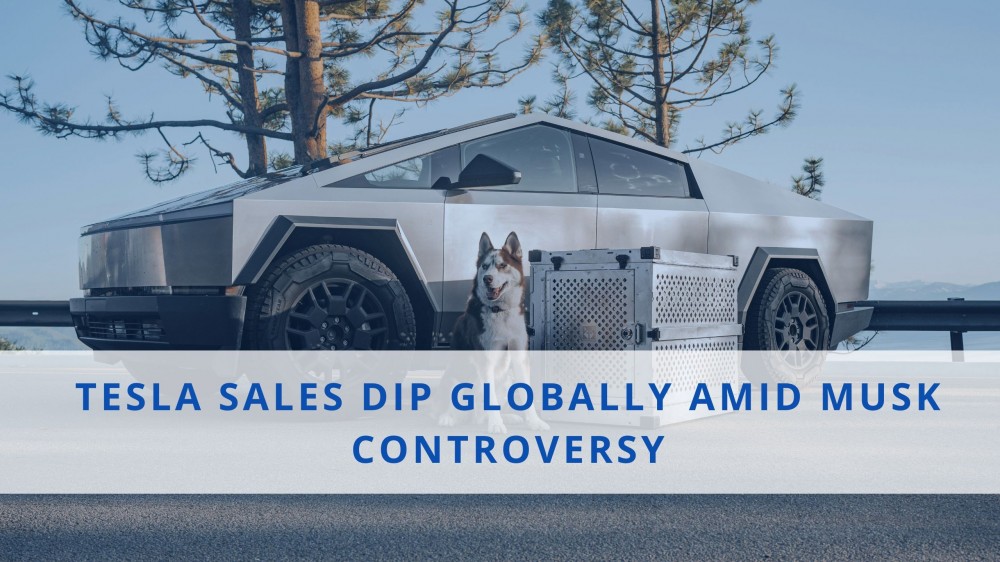
Global Tesla Sales have been under heavy strain as the electric vehicle industry experiences heightened competition, economic slowdown, and the growing impact of Elon Musk’s controversies. The company that once defined electric mobility now faces an increasingly crowded market filled with innovative competitors, regulatory hurdles, and changing consumer sentiments. The current phase reflects not only a commercial challenge but also a turning point for Tesla’s global influence in the EV space.
The Global EV Boom Turns Competitive
When Tesla entered the automotive market, it revolutionized the idea of sustainable transport. Today, however, the global EV boom has attracted hundreds of players — from traditional automakers like Ford and Volkswagen to ambitious newcomers such as BYD, NIO, and Rivian. This surge in global competition has created pricing pressure and innovation races that have chipped away at Tesla’s dominance.
As a result, Tesla Sales have fallen in key markets such as Europe and China, where government incentives now favor local manufacturers. In the U.S., Tesla remains a leader, but rivals are rapidly catching up with improved range, technology, and affordability. What was once Tesla’s defining edge — innovation — has become the industry standard, forcing the company to rethink its strategy.
Pricing Cuts and Financial Strain
In response to declining sales, Tesla introduced aggressive price cuts in 2025 across its main vehicle lines. The move sparked short-term demand but quickly led to margin compression. Investors have since raised concerns about whether this pricing strategy is sustainable given the rising cost of materials and logistical challenges.
The company’s Model 3 and Model Y remain best-sellers, yet reduced profitability per unit has weakened Tesla’s overall financial performance. Analysts believe that while price adjustments can temporarily boost Tesla Sales, long-term profitability requires balancing affordability with premium value — a difficult feat in a highly competitive market.

Elon Musk’s Public Image Challenges
Tesla’s brand identity is deeply intertwined with Elon Musk, whose leadership style has always been polarizing. Musk’s social media statements, political comments, and business decisions outside of Tesla — particularly regarding SpaceX and X (formerly Twitter) — have drawn widespread attention and criticism.
This has begun to affect Tesla’s public image. Some consumers perceive Musk’s controversies as distractions that overshadow Tesla’s mission of innovation and sustainability. Market research shows that public trust and brand perception directly influence Tesla Sales, and Musk’s unpredictable persona now poses a reputational risk that the company must address carefully.
Supply Chain Instability and Production Issues
Tesla’s massive production network has not been immune to global supply chain disruptions. Despite operating multiple Gigafactories worldwide, shortages of semiconductors, lithium, and other critical materials continue to hinder production efficiency.
These disruptions have delayed vehicle deliveries, frustrating potential buyers and dealers. In particular, supply shortages in Asia and Europe have limited Tesla’s ability to meet regional demand, directly contributing to a dip in Tesla Sales. While Tesla is investing in battery technology and local production to mitigate these issues, full stabilization may take several quarters.
Competitive Pressure from Global Automakers
Global automotive giants are intensifying their EV expansion efforts. Brands like Hyundai, Toyota, and BMW have diversified their EV portfolios with new models that compete head-to-head with Tesla in range, performance, and pricing.
Meanwhile, Chinese manufacturers are dominating their home market and expanding internationally with cost-effective electric models. Companies such as BYD and XPeng have not only captured a massive domestic audience but also entered European markets, pushing Tesla to adapt its pricing and distribution strategies. The result has been a consistent decline in Tesla Sales across previously secure territories.
Market Reaction and Investor Sentiment
The recent slowdown in deliveries has had a ripple effect on Tesla’s stock performance. Investors have expressed mixed reactions — some view the decline as a temporary correction, while others see it as a warning sign of market saturation.
Tesla’s once sky-high valuation is now under scrutiny, as analysts question whether the company can maintain its market share in a maturing EV industry. Falling Tesla Sales figures and Musk’s controversial behavior have contributed to market volatility, raising doubts about the company’s near-term growth trajectory.
Consumer Trust and Brand Loyalty in Flux
Tesla’s early success relied heavily on strong brand loyalty from tech enthusiasts and environmental advocates. However, as more automakers deliver reliable, affordable, and high-quality EVs, this loyalty is being tested. Complaints regarding service delays, quality control issues, and inconsistent software updates have also affected Tesla’s image.
Customers now have more options, and many are willing to explore alternatives that offer similar performance without the brand drama. This erosion of loyalty is reflected in Tesla Sales numbers, which show decreasing customer retention rates in some key markets.

Policy and Regulatory Challenges
Government policies have long played a role in EV adoption, and recent changes have further complicated Tesla’s global operations. In some regions, reduced subsidies for electric vehicles have slowed consumer purchases. Simultaneously, stricter environmental regulations in Europe and Asia are forcing automakers to localize production, increasing Tesla’s operational costs.
These factors have collectively placed added pressure on Tesla Sales, as the brand struggles to maintain its pricing advantage while complying with evolving global standards.
Tesla’s Strategic Adjustments for the Future
In response to mounting challenges, Tesla is focusing on several strategic initiatives aimed at revitalizing growth. These include developing more affordable models, enhancing its autonomous driving software, and expanding into emerging markets with lower production costs.
The company’s upcoming next-generation vehicle platform is expected to reduce manufacturing expenses and attract middle-income buyers — a demographic Tesla has yet to fully capture. Additionally, Tesla’s ongoing investment in battery innovation and energy storage could strengthen its market position over time, potentially helping to stabilize Tesla Sales in the coming years.
The Path Forward Amid Market Strain
The current dip in Tesla Sales signals a pivotal moment for the company. To maintain leadership, Tesla must balance technological advancement with operational excellence and public perception management. The EV market is no longer driven by novelty; it is defined by consistency, trust, and affordability.
As Tesla navigates the dual challenges of competitive pressure and leadership controversy, its next moves will determine whether it retains its position as a global EV leader or becomes one of many players in a diversified electric mobility ecosystem.
About Us:
At BusinessInfoPro, we empower entrepreneurs, small businesses, and professionals with cutting-edge insights, strategies, and tools to fuel growth. Driven by a passion for clarity and impact, our expert team curates’ actionable content in business development, marketing, operations, and emerging trends. We believe in making complex ideas simple, helping you turn challenges into opportunities. Whether you’re scaling, pivoting, or launching a new, Businessinfopro offers the guidance and resources to navigate today’s dynamic marketplace. Your success is our commitment, because when you thrive, we thrive together.





