
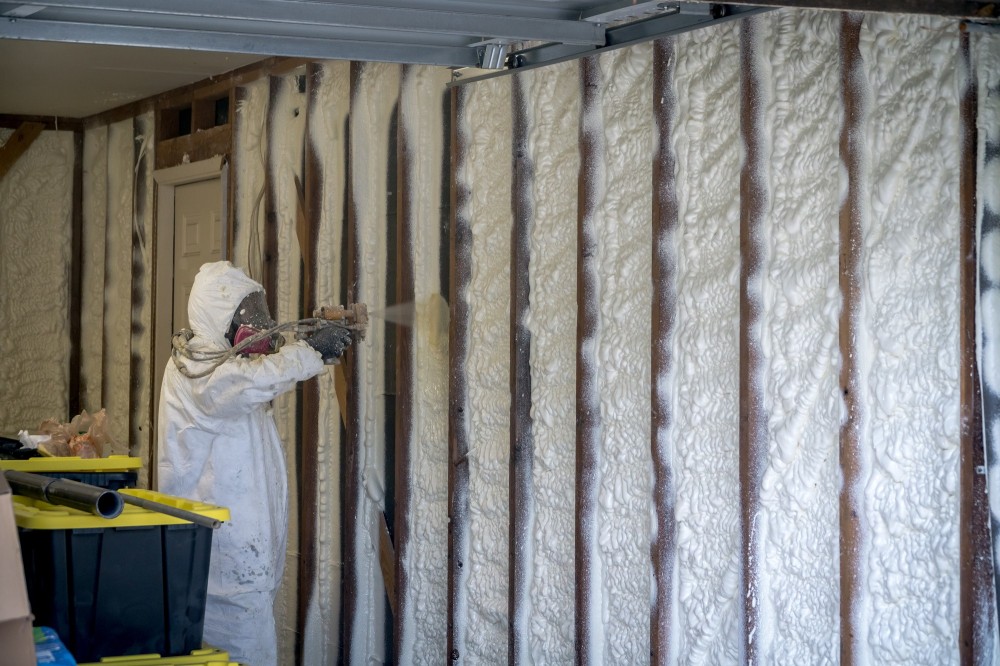
Open-cell spray foam makes work more efficient by tackling two of the biggest drains on a business's resources: high energy costs and employee distraction. It creates a superior air barrier that dramatically reduces the workload on HVAC systems, leading to lower utility bills and improved operational efficiency. At the same time, its unique physical structure provides exceptional sound dampening, which helps to create a quieter, more focused work environment where employees can be more productive.
This combination of thermal performance and acoustic control is what makes open-cell foam a strategic choice in commercial and office settings. Based on extensive experience in building performance, this article will explain how this specific type of insulation delivers these tangible benefits, impacting everything from a company's bottom line to its daily operations.
Creating a Less Distracting Work Environment
In any shared workspace, from open-plan offices to manufacturing floors, noise is a constant challenge. Conversations, ringing phones, and machinery can all break concentration and lower productivity. Studies on workplace environments have consistently shown that noise is a leading cause of employee dissatisfaction and reduced focus. Open-cell spray foam insulation directly addresses this issue through its superior sound absorption qualities.

Its name, "open-cell," refers to its physical structure. The foam is composed of millions of tiny bubbles that are intentionally left open. This creates a soft, sponge-like material that is incredibly effective at trapping and dissipating sound waves. When used in interior walls or between floors, it can significantly reduce noise transfer between offices, conference rooms, and common areas. This creates a quieter, less disruptive atmosphere, allowing employees to concentrate better and work more effectively.
Bonus Tip: For maximum acoustic privacy, using open-cell spray foam in the walls of executive offices, HR departments, and meeting rooms is a highly effective strategy that costs less than many specialized soundproofing materials.
The Financial Impact of Superior Air Sealing
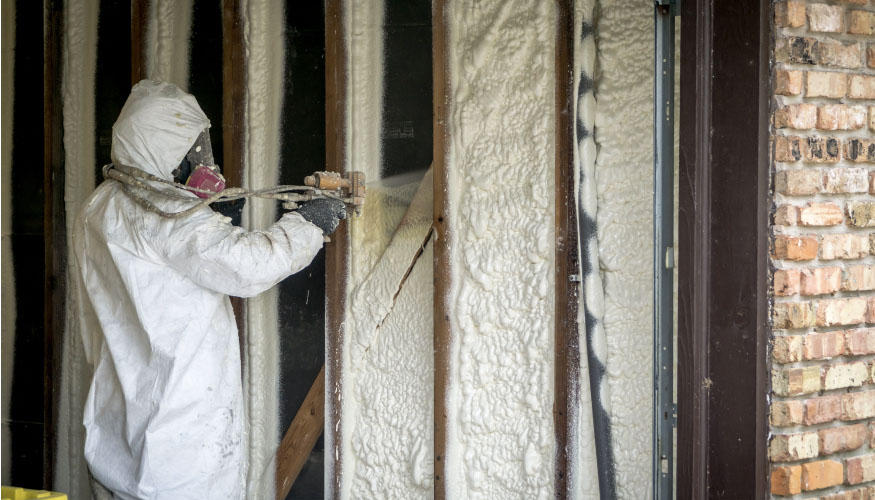
While the acoustic benefits are immediately noticeable, the long-term financial impact of open-cell foam's thermal performance is just as significant. Like all spray foams, its greatest strength as an insulator is its ability to create a near-perfect air seal. It is applied as a liquid and expands to fill every crack, gap, and penetration in a wall or roof assembly, stopping air leakage in a way that traditional insulation batts cannot.
In commercial buildings, heating and cooling can account for a substantial portion of total energy use. Uncontrolled air leakage forces HVAC systems to run longer and harder to maintain a stable indoor temperature, driving up operational costs. By creating a continuous air barrier, open-cell foam dramatically reduces this energy waste. The building becomes much easier to heat and cool, leading to lower monthly utility bills. This operational efficiency provides a consistent return on investment for the life of the building.
Comparing Insulation for Workplace Environments
The best insulation for a work environment depends on the primary goals of the project, whether that's thermal control, sound dampening, or moisture management. The table below compares open-cell spray foam with other common commercial insulation options.
|
Feature |
Open-Cell Spray Foam |
Closed-Cell Spray Foam |
Mineral Wool Batts |
|---|---|---|---|
|
Sound Absorption |
Excellent |
Good |
Good |
|
Air Sealing Ability |
Excellent |
Excellent |
Poor |
|
R-Value per Inch |
~R-3.7 |
~R-6.5 |
~R-4.2 |
|
Vapor Permeability |
High (breathable) |
Low (vapor barrier) |
High (breathable) |
|
Typical Cost |
Medium |
High |
Low-Medium |
The Advantage of Vapor Permeability
Unlike its closed-cell counterpart, open-cell foam is "vapor permeable." This means that water vapor can slowly pass through it. While this makes it unsuitable for certain applications where a moisture barrier is needed (like on the inside of a basement wall), it can be a significant advantage in many wall and roof designs.
A building needs to be able to dry out if moisture ever gets into the structure, whether from a small leak or from condensation. Because open-cell foam allows for this drying potential, it reduces the risk of trapped moisture, which can lead to mold and rot. This "breathable" nature contributes to the long-term health and durability of the building, preventing costly repairs and maintaining a healthier indoor environment for employees.
Bonus Tip: Applying open-cell spray foam to the underside of a metal roof deck in a warehouse or large retail space is an effective way to control condensation and reduce noise from rain or hail.
Things to Consider Before Making a Decision
When evaluating open-cell spray foam for a commercial space, business owners and facility managers should consider several key factors.
- Primary Objective: Is the main goal to reduce noise, lower energy bills, or both? Open-cell foam excels when acoustic performance is a high priority. If the primary need is the absolute highest R-value in a thin space, closed-cell foam might be a better fit.
- Climate and Building Design: In very cold or humid climates, the wall assembly must be carefully designed to manage moisture when using a vapor-permeable insulation like open-cell foam. A building professional should evaluate the plans to ensure the system will perform correctly.
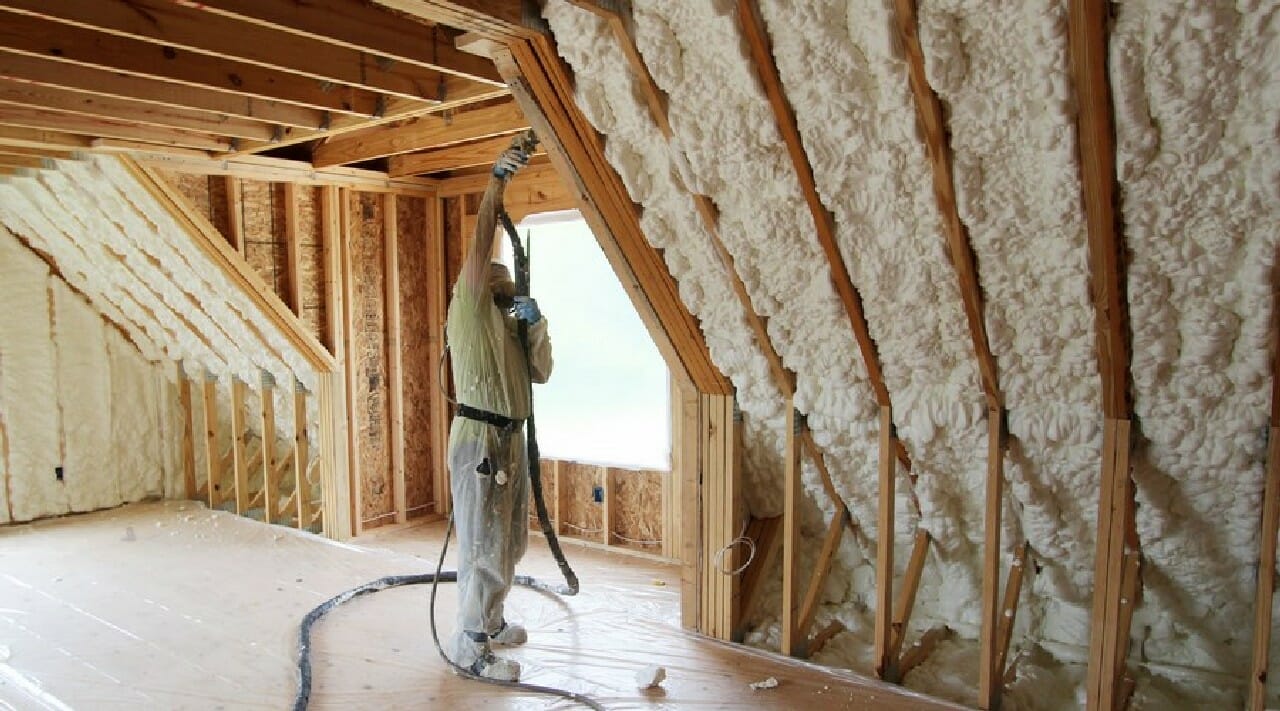
- New Construction vs. Retrofit: Open-cell foam is easily installed in new construction where the wall cavities are open. In a retrofit, it can be a more involved process, but it is an excellent choice for insulating attic or roof assemblies in existing buildings.
- Installer Expertise: The performance of spray foam is entirely dependent on the quality of the installation. It is critical to hire a contractor with extensive experience in commercial applications and a deep understanding of building science.
Common Questions About Open-Cell Foam in Workplaces
Is open-cell foam a fire hazard in a commercial building?
No. Like other building materials, spray foam insulation is required to meet strict fire safety standards. It is treated with a fire retardant and, when covered by a proper thermal barrier like drywall, it is approved for use in a wide range of commercial construction types.
Can open-cell foam be left exposed?
Generally, no. Building codes require most foam plastic insulation to be separated from the interior of the building by a 15-minute thermal barrier, such as half-inch drywall. In some specific cases, like an attic or crawlspace, it may be left exposed, but this must be approved by the local code official.
How long does the installation take in a business environment?
The timeline depends on the size of the project. A small office might be done in a day, while a large warehouse could take a week or more. The work area needs to be clear of personnel during application and for a curing period afterward (typically 24 hours) to allow for proper ventilation.
Will the foam shrink or settle over time?
No. When properly installed, open-cell spray foam adheres to the substrate and cures into a stable, solid material. It will not shrink, sag, or settle, meaning its thermal and acoustic performance will last for the life of the building.
Is it the most cost-effective choice?
Open-cell foam typically has a higher upfront cost than traditional materials like fiberglass or mineral wool, but it is generally less expensive than closed-cell foam. However, when factoring in the long-term energy savings and the added value of sound control, it often provides a superior return on investment.
An Investment in a Better Working Environment
Open-cell spray foam is more than just insulation; it's a tool for creating more efficient and productive workplaces. By providing a powerful air seal, it lowers the day-to-day operating costs of a building. By absorbing sound, it creates a calmer atmosphere where people can perform at their best. This dual-function approach makes it a smart, strategic investment for any business looking to improve its physical space and support the efficiency of its workforce.
Finding the Right Insulation Partner for Your Business
Implementing a high-performance insulation system in a commercial setting requires specialized knowledge of building science and application techniques. For business owners and developers looking to improve their properties, consulting with an experienced commercial insulation contractor is a critical first step. A company like Cascadia Spray Foam Insulation of Seattle has the expertise to advise on and install complex commercial projects. They can be reached for a project evaluation at (425) 386-3500 or through email at info@cascadiasprayfoam.com.
Reviewer: Olivia Thompson has spent 10 years working in spray foam insulation, helping companies grow their visibility. She reviewed this article and provided valuable suggestions on how to better align the content with the needs and expectations of customers, ensuring it resonates with the target audience.





