

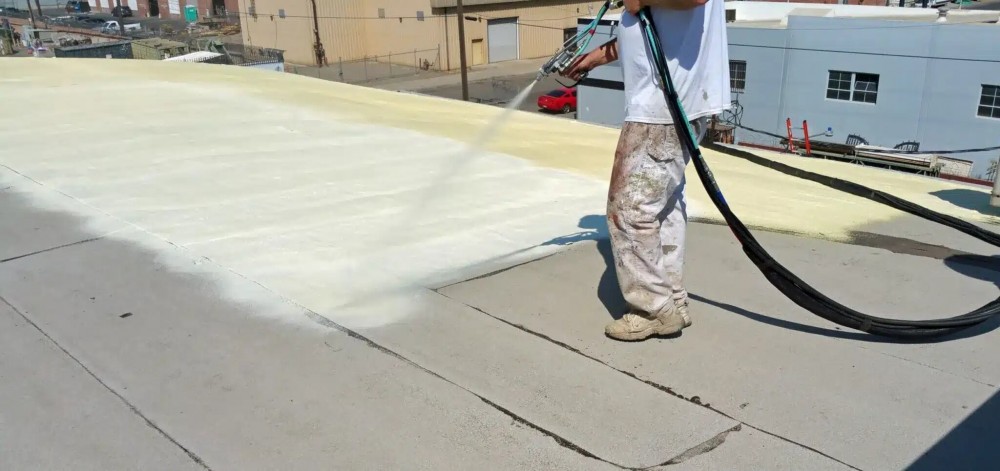
Spray foam roofing reduces heat transfer and energy waste through a powerful combination of three distinct properties. First, the closed-cell polyurethane foam itself provides a high R-value, creating a robust thermal barrier that slows the conduction of heat. Second, it is applied as a seamless, monolithic layer that eliminates the joints and fasteners found in traditional roofing, which prevents thermal bridging and stops energy-wasting air leaks. Finally, the system is topped with a reflective "cool roof" coating that deflects solar radiation, drastically reducing the building's heat gain in the summer.
This integrated system is what makes Spray Polyurethane Foam (SPF) roofing one of the most energy-efficient commercial roofing options available. Based on decades of building science and practical application, this article will break down exactly how each component of an SPF roof works to provide superior thermal performance and significant long-term energy savings.
A Seamless and Unbroken Thermal Barrier
In a conventional spray foam roofing system, insulation is typically installed as large, rigid boards. These boards have seams between them, and they are often attached to the roof deck with thousands of metal fasteners. Both the seams and the fasteners act as "thermal bridges"—pathways for heat to travel through the insulation layer, bypassing its insulating value. This can reduce the effective R-value of the entire roof assembly by 15% or more.

SPF roofing solves this problem by creating a single, continuous layer of insulation with no seams or joints. The foam is sprayed directly onto the roof deck as a liquid and expands to form a solid, custom-fitted layer that adheres to every surface. This monolithic barrier has no gaps and requires no fasteners, completely eliminating thermal bridging. The result is a roof that performs at its full, tested R-value across its entire surface, providing a much more effective defense against heat transfer.
High R-Value for Superior Insulation
The material at the heart of an SPF roofing system is a high-density, closed-cell polyurethane foam. This material is specifically engineered for roofing applications and provides an excellent R-value, typically around R-6.5 per inch of thickness. This is a higher R-value than most other common roof insulation materials, such as polyisocyanurate or expanded polystyrene boards.
This high thermal resistance means that for a given thickness, an SPF roof can provide more insulating power. Building owners can achieve modern energy code requirements with a thinner profile, which can be an advantage in retrofit projects. The foam's R-value is also stable and permanent; because it's a solid, cured plastic, it will not sag, settle, or lose its insulating properties over the life of the building.
Bonus Tip: The thickness of the spray foam can be varied during application. This allows installers to build up low spots to eliminate ponding water on a flat roof, improving drainage and extending the life of the roof while also adding insulation.
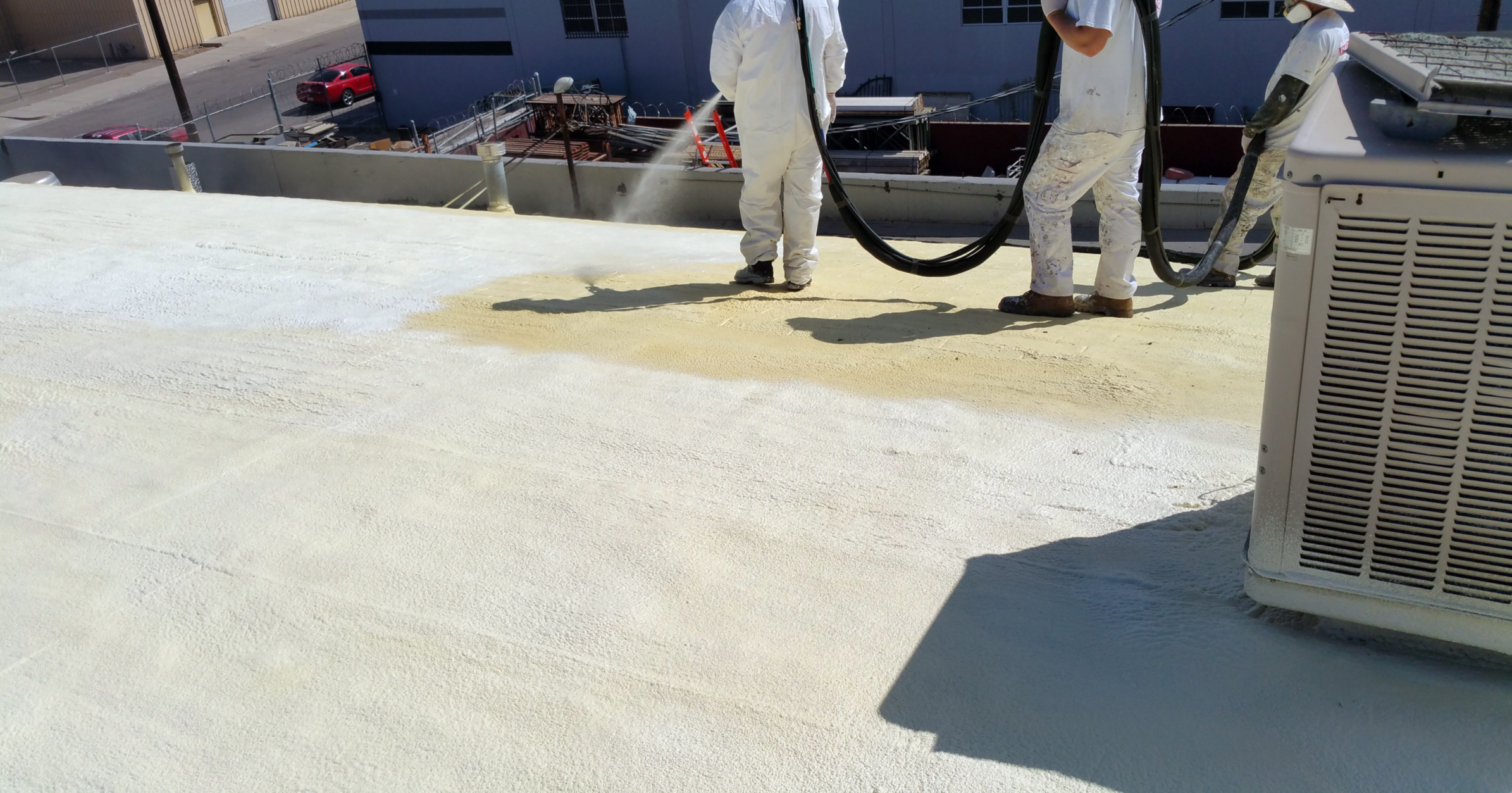
The Power of the Reflective Top Coat
While the foam itself provides the primary insulating value, the final layer of an SPF roofing system is just as important for energy efficiency. After the foam is applied, it is protected with a durable, elastomeric coating. These coatings are typically white or a light color, making them highly reflective.

This "cool roof" technology works by reflecting a significant portion of the sun's solar energy back into the atmosphere instead of allowing it to be absorbed as heat. A typical white roof coating can reflect up to 85% of solar radiation. This has a massive impact on the building's cooling load during the summer. By keeping the roof surface temperature much lower (often by 50-60°F), it dramatically reduces the amount of heat that is transferred into the building. Some studies suggest a cool roof can lower a building's cooling energy demand by 10-15%, providing significant savings in warm climates.
Comparing SPF to Conventional Roofing Systems
The energy performance of a roof is determined by more than just the R-value of its insulation. The overall system design is what matters. The table below compares the key energy-related features of an SPF roof to a traditional single-ply membrane system.
|
Feature |
SPF Roofing System |
Traditional Single-Ply Roof (with board insulation) |
|---|---|---|
|
Insulation Layer |
Seamless, monolithic |
Multiple boards with seams |
|
Thermal Bridging |
None |
Significant (at seams and fasteners) |
|
Air Barrier |
Excellent (naturally airtight) |
Poor (many potential leak points) |
|
R-Value per Inch |
High (~R-6.5) |
Medium (~R-5.5 for polyiso) |
|
Reflectivity |
Excellent (reflective top coat) |
Varies (white membrane is reflective) |
Things to Consider Before Choosing an SPF Roof
An SPF roof is a high-performance system, but building owners should be aware of several key factors to ensure a successful and long-lasting installation.
- The Installer's Skill is Paramount: This is not a simple product to install. The quality and performance of an SPF roof are entirely dependent on the expertise of the installation crew. It is essential to hire a certified, experienced commercial roofing contractor with a proven track record.
- Substrate Preparation is Critical: The existing roof surface must be clean, dry, and structurally sound before the foam can be applied. A good contractor will spend a significant amount of time on surface preparation to ensure proper adhesion.
- The Coating Requires Maintenance: The foam itself can last indefinitely, but the protective top coat is the wearing surface. It needs to be inspected periodically and recoated every 15 to 20 years to maintain its performance and protect the foam underneath. This recoating process is much less expensive than a full roof replacement.
- Not Suitable for All Slopes: SPF roofing is primarily designed for low-slope or flat commercial roofs. It is generally not used on steep-sloped residential roofs.

Common Questions About SPF Roofing and Energy
How much can I actually save on energy with an SPF roof?
The savings depend on the climate, the building's use, and the condition of the previous roof, but many building owners report energy savings of 30% or more. In some cases, the savings are enough for the roof to pay for itself in as little as 5-7 years.
Is an SPF roof durable?
Yes. The foam is very tough and can be walked on for normal maintenance. It is also highly resistant to damage from hail. If the top coat is ever punctured, the closed-cell foam underneath will not absorb water, preventing a small issue from becoming a major leak.
Can an SPF roof be installed over my existing roof?
In many cases, yes. SPF is lightweight and can often be applied directly over an existing built-up, modified bitumen, or single-ply roof. This can save a significant amount of money and time by avoiding a costly and disruptive tear-off.
What is the lifespan of an SPF roofing system?
With proper maintenance and periodic recoating, an SPF roof can last for 50 years or more. It is considered a sustainable roofing system because it can be renewed repeatedly instead of being torn off and sent to a landfill.
Does the reflective coating work in cooler, cloudier climates?
While the benefits of a cool roof are most pronounced in sunny, southern climates, they still provide an advantage in northern regions. The high R-value and seamless nature of the foam provide the primary energy savings during the heating season, while the reflective coating helps reduce the cooling load on the sunnier days of the year.
A Smarter System for Energy Control
Spray foam roofing offers a systematic approach to reducing a building's energy consumption. By combining high R-value insulation, a seamless air barrier, and a reflective surface into a single, integrated system, it provides a level of thermal performance that traditional roofing methods struggle to match. For building owners looking for a reliable, long-term solution to high energy costs, an SPF roof is one of the smartest investments they can make.
Consulting with Commercial Roofing Experts
Designing and installing a high-performance SPF roofing system requires specialized technical knowledge. For building owners and facility managers considering this technology, it is important to work with a company that has deep expertise in commercial applications. A firm like Cascadia Spray Foam Insulation of Seattle can provide professional consultations and specifications for large-scale roofing projects. They can be reached to discuss a project by calling (425) 386-3500 or by email at info@cascadiasprayfoam.com.
Reviewer: Olivia Thompson has spent 10 years working in spray foam insulation, helping companies grow their visibility. She reviewed this article and provided valuable suggestions on how to better align the content with the needs and expectations of customers, ensuring it resonates with the target audience.





