

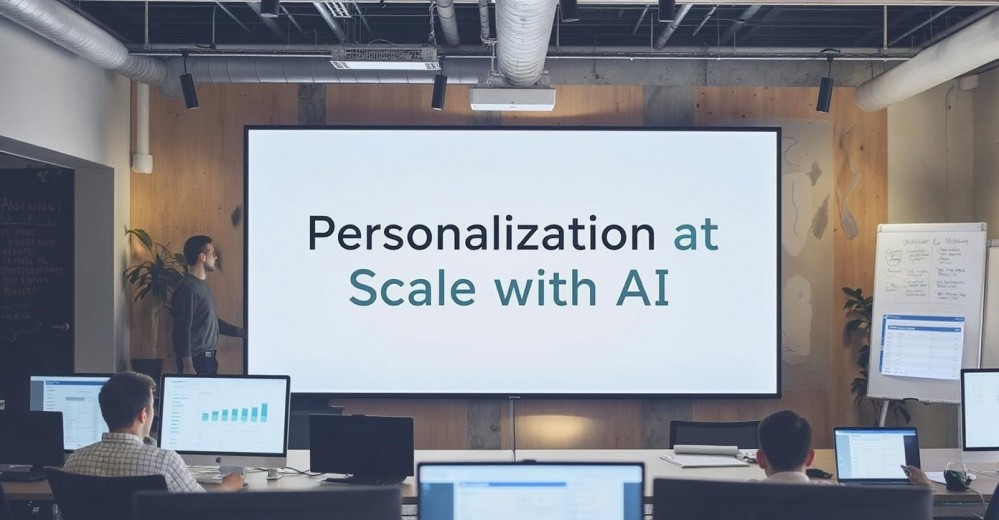
B2B marketers today face the challenge of delivering personalized experiences to increasingly savvy buyers who expect relevant content at every stage of their journey. Traditional marketing strategies are often insufficient to meet these expectations, making AI-powered personalization a necessity. By leveraging artificial intelligence, businesses can scale personalization across multiple channels, ensuring that each prospect receives messaging and content that resonates. If you want to elevate your B2B Marketing Campaigns, AI provides actionable insights that allow for precise targeting, optimized engagement, and improved ROI.
The Importance of Personalization in Modern B2B Marketing
Personalization helps B2B marketers connect with prospects on a deeper level, increasing engagement and nurturing stronger relationships. Buyers interact with multiple touchpoints, and AI enables businesses to analyze data from these interactions to deliver relevant experiences. By predicting buyer behavior and preferences, AI allows marketers to craft personalized campaigns that are both scalable and effective. This approach ensures that every interaction adds value, builds trust, and moves prospects further along the buyer journey.

Data as the Backbone of AI Personalization
AI-driven personalization relies heavily on accurate and comprehensive data. B2B organizations gather data from CRM systems, email campaigns, website interactions, and social media engagement. AI can unify this information to generate detailed profiles of prospects, including their interests, behaviors, and intent. Predictive analytics then helps marketers identify high-value leads and determine the type of content or messaging most likely to resonate. This data-driven approach ensures that campaigns are highly targeted and deliver meaningful results.
Advanced Segmentation Through Machine Learning
Traditional segmentation methods often rely on broad categories such as industry, company size, or geographic region. While these methods are useful, they fail to capture the subtle behaviors and preferences of modern buyers. AI and machine learning allow for more granular segmentation by analyzing behavioral patterns, engagement data, and content preferences. These micro-segments enable marketers to deliver hyper-personalized messaging, improving engagement, nurturing leads more effectively, and increasing the likelihood of conversion.
AI-Powered Content Recommendations

Content personalization is a key driver of engagement in B2B marketing. AI can analyze past interactions to recommend blogs, whitepapers, videos, webinars, or product demos that are most relevant to each prospect. This ensures that each touchpoint provides value and encourages further engagement. AI can also optimize messaging in emails, landing pages, and advertisements, adjusting in real-time based on prospect behavior. The result is a dynamic, tailored experience that improves lead nurturing and accelerates the sales cycle.
Predictive Lead Scoring and Nurturing
AI enables predictive lead scoring by evaluating prospects on multiple criteria, including demographics, engagement patterns, and behavioral data. Predictive scoring identifies leads most likely to convert, allowing marketing and sales teams to focus their efforts on high-value opportunities. Automated nurturing campaigns can then deliver personalized content at the right time, guiding prospects through the buyer journey efficiently and improving the overall conversion rate.
Omnichannel Personalization for B2B Campaigns
Modern B2B buyers engage with brands through multiple channels, such as email, social media, websites, webinars, and events. AI ensures that personalization is consistent and relevant across all touchpoints. By analyzing cross-channel data, AI can deliver messaging that aligns with the prospect’s interests and stage in the buying process. For example, a prospect who downloads a technical whitepaper may later receive an email with a related case study, while a social media lead may be targeted with content addressing the same topic. This approach strengthens engagement and fosters stronger relationships.
AI-Enhanced Marketing Automation
Integrating AI with marketing automation platforms enables businesses to implement personalization at scale efficiently. AI can automate tasks such as sending targeted emails, recommending content, triggering workflows, and adjusting advertising bids in real-time. As AI learns from prospect interactions, it continuously optimizes campaigns, reducing manual workload and ensuring timely delivery of relevant content. This allows marketers to focus on strategy and creativity while maintaining consistent, personalized engagement across channels.
Measuring the Effectiveness of AI Personalization
To maximize the value of AI-driven personalization, marketers must monitor metrics such as engagement rates, lead conversion, and ROI. AI-powered analytics platforms provide actionable insights that identify successful strategies and highlight areas for improvement. Real-time reporting allows marketers to adapt campaigns quickly, ensuring that personalization remains effective. Additionally, AI can simulate different campaign scenarios, predicting outcomes and guiding decision-making for better results.
Challenges in Scaling AI Personalization
While AI offers numerous advantages, implementing personalization at scale comes with challenges. Data quality and integration are critical, as fragmented or inaccurate data can reduce AI effectiveness. Compliance with privacy regulations, such as GDPR and CCPA, is essential for maintaining trust with prospects. Organizations also need skilled professionals who can manage AI platforms, interpret insights, and implement personalized strategies effectively. Addressing these challenges ensures that AI personalization delivers maximum impact in B2B campaigns.
Best Practices for Implementing AI Personalization
To succeed with AI-driven personalization, marketers should follow best practices. First, ensure data is clean, integrated, and comprehensive to provide accurate inputs for AI models. Second, set clear goals for personalization, such as increasing engagement, accelerating conversions, or improving lead nurturing. Third, continuously monitor, test, and optimize AI-driven campaigns to adapt to evolving buyer behavior. Fourth, maintain transparency and compliance with privacy regulations to build trust. Finally, align AI personalization initiatives with the broader marketing strategy to ensure consistency across campaigns.
Future of AI Personalization in B2B Marketing
AI will continue to shape the future of B2B marketing by enabling hyper-personalized experiences at scale. Advances in natural language processing (NLP) will allow more human-like interactions through chatbots and virtual assistants. Predictive analytics will become more accurate, anticipating customer needs and preferences before they are expressed. Integration with technologies such as augmented reality (AR) and virtual reality (VR) may provide immersive experiences that enhance engagement further. Organizations that adopt AI personalization early will gain a competitive edge by delivering relevant, meaningful experiences to prospects and customers.
About Us : Acceligize is a global B2B demand generation and technology marketing company helping brands connect with qualified audiences through data-driven strategies. Founded in 2016, it delivers end-to-end lead generation, content syndication, and account-based marketing solutions powered by technology, creativity, and compliance.





