

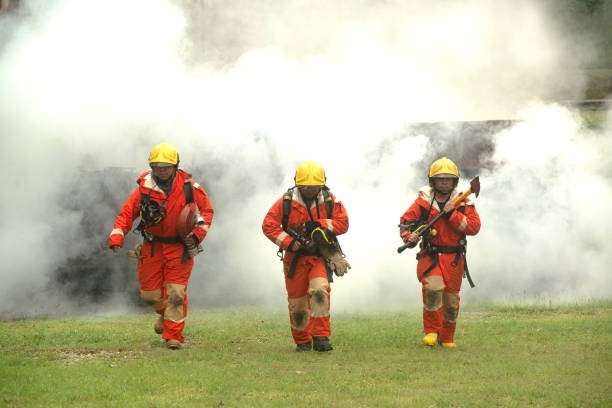
You don’t need me to tell you the world feels a little… unpredictable lately. Buildings are bigger. Job sites are busier. Risks pop up in places nobody bothered checking ten years ago. And in the middle of all this mess, there’s one thing I keep seeing over and over: employers aren’t playing around anymore when it comes to fire safety. They want people who actually know what they’re doing. That’s where fire safety certification sneaks into the conversation—quiet at first, then suddenly everywhere.
No, it’s not just for big commercial towers in Manhattan or giant industrial plants humming away out in Jersey. It’s becoming the baseline for anyone working in construction, security, property management, event operations, even certain hospitality roles. If you’re around people or buildings (so… most jobs), fire guard knowledge is starting to matter.
Let’s break down why.

Why Fire Risks Don’t Look Like They Used To
Fire hazards used to be pretty obvious. Open flames. Bad wiring. A cigar left burning on a couch. Now the threats are more complicated, more hidden. Lithium-ion batteries, overloaded systems, cheap electronics with questionable safety standards—they’re everywhere. Even your local bodega has enough battery-powered gadgets to light up the whole neighborhood if something goes sideways.
Companies know this. Insurance companies know it even more. And they’re pushing workplaces to put trained Fireguards on-site, not “someone responsible” or “the guy who’s been here the longest.” They want documented skill. Certified skill. Because when something sparks, the difference between losing a room and losing an entire building comes down to who’s standing there in the first two minutes.
Why Fireguard Certification Keeps Rising in Demand
You Become the “Go-To” Person on Any Site
Once you get certified, something funny happens. People treat you like the adult in the room. It doesn’t matter if you’re new or younger or still figuring out your career path. Fireguard training gives you authority. It tells everyone else: yeah, this person can handle an emergency—and they won’t freeze.
And in a workforce where half the people are distracted, tired, or glued to their phones… that’s worth a lot.
Employers Are Tired of Rolling the Dice
Most companies don’t want risk. Especially not avoidable risk. They want workers who reduce headaches, not add them. Fireguard Certification makes HR breathe easier. Makes safety officers sleep better. Makes building owners stop pacing the hallways.

It’s the simplest plug-and-play solution: hire certified people, reduce liability.
Boom.
How Fireguard Training Fits Into Today’s Job Market
Here’s the thing nobody says out loud: a ton of modern jobs are basically “keep this place from burning down, literally or figuratively.” Property managers. Contractors. Security teams. Stage crews. Temporary structures like pop-up events or construction sheds. Even high-end residential buildings with too many tenants and too few safety eyes on the floor.
Some of these roles already require certification by law (New York doesn’t mess around). More cities are creeping toward that model. Regulations get tighter every year. It’s not slowing down.
That’s why adding Fireguard Certification to your resume isn’t just smart—it’s future-proof.
The Middle of the Workforce Is Changing Fast
Security and Fire Safety Now Overlap More Than Ever
This is where the secondary keyword fits naturally: modern security solutions aren’t just about cameras and patrols anymore. A guard who can’t respond to a fire effectively is basically half-trained. Companies want multi-capable staff. People who can watch, react, and protect—whether the threat is a person, a battery, or a wiring issue humming behind a wall.
So security professionals, especially, are being nudged (sometimes shoved) toward fireguard training. It boosts job opportunities immediately. And let’s be honest—security is competitive. Anything that sets you apart matters.
Insurance Companies Are Quietly Pulling Strings
They won’t say it outright, but insurance providers influence everything. They look at claims, probabilities, risk profiles. If a building hires staff with real fire knowledge, premiums drop. If they don’t… well, the bill goes up. That pressure trickles down until a property manager finally says: “Fine. Everyone get certified.”
Follow the money and you’ll see why demand isn’t slowing.
Why Workers Themselves Are Choosing Certification
This part’s interesting. It’s not just employers pushing it. Workers are chasing it for their own reasons:
- Better pay brackets
- More stable roles
- Easier job mobility
- Promotable skill with real-world value
- Respect on-site (people listen when you talk safety)
Most people don’t stay in one job forever. But a fireguard credential follows you everywhere. It becomes part of your professional identity, the same way OSHA training or a CPR card does. Except this one has even more real-world stakes.
You might not need it every day. But when you do? Everything depends on it.
Fireguard Certification Isn’t Complicated… But It Matters
A lot of folks hear “certification” and immediately think hours of studying, big textbooks, complicated exams. Not really. Fireguard training is straightforward. Practical. Mostly common sense, sharpened and organized. But the impact is huge.
You learn how to spot hazards before they become problems.
You understand evacuation patterns.
You know what equipment to grab first.
You get comfortable staying calm when alarms go off.
Small skills, big outcomes.
Will Fireguard Certification Become Mandatory Everywhere?
Maybe not everywhere, but it’s trending. Especially in dense urban cities where space is tight and risks domino fast. Anytime you have large crowds, tall buildings, or battery-heavy equipment, certification becomes the safety net.
If you’re thinking ahead—even a little—it’s worth getting now, before regulations make it something you must have instead of something you chose to have.
Conclusion
The workforce is shifting. Risks are different. Expectations are higher. And fireguard certification is sliding into the spotlight, becoming one of those must-have skills that employers quietly prefer—and soon might outright demand.
It’s not glamorous. It’s not complicated. But it’s real. Practical. A skill that makes you more valuable on day one, and honestly, a better safeguard for the people around you.





