

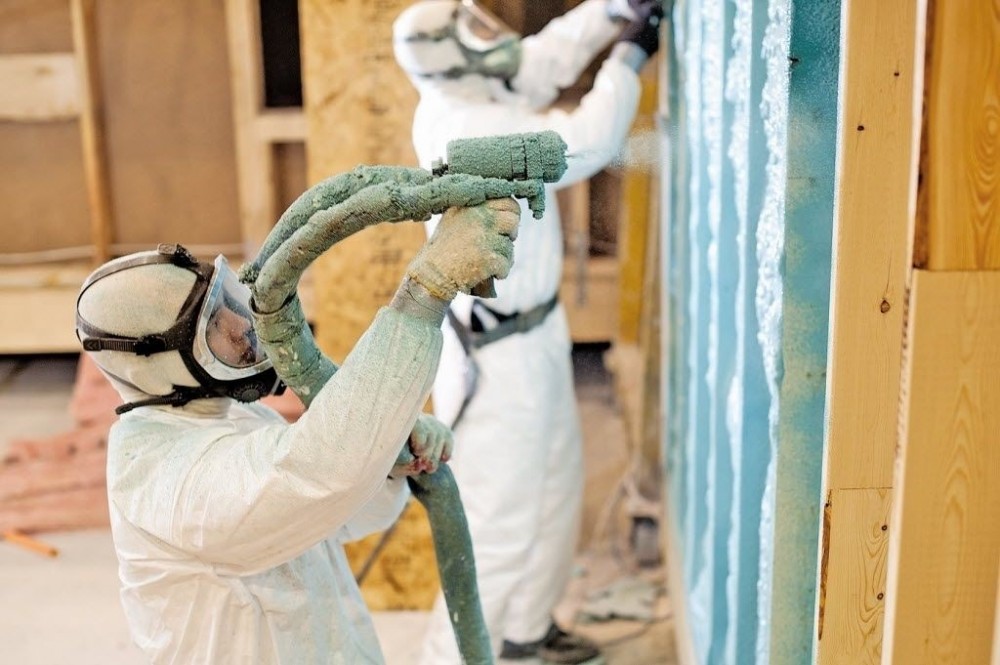
Spray foam roofing insulation is playing an increasingly important part in modern building design by offering a multifunctional system that addresses several architectural challenges at once. It combines a high-performance insulating layer, a seamless waterproofing membrane, and a complete air barrier into a single, monolithic application. This allows architects and builders to create more energy-efficient, durable, and architecturally flexible buildings that can better meet today's stringent energy codes and demanding performance standards.
Unlike traditional roofing methods that involve multiple layers and countless seams, spray foam roofing creates a continuous, fully adhered surface that eliminates thermal bridging and common points of failure. This article will explore the specific ways this technology is influencing building design, from enhancing energy performance to enabling greater creative freedom. Michael Carter reviewed this article using insight gained over 12 years in the spray foam business. His feedback focused on helping contractors reach new customers without overcomplicating their message.


How Spray Foam Roofing Works
A spray foam roofing system consists of two main components. First, a layer of high-density, closed-cell spray polyurethane foam (SPF) is applied as a liquid directly to the roof substrate. This liquid expands about 30 times its original volume to form a rigid, seamless layer of insulation that conforms to any shape. Second, this foam is protected by one or more layers of a durable, elastomeric coating. This coating provides waterproofing, protection from UV radiation, and resistance to physical damage. Common coatings include silicone, acrylic, and urethane.
This system is most frequently used on low-slope or flat roofs, which are common in commercial construction, but it is also adaptable to residential buildings with unique rooflines.
Driving Energy Efficiency in Buildings
The roof is a primary source of heat gain in the summer and heat loss in the winter. Spray foam roofing directly addresses this with a powerful combination of features.
Superior Thermal Resistance
Closed-cell spray foam used in roofing applications offers a very high R-value, typically around R-6.5 per inch. This significantly reduces the amount of heat that can pass through the roof assembly. Because it's applied as a continuous layer, it also eliminates thermal bridging through fasteners and gaps, which can reduce the effectiveness of traditional board insulation.
The Power of a Seamless Air Barrier
Air leakage through the building envelope can account for a substantial portion of a building's energy use. Traditional roofing systems have thousands of feet of seams, which are all potential points for air and water leaks. A spray foam roof is completely seamless, creating a perfect air barrier across the entire roof surface.

Reflective "Cool Roof" Coatings
The protective topcoat applied over the foam is typically white or a light color. These coatings have high solar reflectivity, meaning they reflect a large percentage of the sun's energy instead of absorbing it. This "cool roof" effect can dramatically lower the roof's surface temperature, reducing the amount of heat transferred into the building and cutting down on air conditioning costs. In urban areas, this also helps mitigate the "heat island effect."
Enabling Architectural Flexibility and Creativity
Spray foam roofing frees architects from some of the constraints imposed by traditional roofing materials, allowing for more innovative and complex designs.
Conforming to Complex Shapes
Because it's applied as a liquid, spray foam can easily conform to curved, domed, or otherwise unconventional roof shapes. Installing traditional roofing materials on these surfaces is labor-intensive and results in numerous seams that are prone to failure. Spray foam creates a perfect, custom-fit membrane regardless of the roof's geometry.
Lightweight Construction
Spray foam roofing is incredibly lightweight, weighing only about 1 to 3 pounds per square foot. This is significantly less than many traditional roofing systems. This can reduce the structural load requirements for the building, potentially leading to cost savings in the design of the support structure.
Self-Flashing Application
One of the most common sources of roof leaks is failing flashing around roof penetrations like vents, pipes, and skylights. Spray foam is self-flashing; it can be sprayed directly around these penetrations, creating a continuous, seamless seal that is far more reliable than traditional flashing methods.

A Comparison of Roofing Systems
|
Feature |
Spray Foam (SPF) Roofing |
Single-Ply (TPO/EPDM) |
Built-Up Roofing (BUR) |
|---|---|---|---|
|
Seams |
None (Monolithic) |
Every 6-12 feet |
Multiple layers |
|
Insulation Value |
High (R-6.5 per inch) |
Added separately |
Added separately |
|
Application |
Sprayed liquid |
Mechanically fastened |
Layered hot asphalt |
|
Adhesion |
Fully adhered |
Fastened at seams |
Adhered or ballasted |
|
Lifespan |
Renewable (30+ years) |
15-25 years |
15-30 years |
|
Conformability |
Excellent |
Fair to Good |
Poor |
Things to Consider Before Specifying Spray Foam Roofing
While spray foam roofing offers many advantages, its success is entirely dependent on the quality of the installation.
- Contractor Expertise: This is not a DIY product. It must be installed by a certified, experienced contractor who understands the equipment, material science, and safety protocols.
- Weather Sensitivity: The application process is sensitive to weather conditions like temperature, humidity, and wind. A professional crew will know how to manage these variables.
- Substrate Preparation: The roof deck or existing roof surface must be clean, dry, and structurally sound before the foam is applied.
- Maintenance: While very durable, the roof should be inspected annually. Small punctures in the protective coating from dropped tools or storm debris should be repaired with sealant to maintain the waterproof seal.
Bonus Tip: A major benefit of SPF roofing is its renewability. At the end of the coating's warranty period (typically 10-20 years), the roof can simply be cleaned and a new topcoat applied, extending its life indefinitely without the cost and environmental impact of a full roof tear-off.
Questions People Ask About Spray Foam Roofs
Can you walk on a spray foam roof?
Yes. The high-density foam is strong enough to support regular foot traffic for maintenance. For areas with very heavy traffic, special walkway pads can be installed.
Can a spray foam roof be applied over my existing roof?
In many cases, yes. As long as the existing roof is structurally sound and dry, spray foam can often be applied directly over it, saving significant time and money on tear-off and disposal costs.
What is the typical cost of a spray foam roof?
The initial cost is often competitive with other high-performance roofing systems. However, when you factor in the long-term energy savings and the lower life-cycle cost due to its renewability, it is often one of the most cost-effective options available.
Is a spray foam roof noisy when it rains?
No, the foam layer actually provides excellent sound insulation, dampening the noise from rain and hail much better than a metal or single-ply roof.
How is a spray foam roof repaired if it gets damaged?
Repairs are simple. The damaged area is cut out, the hole is filled with a compatible sealant or fresh foam, and the area is recoated. The repair becomes a seamless part of the original roof.
The Future of High-Performance Roofing
Spray foam roofing insulation is a key component in the toolkit of modern building design. Its ability to provide superior energy efficiency, accommodate creative architectural forms, and offer a sustainable, long-term roofing solution makes it an ideal choice for new construction and retrofits alike. As energy codes become stricter and building designs more ambitious, the use of this versatile technology is only expected to grow.
Consult with Roofing Insulation Specialists
For architects, builders, and property owners in the Las Vegas area considering a spray foam roofing system, it is important to work with a knowledgeable contractor. Supreme Spray Foam LV has extensive experience with commercial and residential roofing applications. Their team can provide detailed information on how a spray foam roof can meet your design and performance goals. To discuss a project, contact them at info@supremesprayfoamlv.com or by calling (702) 904-9895.
Reviewer: Michael Carter reviewed this article using insight gained over 12 years in the spray foam business. His feedback focused on helping contractors reach new customers without overcomplicating their message.





