8 Proofs Spray Polyurethane Foam Is the Best Home Insulation
Selecting the best material for home insulation requires analyzing and comparing thermal insulation characteristics, the complexity and labor intensity of the work, the weight and size of the resulting structure, and additional beneficial performance properties. Comparing spray polyurethane foam with other traditional insulation materials—mineral wool, glass wool, various panels, polystyrene foam, and ecowool—it's easy to see that some of their properties may be similar. However, in terms of the combined performance and physical characteristics, this material has proven unrivaled.
There's plenty of evidence that spray polyurethane foam is the best home insulation material. However, just eight of these examples will leave no doubt about which material to choose for home insulation during construction or renovation.
1. Ideal thermal insulation without heat loss
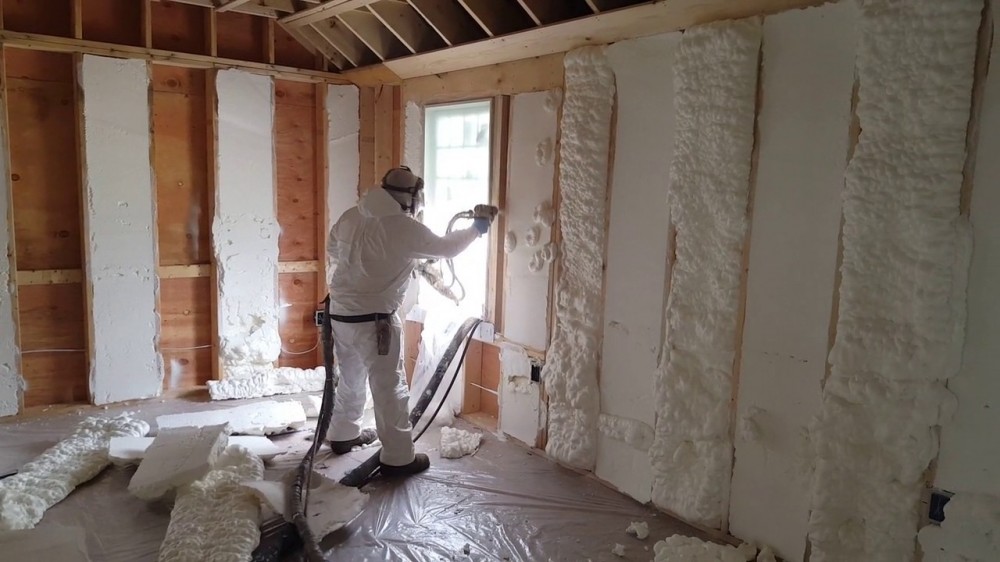
When sprayed, liquid polyurethane foam penetrates all cracks, leaving no gaps near structural elements, pipes, doors, and windows. After curing, it forms a single, monolithic coating of uniform thickness.

Solid foam retains its properties for decades. The coating won't break, crumble, or shrink. Even its appearance will be the same as immediately after it has fully cured. Well, maybe the surface will get dusty.
2. Safety for people, pets, and nature
Of course, polyurethane is a chemical. Moreover, its application involves certain hazardous factors, so the work must be performed by professionals wearing special protective suits. However, once the foam has completely cured, it becomes completely neutral.
Polyurethane foam is dust-free, and its particles don't become airborne, posing a health hazard, as is the case with, for example, glass wool. Fungi don't thrive on polyurethane foam, and rodents and insects don't use it as a burrowing surface. It's solid and doesn't emit any fumes. Its safety is confirmed by certificates issued based on conducted tests.
3. Durability and damage resistance
Damaging the coating, especially closed-cell foam, is quite difficult. Accidental damage is virtually impossible. Polyurethane foam is resistant to moisture, repeated temperature changes, and aggressive environments. Polyurethane foam insulation only requires protection from sunlight.
Pro Tip: Get professional Attic Space Insulation Services in Napa, CA. Improve home energy efficiency, reduce utility bills, and keep your attic comfortable year-round.

4. Additional protection of structural materials
There's no gap between the polyurethane foam insulation and the surface being insulated, preventing moisture accumulation, condensation, and the growth of dangerous microorganisms. As a result, polyurethane foam insulation protects metal from rust and wood from fungi, extending their lifespan.
5. Vapor permeability
Despite the monolithic nature of the resulting coating, polyurethane foam insulation does not create a "greenhouse effect" in the home. Polyurethane foam's vapor permeability is approximately the same as that of wood, and the comfort of living in a wooden home is self-evident.
6. High speed of work production
Two people can insulate up to 250 m² of surface area with polyurethane foam in a single workday. This means that insulating the roof, basement, and walls of a typical private home will take less than one workday in the vast majority of cases. The foam hardens in just a few minutes. Repairs or construction work can resume on the insulated home the very next day.
7. Light weight
By using components in different proportions, you can achieve different bubble contents in the polyurethane foam and adjust their size. However, in any case, one of the main components of the finished coating will be the gas-air mixture in the pores.
An important factor reducing the overall weight of polyurethane foam insulation is the absence of a frame or other auxiliary or fastening elements. The foam is applied directly to the structures being insulated.
8. Good adhesion to all building materials
When applied, polyurethane foam penetrates the smallest pores, firmly adhering to the surface of wood, metal, and concrete. In some cases, preliminary preparation of the surface to be insulated is required: cleaning or drying, or heating in winter.