

Residential insulation myths often lead homeowners to make decisions that result in higher utility bills, reduced comfort, and potential structural damage. Residential insulation experts consistently point out that the most pervasive misunderstanding is the belief that insulation functions solely as a barrier against cold temperatures. In reality, insulation is a comprehensive system designed to manage heat transfer, airflow, and moisture control simultaneously. Believing outdated information frequently causes property owners to install the wrong materials or neglect critical areas of the building envelope, resulting in energy waste that persists for the life of the home.
This article corrects eight common misconceptions by applying modern building science principles supported by residential insulation experts. It explains why R-value is not the only metric that matters, clarifies the relationship between airtight homes and rot, and provides region-specific guidance for the Pacific Northwest. Readers will gain the knowledge necessary to evaluate their insulation needs accurately and avoid costly renovation errors.
Myth 1: R-Value Is the Only Metric That Matters
For decades, the insulation industry has marketed products based almost exclusively on R-value, which measures a material's resistance to conductive heat flow. While important, this single number fails to account for air leakage, which is often the primary source of energy loss in a home.

The Role of Air Barriers
A high R-value is ineffective if air can pass freely through or around the insulation material. Fiberglass batts, for example, may have a respectable R-value on the label, but they function like a wool sweater; they keep you warm only if the air is still. If a wind blows through the sweater, the heat escapes instantly.
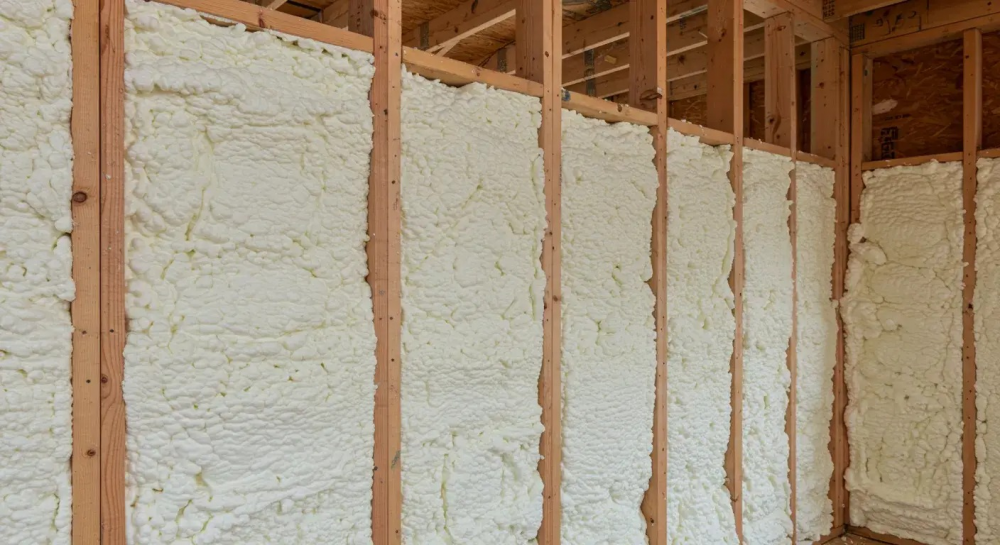
Modern energy efficiency relies on stopping convective heat loss, the movement of air. Materials like spray foam provide both a high R-value and a monolithic air seal. This combination stops the "stack effect" where warm air rises and escapes through the attic, dragging cold air in from the bottom of the house. Focusing solely on R-value without addressing air sealing is a recipe for continued drafts and high bills.
Myth 2: "If It Ain't Broke, Don't Fix It" (Old Insulation Is Fine)
Many homeowners assume that insulation is a permanent fixture that never degrades. In reality, traditional materials like fiberglass and cellulose have a limited lifespan and often lose effectiveness over time.
Settling and Displacement
Blown-in cellulose settles under its own weight, creating gaps at the top of wall cavities or reducing the depth in attics. Fiberglass batts can sag due to gravity or moisture absorption, causing them to pull away from the framing studs. Even a small gap of 5% in the insulation coverage can result in a 50% drop in effective thermal performance.
Furthermore, old insulation in the Seattle area often becomes a filter for dust and a nesting ground for rodents. Over the course of 20 or 30 years, the material becomes laden with allergens and pest waste, which can negatively impact indoor air quality.

Myth 3: You Can Simply Add New Insulation Over the Old
Layering new material on top of old insulation can seem cost-effective, but it often just buries existing problems rather than solving them.
The Risk of Trapped Moisture
In the damp climate of the Pacific Northwest, old insulation may hold moisture or mold spores. Covering this with a new layer traps the dampness against the ceiling joists or wall studs, accelerating wood rot.
Additionally, applying a vapor barrier on top of existing insulation creates a "vapor sandwich." This occurs when moisture gets trapped between two impermeable layers, leading to condensation and decay. Professional removal of the old material allows for inspection of the substrate, air sealing of penetrations, and a fresh, sanitary start.

Myth 4: Spray Foam Insulation Causes Wood Rot
A persistent myth suggests that because spray foam seals wood tightly, it causes the wood to rot by preventing it from "breathing." This misunderstanding stems from incorrect applications or a lack of understanding regarding vapor drive.
Keeping Wood Dry
Wood rot requires moisture. Closed-cell spray foam is water-resistant and acts as a vapor retarder. When applied to roof decks or walls, it prevents warm, moist indoor air from reaching cold exterior surfaces where condensation would occur. By stopping the condensation cycle, spray foam actually protects the structural integrity of the wood.
Rot occurs when bulk water (like a roof leak) is trapped, or when open-cell foam is used in a damp environment without a proper vapor retarder. Qualified specialists understand these physics and select the correct foam density to ensure the assembly remains dry.
Myth 5: Insulation Is Only Necessary for Cold Climates
While Seattle is known for its grey, chilly winters, insulation is equally important for keeping heat out during the summer.
Blocking Radiant Heat
In July and August, the sun beats down on the roof, raising attic temperatures to over 140 degrees Fahrenheit. Without an effective thermal barrier, this radiant heat penetrates the ceiling and raises the temperature of the living space.
Proper insulation acts as a shield, preventing this heat transfer. This keeps the home cooler and reduces the load on air conditioning systems. In an era of rising summer temperatures, insulation is a year-round asset for comfort.
Bonus Tip: Rim Joist Sealing
The rim joist area, where the wooden house frame sits on the concrete foundation, is often uninsulated in older homes. Sealing this perimeter with spray foam prevents summer heat from entering the basement and keeps floors warmer in the winter.
Myth 6: Houses Need to "Breathe" Through Leaks
The phrase "a house needs to breathe" is often misinterpreted to mean that random air leaks are beneficial. This is false.
Build Tight, Ventilate Right
Building science dictates that a home should be sealed tightly to control energy loss and pollutant entry. "Breathing" should occur through controlled mechanical ventilation, not through dirty cracks in the crawl space or attic.
Reliance on accidental leaks brings in unfiltered air containing pollen, wildfire smoke, and humidity. A sealed home with an Energy Recovery Ventilator (ERV) provides fresh, filtered air while retaining thermal energy, offering a healthier environment than a "leaky" house ever could.
Myth 7: Vents Should Never Be Covered
Standard building codes traditionally required attic and crawl space vents to remove moisture. However, modern unvented assemblies have proven superior in many applications.
The Conditioned Attic and Crawl Space
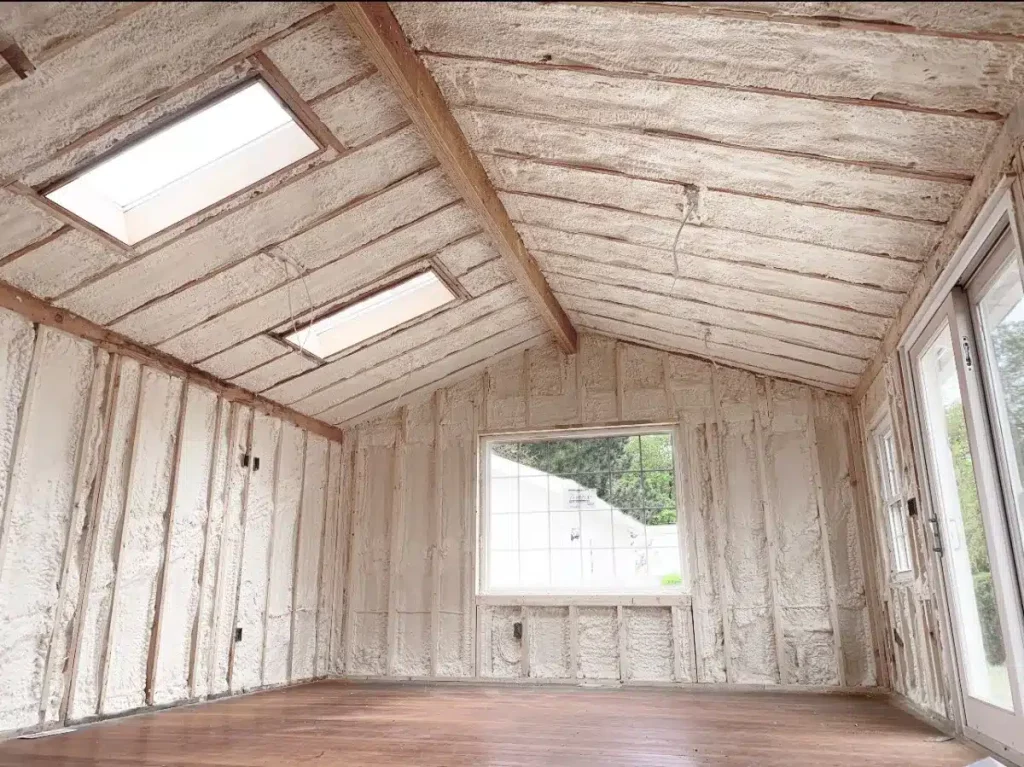
By moving the insulation boundary from the floor of the attic to the underside of the roof deck, the attic becomes a "conditioned space." This means it stays within a few degrees of the house temperature. In this scenario, soffit and ridge vents are sealed to prevent humid outdoor air from entering.
The same logic applies to crawl spaces. Encapsulating the crawl space and insulating the foundation walls (rather than the subfloor) eliminates the need for vents that let in damp, cold air. This method protects plumbing pipes from freezing and reduces humidity levels significantly.
Myth 8: DIY Insulation Is Just as Good as Professional
Hardware stores sell DIY spray foam kits and fiberglass rolls, leading many to believe they can achieve professional results on a weekend.
The Gap in Performance
Professional insulation is not just about the material; it is about the application. Industrial spray foam rigs heat chemicals to precise temperatures to ensure a perfect reaction and bond. DIY kits often result in off-ratio foam that shrinks or fails to cure properly.
With fiberglass, the "performance gap" is literal. Amateurs often leave small gaps around outlets, pipes, and odd-shaped corners. These voids compromise the integrity of the entire system. Professionals have the tools and experience to ensure 100% coverage.
Comparison of Insulation Strategies
The following table highlights the differences between outdated practices (myths) and modern building science solutions.
|
Feature |
Myth / Old Standard |
Reality / Modern Standard |
|---|---|---|
|
Primary Metric |
R-Value only (Thermal Resistance) |
Air Barrier + R-Value |
|
Airflow Strategy |
"Houses need to breathe" (Leaks) |
"Build tight, ventilate right" |
|
Attic Approach |
Insulate the floor, vent the roof |
Insulate the roof deck (Conditioned) |
|
Moisture Control |
Ventilation removes moisture |
Vapor retarders prevent moisture |
|
Longevity |
Fiberglass/Cellulose settles |
Closed-cell foam adds structure |
|
Summer Function |
Irrelevant |
Blocks radiant heat gain |
Things to Consider Before Making a Decision
Before committing to an insulation upgrade, property owners should evaluate their specific situation to ensure the investment yields the expected return.
Regional Climate Factors
In Zone 4 Marine climates like Seattle, moisture is the primary enemy. Materials that absorb water, like open-cell foam or cellulose, must be used with care and proper vapor barriers. Closed-cell foam is often the safer choice for exterior walls and below-grade areas due to its impermeability.
Long-Term Occupancy Plans
High-performance insulation is an investment with a payback period of 5 to 7 years through energy savings. If a homeowner plans to move within a year, a less expensive retrofit might make sense. However, for long-term residents, the durability and energy savings of spray foam offer a superior ROI.
Questions People Ask About Insulation Myths
Here are five questions that clear up remaining confusion regarding residential insulation.
Does spray foam insulation attract termites or pests?
Spray foam does not contain any food source for pests. While it is not a pesticide, its dense structure makes it difficult for rodents to burrow through compared to soft fiberglass. It also blocks the scent trails that pests follow.
Will high-performance insulation soundproof my home?
Yes, replacing old, settled insulation with modern materials significantly reduces noise transfer. Open-cell foam is particularly effective at absorbing sound waves, making homes quieter near busy streets.
Is it expensive to remove old insulation?
Removal adds to the initial cost but is often necessary for a healthy home. Vacuuming out old, dirty loose-fill allows the installer to air-seal the attic floor, which is impossible to do with debris in the way.
Does insulation really affect resale value?
Yes. Energy-efficient homes are in high demand. Documentation of professional upgrades, especially those that improve the energy rating of the house, is a strong selling point for buyers looking for lower utility costs.
Can insulation solve ice dams?
Ice dams are caused by heat escaping into the attic and melting snow on the roof. By sealing the attic and preventing this heat loss, proper insulation is the most effective way to stop ice dams permanently.
Summary of Key Takeaways
Dispelling these eight myths reveals that effective insulation is about more than just thickness; it is about creating a continuous, airtight, and moisture-resistant boundary. Modern building science prioritizes air sealing and moisture management to protect both the structure and the bank account of the homeowner.
By moving past the "R-value only" mindset and understanding the importance of treating the house as a system, property owners can make informed decisions. Upgrading to materials that offer air sealing, such as spray foam, solves the root causes of energy waste and discomfort, rather than just masking the symptoms.
Taking the Next Step for Your Home
Homeowners ready to look past the myths and implement real solutions should schedule a professional assessment. An expert evaluation can identify the specific air leaks and thermal bridges that generic advice misses.
Cascadia Spray Foam Insulation of Seattle provides data-driven energy solutions for homes in the Pacific Northwest. They specialize in identifying the unique moisture and airflow challenges of the region and installing high-performance systems that last. To discuss your project or schedule a site visit, contact them at info@cascadiasprayfoam.com or call (425) 386-3500.
Reviewer: Olivia Thompson has spent 10 years working in spray foam insulation, helping companies grow their visibility. She reviewed this article and provided valuable suggestions on how to better align the content with the needs and expectations of customers, ensuring it resonates with the target audience.





