

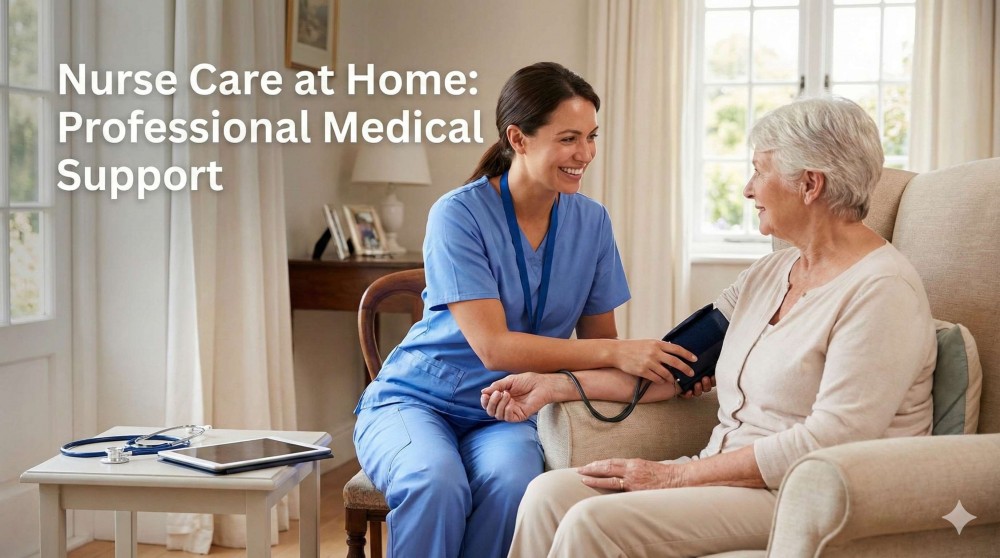
Medical care does not always require a hospital bed. In many cases, patients recover better when they are surrounded by familiar faces, comfortable routines, and a calm environment. This is why nurse care at home has become an essential part of modern healthcare. It offers professional medical support while allowing patients to heal where they feel safest — at home.
From post-surgical recovery to long-term medical supervision, home-based nursing brings hospital-level care to your doorstep without the stress of repeated hospital visits.
What Is Nurse Care at Home?
Nurse care at home involves trained and certified nurses providing medical assistance to patients in their own homes. These services are designed for individuals who require professional medical attention but do not need to be hospitalised.

Nursing services at home are commonly used for:
-
Post-surgery recovery
-
Chronic illness management
-
Wound care and dressing
-
IV therapy and injections

-
Elderly medical supervision
-
Palliative and long-term care
A nurse at home ensures that medical procedures are carried out safely, accurately, and under proper clinical guidance.
Why Families Are Choosing Home-Based Nursing Care
For many families, frequent hospital visits can be exhausting, costly, and emotionally draining. Home healthcare provides an effective alternative that combines medical expertise with comfort and convenience.
Some of the key reasons families choose nurse care at home include:
-
Personalised one-on-one medical attention
-
Reduced risk of hospital-acquired infections
-
Faster recovery in familiar surroundings
-
Flexible care schedules
-
Emotional reassurance for patients and families
Home-based care allows families to remain involved in the recovery process without the pressure of managing medical tasks themselves.
The Role of Professional Nurses in Home Healthcare
A professional nurse does more than administer medication. Nurses observe patient behaviour, monitor vital signs, and identify early warning signs that may require medical intervention.
Their responsibilities often include:
-
Monitoring blood pressure, oxygen levels, and vitals
-
Administering medications as prescribed
-
Managing catheters, tubes, and wound care
-
Assisting with mobility and daily activities
-
Educating family members on care routines
This continuous supervision ensures patient safety while reducing the likelihood of complications.
When Is Nurse Care at Home Needed?
Nursing services at home are suitable for a wide range of situations. Some patients may need short-term care, while others require long-term or even round-the-clock medical supervision.
Common situations include:
-
Recovery after surgery or hospital discharge
-
Elderly patients with multiple health conditions
-
Patients requiring regular injections or IV therapy
-
Bedridden patients needing daily medical attention
-
Individuals requiring palliative or end-of-life care
In each case, the care plan is tailored to the patient’s medical condition, lifestyle, and family preferences.
Emotional Comfort Enhances Physical Recovery
Healing is not only physical — it is emotional. Being at home helps patients feel calm, secure, and supported, which directly impacts recovery outcomes.
Patients receiving care at home often experience:
-
Reduced anxiety
-
Improved cooperation with treatment
-
Better sleep and appetite
-
Higher emotional stability
When medical care is combined with emotional comfort, recovery becomes smoother and more sustainable.
Safety, Hygiene, and Clinical Protocols
One concern families often have is safety. Professional home healthcare providers follow strict hygiene standards and clinical protocols to ensure high-quality care.
This includes:
-
Proper sterilisation of medical tools
-
Infection control practices
-
Regular supervision by senior medical staff
-
Clear documentation and reporting
These standards ensure that nursing care at home meets professional healthcare benchmarks.
Supporting Families Through Reliable Care
Caring for a medically dependent loved one can be overwhelming. Nurse care at home supports families by sharing responsibility and providing reassurance.
Families benefit from:
-
Reduced caregiver stress
-
Professional medical oversight
-
Clear communication about patient progress
-
Time to focus on emotional support rather than clinical tasks
This balance allows families to remain emotionally present while professionals manage medical needs.
A Smarter Approach to Healthcare
As healthcare evolves, the focus is shifting toward patient-centred solutions. Home healthcare allows medical care to adapt to the patient’s life, not the other way around.
Nurse care at home represents a smarter, more humane approach to healthcare — one that respects comfort, dignity, and safety without compromising medical quality.
Looking Ahead: The Future of Home Nursing
With advancements in training, technology, and care models, home-based nursing is becoming an integral part of healthcare delivery. As families continue to seek flexible and personalised solutions, nursing services at home will play an even greater role in patient recovery and long-term care.





