

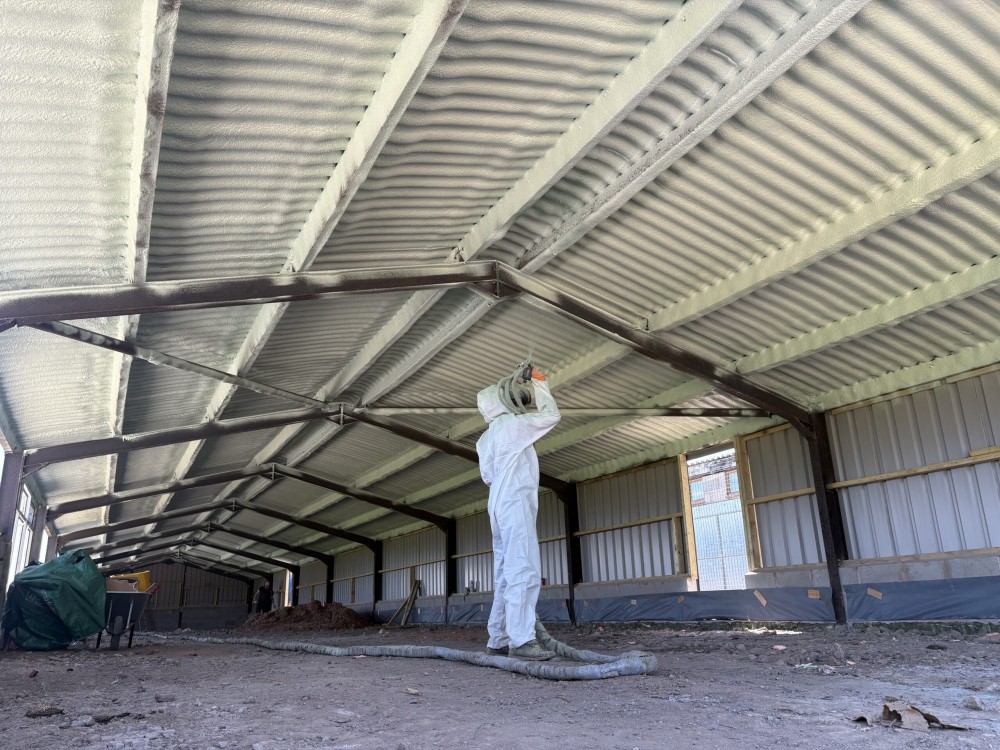
Commercial roofs last longer when treated with spray foam because the material creates a seamless, monolithic barrier that eliminates leaks at the seams and joints. By removing these common failure points, property owners prevent water from reaching the underlying structure and causing premature decay. This protective layer acts as a shield, reflecting heat and resisting the damaging effects of weather extremes over many decades.
Buildings that use commercial spray foam insulation often see their roofs last well beyond 30 or 40 years with simple maintenance. The material is lightweight and can usually be applied directly over an existing roof, avoiding the stress of a complete tear-off and replacement. This approach preserves the building's structural integrity while providing a high-performance surface that remains waterproof throughout its life.
Enhancing Structural Integrity and Waterproofing
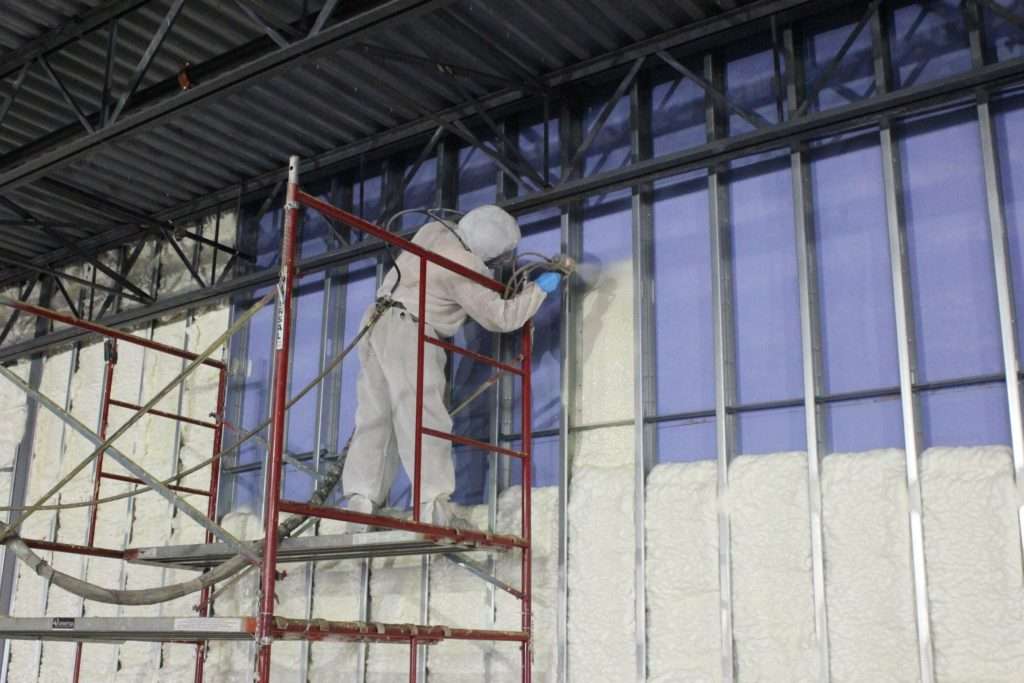
Commercial roofs are typically large, flat surfaces that are prone to ponding water and wind damage. Spray foam provides a durable, self-flashing surface, wrapping around pipes, vents, and parapet walls without the need for metal strips or caulking that eventually fail. This single, continuous layer moves with the building and stays attached even during severe weather events.
Seamless Barrier Creation
The application process involves a liquid that expands into a solid, closed-cell foam in seconds. This expansion allows the material to fill every tiny crack and crevice that traditional membranes might miss. Because there are no mechanical fasteners or overlapping sheets, the risk of water creeping under the system is virtually removed.
- Spray foam systems eliminate the thousands of feet of seams found on typical commercial roofs, where most leaks originate.
- The material is incredibly lightweight, adding only about half a pound per square foot, which reduces the dead load on the building structure.
- Closed-cell foam is strong enough to support the weight of maintenance workers and equipment without compressing or puncturing easily.
- Property managers can easily repair minor damage with a simple sealant, as the foam prevents water from traveling laterally through the system.
Eliminating Common Failure Points
Most roofing systems fail due to details, such as corners and equipment curbs. Spray foam handles these complex shapes with ease by conforming to any geometry. This flexibility ensures that the most vulnerable parts of the roof receive the same level of protection as the flat sections.
Bonus Tip
Scheduling a professional inspection twice a year, especially after major storms, helps identify minor issues before they impact the building's interior.
Maintaining the Protective Layer
Keeping the top coating clean and intact is the primary requirement for a long-lasting foam roof. This coating protects the foam from UV rays and ensures the system remains reflective and calm during the summer months.

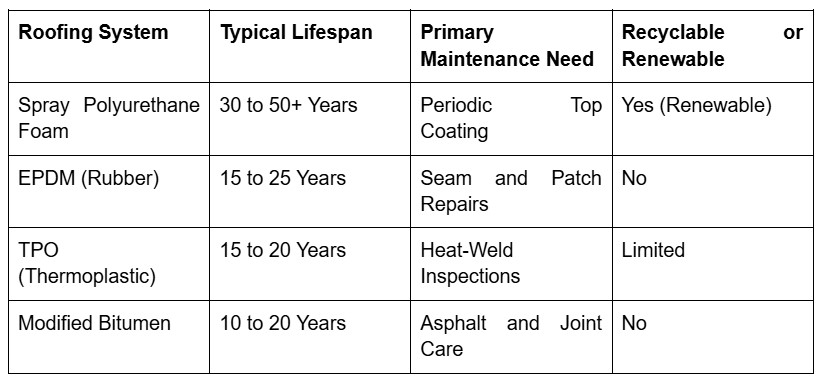
Comparison of Commercial Roofing Longevity
The durability of a roof depends heavily on how the material reacts to the environment. Different systems have varying lifespans and maintenance requirements that property owners should evaluate. Spray foam stands out for its renewability, as a simple recoat every few decades can restart the warranty and extend the roof's life.
Protecting Against Environmental Stress
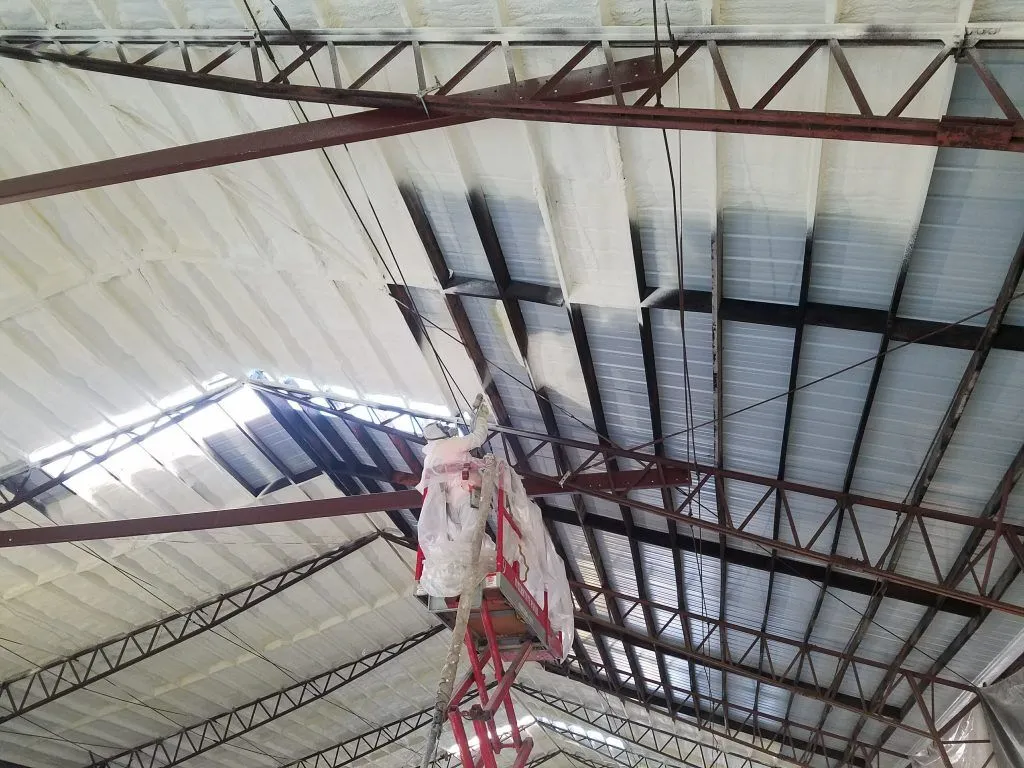
Environmental factors like UV radiation and temperature fluctuations cause roofing materials to expand and contract. This cycle, known as thermal shock, eventually causes membranes to crack or pull away from the edges. Spray foam has a high R-value that insulates the roof deck from these temperature swings, keeping the structure stable.
- The white reflective coating applied to the foam can reflect up to 85 percent of solar radiation, significantly lowering roof surface temperatures.
- By reducing thermal expansion, the foam prevents the stress that typically causes fasteners to back out of the roof deck.
- Spray foam acts as a powerful air barrier, stopping the loss of conditioned air through the roof assembly and lowering energy costs.
- In regions with high winds, the adhesion of spray foam to the substrate provides superior uplift resistance compared to mechanically fastened systems.
Payback and Return on Investment
The initial cost of a foam roof is often recovered through energy savings within a few years. Because the roof does not need to be replaced as often as other systems, the long-term cost of ownership is much lower. Businesses can direct their capital toward operations rather than recurring roofing emergencies.
Managing Severe Weather Impacts
In areas prone to hail or heavy rain, the closed-cell foam's density provides a resilient cushion. Even if the top layer is bruised, the foam's closed-cell structure prevents water from soaking into the building. This provides a safety margin that other materials simply cannot match.
Bonus Tip
Asking for a thickness of at least 1.5 inches ensures the best balance of structural strength and thermal performance for most commercial applications.
Things to Consider Before Making a Decision
Before choosing a spray foam system, the property owner should ensure the current roof deck is dry and structurally sound. While foam can be applied over many existing roofs, any trapped moisture must be removed first to prevent future issues. A professional moisture scan is a standard part of the preparation process.
Coating Selection for Specific Climates
The type of top coating used over the foam should match the local environment. Silicone coatings are excellent for areas with frequent rain or ponding water, while acrylic coatings may be suitable for drier climates. Selecting the right finish ensures the foam remains protected from the elements throughout its service life.
Common Questions About Commercial Foam Roofing
How often does a spray foam roof need a new coating?
A new protective coating is typically required every 15 to 20 years, depending on the environmental conditions and the thickness of the initial application. This process is much cheaper than a complete replacement and restores the roof to like-new condition.
Can spray foam be applied over any roofing material?
It is compatible with most common substrates, including metal, wood, concrete, and many existing membrane systems. The key requirement is that the surface must be clean, dry, and securely attached to the building.
Is spray foam roofing fire-resistant?
Yes, most commercial spray foam systems are rated as Class A fire-resistant. They include flame-retardant materials and are tested to meet strict safety standards for commercial and industrial settings.
How does the material handle foot traffic?
Closed-cell spray foam is dense and complex, making it perfectly safe for regular maintenance traffic. For areas that require frequent access, such as paths to HVAC equipment, extra-thick coating or walking pads can be added for more protection.
What happens if the roof is punctured?
If a sharp object punctures the foam, the damage is localized. Because the foam is closed-cell, water cannot travel through the material to other parts of the roof. Repairs are usually made quickly with a small amount of compatible sealant.
Final Summary of Benefits
Maintaining a commercial roof requires a strategy that focuses on prevention rather than constant repair. Spray foam offers a unique advantage by creating a single, durable layer that protects the building from the top down. By eliminating seams and providing superior insulation, it remains a top choice for those looking to maximize the life of their facility. Property owners should assess their current roof condition and consider how a seamless system can reduce their long-term expenses.
Professional Support for Property Management
Property owners can find reliable roofing solutions by working with experienced contractors. Supreme Spray Foam LV provides comprehensive services to help businesses protect their investments with high-quality foam applications. They offer expert assessments to determine if a building is a good candidate for a seamless roofing system. To discuss a project or schedule an evaluation, they can be reached at (702) 904-9895 or via email at info@supremesprayfoamlv.com. Taking this step can lead to a more durable, energy-efficient building in the future.
Reviewer: Michael Carter reviewed this article using insight gained over 12 years in the spray foam business. His feedback focused on helping contractors reach new customers without overcomplicating their message.





