

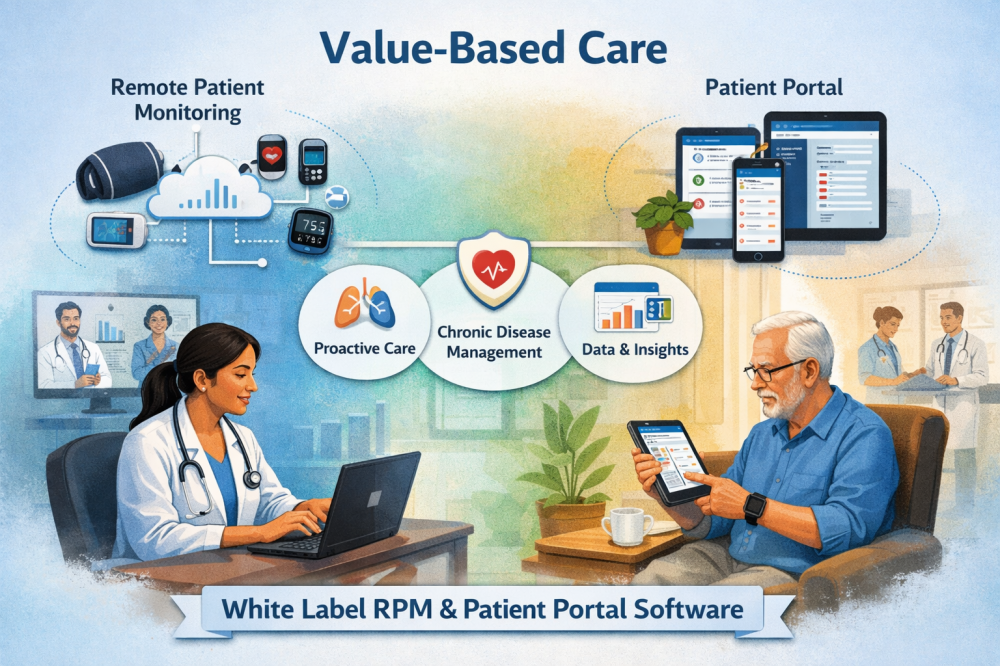
Healthcare systems worldwide are moving away from traditional fee-for-service models toward value-based care frameworks. In value-based care, providers are rewarded for patient outcomes, quality of care, and cost efficiency rather than the number of services delivered. This shift requires continuous patient engagement, proactive monitoring, early intervention, and measurable outcomes across the care continuum.
Digital health technologies play a foundational role in enabling this transition. Among them, White Label Remote Patient Monitoring Software has emerged as a strategic enabler, allowing healthcare organizations to monitor patients beyond clinical settings while maintaining control over branding, workflows, and data ownership.
What Is White Label Remote Patient Monitoring Software?
White Label Remote Patient Monitoring Software refers to a ready-to-deploy, customizable digital platform that healthcare providers can rebrand as their own to remotely track patient health data. These platforms integrate with medical devices, wearables, and patient-reported data sources to collect real-time and longitudinal health metrics such as blood pressure, glucose levels, oxygen saturation, heart rate, and activity levels.

Unlike generic RPM tools, white label solutions are designed to align with an organization’s clinical protocols, compliance requirements, and digital ecosystem. They are often paired with dashboards for clinicians, analytics engines, and secure patient interfaces, making them suitable for scalable, outcome-driven care delivery.
Why Remote Patient Monitoring Is Central to Value-Based Care Models
Value-based care depends on three core pillars: improved patient outcomes, reduced healthcare costs, and enhanced patient experience. Remote patient monitoring directly supports each of these goals.
Continuous monitoring enables early detection of health deterioration, reducing preventable hospital admissions and emergency visits. At the same time, ongoing engagement improves patient adherence to treatment plans and lifestyle changes. From a financial perspective, RPM helps providers manage chronic conditions more efficiently, aligning with reimbursement models that reward long-term health improvements rather than episodic care.
Enabling Proactive and Preventive Care Through Continuous Data Collection
One of the strongest contributions of White Label Remote Patient Monitoring Software to value-based care is its ability to shift care from reactive to proactive. Instead of waiting for patients to report symptoms or visit clinics, clinicians receive continuous streams of health data.
This data-driven visibility allows care teams to identify risk patterns early, adjust treatment plans in real time, and intervene before conditions escalate. For patients with chronic diseases such as diabetes, hypertension, COPD, or heart failure, this proactive approach directly translates into better outcomes and lower care costs, both of which are essential metrics in value-based contracts.

Supporting Long-Term Chronic Disease Management at Scale
Chronic disease management is a cornerstone of value-based care, as chronic conditions account for a significant portion of healthcare spending. White label RPM platforms enable providers to manage large patient populations efficiently by automating routine monitoring and alerts.
Clinicians can prioritize high-risk patients based on real-time indicators, while stable patients continue self-monitoring at home. This stratified approach ensures that clinical resources are used where they have the greatest impact, improving quality scores and reducing unnecessary interventions.
Improving Patient Engagement and Accountability Through Digital Touchpoints
Patient engagement is a measurable factor in many value-based care programs. Remote monitoring platforms encourage active participation by making patients part of their own care journey.
When combined with a White Label Patient Portal software, RPM solutions provide patients with access to their health data, care plans, educational resources, and communication tools. This transparency builds trust, improves adherence, and encourages healthier behaviors. Engaged patients are more likely to follow treatment protocols, attend virtual check-ins, and report symptoms early, all of which positively influence outcome-based performance metrics.
Enhancing Care Coordination Across Multidisciplinary Teams
Value-based care often involves collaboration among primary care physicians, specialists, nurses, care coordinators, and allied health professionals. White label RPM systems centralize patient data, making it accessible to authorized stakeholders across the care team.
Shared dashboards and unified patient records reduce data silos and improve clinical decision-making. Care teams can coordinate interventions more effectively, track progress against care goals, and document outcomes required for value-based reporting and reimbursement.
Data-Driven Insights for Outcome Measurement and Reporting
Accurate measurement of outcomes is fundamental to value-based care success. White Label Remote Patient Monitoring Software provides structured, time-stamped data that can be analyzed to assess treatment effectiveness, patient adherence, and population health trends.
Advanced platforms offer analytics and reporting tools that help providers demonstrate performance against key quality indicators such as reduced readmissions, improved biometric control, and enhanced patient satisfaction. These insights support contract negotiations with payers and ensure compliance with regulatory and reimbursement frameworks.
Cost Optimization and Resource Efficiency in Value-Based Programs
Remote monitoring reduces the dependency on in-person visits for routine follow-ups, lowering operational costs for providers and reducing travel and time burdens for patients. By minimizing avoidable hospitalizations and complications, RPM directly contributes to cost containment, a critical objective in value-based care agreements.
White label solutions further enhance cost efficiency by eliminating the need to build custom platforms from scratch. Providers gain faster deployment, predictable costs, and the flexibility to scale programs as patient volumes grow.
Custom Branding and Trust Building in Patient-Facing Digital Health Solutions
Trust is a key factor in patient adoption of digital health tools. White label platforms allow healthcare organizations to present RPM and patient portal solutions under their own brand, reinforcing credibility and continuity of care.
When patients interact with a familiar, provider-branded interface, they are more likely to engage consistently and share accurate health data. This continuity strengthens the patient-provider relationship, which is essential for sustained participation in value-based care models.
Integration With Existing Health IT Ecosystems
For value-based care to function effectively, digital tools must integrate seamlessly with electronic health records, billing systems, and care management platforms. White Label Remote Patient Monitoring Software is typically designed with interoperability in mind, supporting standardized data exchange and workflow integration.
This connectivity ensures that remote monitoring data becomes part of the broader clinical and administrative ecosystem, reducing manual work, improving data accuracy, and supporting holistic patient management.
Regulatory Compliance and Data Security in Value-Based Care Delivery
Value-based care programs operate within strict regulatory and privacy frameworks. White label RPM platforms are built to meet healthcare compliance standards related to data protection, patient consent, and auditability.
Secure data handling, role-based access controls, and encrypted communication protect patient information while enabling transparent reporting. Compliance readiness is critical for organizations participating in payer contracts and government-backed value-based initiatives.
Conclusion
White Label Remote Patient Monitoring Software plays a strategic role in enabling value-based care by supporting proactive care delivery, chronic disease management, patient engagement, and outcome measurement. When combined with White Label Patient Portal software, it creates a connected digital care ecosystem that aligns clinical goals with financial incentives. By improving outcomes while controlling costs, these white label solutions empower healthcare providers to succeed in an increasingly value-driven healthcare landscape.
Frequently Asked Questions
How does White Label Remote Patient Monitoring Software differ from standard RPM platforms?
White label solutions allow healthcare organizations to rebrand and customize the software to match their workflows, clinical protocols, and patient experience, unlike generic RPM tools with limited flexibility.
Can remote patient monitoring improve reimbursement under value-based care models?
Yes. Continuous monitoring, documented outcomes, and improved patient adherence support quality metrics and performance benchmarks required for value-based reimbursements.
How does a White Label Patient Portal software complement remote monitoring?
A patient portal enables patients to view health data, communicate with care teams, and access care plans, increasing engagement and accountability alongside remote monitoring.
Is remote patient monitoring suitable for acute as well as chronic care?
While it is most commonly used for chronic disease management, RPM can also support post-acute care, recovery monitoring, and preventive health programs.
What types of healthcare organizations benefit most from white label RPM solutions?
Primary care networks, specialty clinics, hospitals, digital health providers, and population health organizations all benefit, especially those participating in outcome-based or risk-sharing care models.





