

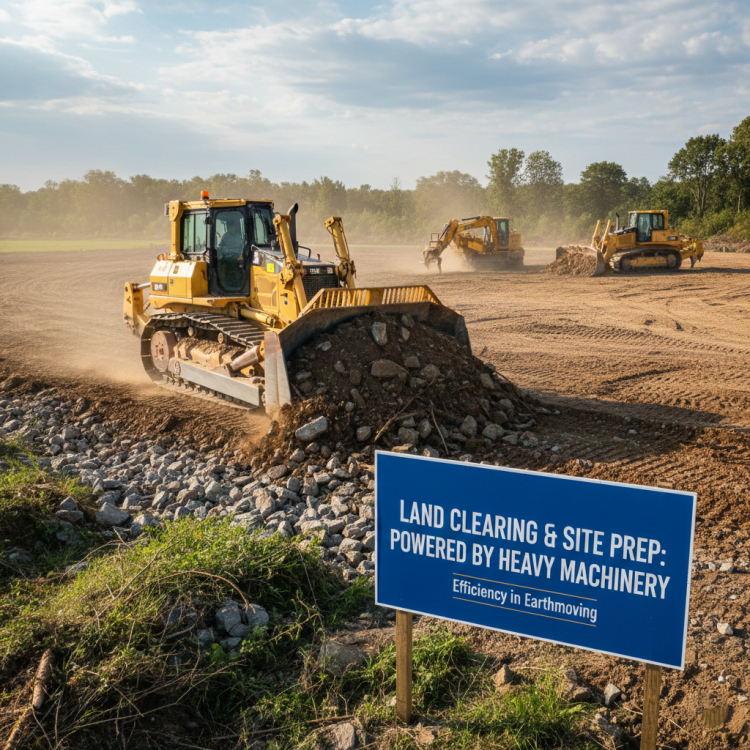
On any fresh site, the ground usually tells its own story: uneven patches, scattered rock, stubborn tree stumps, and soil that has never carried structural loads. Contractors often mention that the real work begins long before the first column or footing appears.
That early phase depends heavily on one machine that keeps turning chaotic terrain into workable platforms day after day. The bulldozer steps in here with a mix of raw force and control that many people only appreciate after seeing a full site transformation up close. Here is what you should know about their role.
Role of Bulldozers in Land Clearing
Land clearing tends to look simple from a distance, yet anyone who has walked a bush-covered site after rain knows how demanding it becomes. Thick roots, hidden rocks, and soft pockets underfoot all slow progress if handled with light equipment. A bulldozer changes that equation by combining traction, weight, and blade control so the surface can be stripped in a structured way rather than in scattered patches. The function of bulldozers in land clearing is as follows.

Clearing Vegetation and Trees Methodically
Most clearing operations start at the edges and work inward, so material always has a direction to move. The dozer blade cuts into brush and smaller trees at a slight angle, lifting roots rather than snapping trunks at ground level.
That approach reduces regrowth later because root systems do not stay intact beneath the surface. Larger trees often get pushed from the side after the operator judges lean and root spread, which keeps the fall path predictable and avoids damage to nearby features.
Stump, Root, and Rock Handling
Once trunks and bush are out of the way, stumps and rocks become the main problem. A bulldozer handles both with different techniques. Stumps rarely come out clean on the first push, so the machine often straddles the stump and works around it from several angles. The weight of the tracks, combined with short, repeated pushes from the blade, loosens the surrounding soil and gradually pops the stump free. Crews sometimes comment that clay soil hangs onto roots far more stubbornly than sandy ground, so jobs on heavy clay need extra passes and more patience.
Organizing Debris for Efficient Removal
A cleared site that still holds random piles of roots, logs, and broken branches is far from ready. This is where many crews rely heavily on the dozer again. It organizes debris into clear zones: windrows for burning or chipping, stump piles for hauling, and rock piles for potential reuse. That layout sounds like a small step, but it tends to save a surprising amount of time when trucks, grinders, or excavators arrive.
Role of Bulldozers in Leveling
Once the clutter is gone, the “true” ground finally shows itself. High ridges stand out, low pockets collect water, and original slopes might not match the design drawings as closely as expected. Leveling turns that unpredictable surface into a controlled plane that can carry structures, roads, or yards. Here is what you should know about the role of bulldozers in leveling.

Rough Grading and Slope Formation
Rough grading usually starts with a cut-and-fill strategy. Material from higher spots gets pushed into the low areas, so imported fill stays at a minimum. A straight blade or semi-U blade works across the site in long passes, shaving thin layers rather than trying to remove huge bites all at once. That approach keeps the surface smoother and reduces the risk of overcutting.
Fine Grading for Construction Tolerances
After rough grading comes the more time-consuming fine work. Here, the blade lifts only a few centimeters of soil at a time. Many operators prefer to work in overlapping passes, almost like mowing, so no ridges or missed strips remain.
On projects where pavements or slabs follow, tolerance can be tight – often within a few centimeters of the design elevation. A dozer can comfortably hit those numbers over surprisingly large areas.
Compaction Support and Layer Control
Although rollers and compactors often get the spotlight when compaction is mentioned, the bulldozer plays a strong supporting role. Before rollers arrive, the dozer spreads fill in thin layers.
Role of Bulldozers in Site Prep
By the time clearing and leveling finish, the site starts to resemble a blank canvas. Site preparation then focuses on making that canvas ready for specialists: foundation crews, utility installers, road builders, and landscapers. A bulldozer continues to move through these steps, but now with a more detailed checklist in mind. Here is what you should be aware of.
Supporting Utility Layout and Access Routes
As trenches get marked for water, sewer, or electrical runs, the dozer helps maintain working platforms and access. On some sites, it cuts shallow starter trenches or benches that guide excavators along consistent lines.
Once utilities go in, the machine returns to spread and compact backfill, keeping cover depths even and surface grades consistent over the new lines. Uneven backfill shows up later as dips or bumps, especially under roads or parking areas.
Erosion Control and Edge Detailing
A site that handles one big storm without washing away earns a lot of respect. Part of that performance comes from erosion control features shaped by the dozer. Perimeter berms, diversion swales, and gentle side slopes guide water into controlled paths rather than letting it carve random channels down steep cuts. This is especially important where stockpiles or bare slopes sit exposed between phases of work.
Final Proofing
The last passes of a bulldozer on a site feel different. At this point, the mission shifts from big changes to subtle corrections. The operator smooths minor ripples, knocks down small high spots, and cleans loose material away from pad edges and road interfaces. Some contractors like to perform a proof roll with a loaded truck or other heavy equipment over key areas.
Conclusion
Across clearing, leveling, and detailed site preparation, the bulldozer holds the project together. Every push of the blade removes one more obstacle or irregularity between raw land and a dependable working surface. Over time, many crews come to view that early earthmoving phase as the point where project success is set in motion long before the first structural element appears.





