

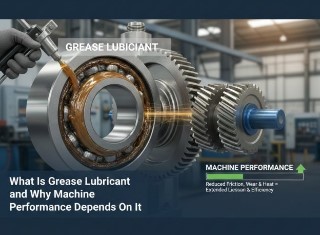
Machines do not fail suddenly. Most of the time, they give small warnings such as noise, heat, vibration, or slow movement. One of the biggest reasons behind these problems is improper lubrication. This is where grease lubricants solve all these issues.
If you are new to machines, workshops, or industrial equipment, grease may look like just another messy substance applied during maintenance. But in reality, grease lubricant plays a critical role in how machines perform every single day. From small motors to heavy industrial equipment, grease decides how smoothly parts move, how long components last, and how often breakdowns happen.
This article explains what grease lubricant is, how it works inside machinery, and why machine performance depends so heavily on effective lubrication.

What Is Grease Lubricant?
Grease lubricant is a thick, semi-solid substance used to reduce friction between moving machine parts. This slimy material does not flow easily. It stays where it is applied and continues to protect the surface over a longer period.
Machines have many parts that rotate, slide, or carry heavy loads. When these metal parts touch each other directly, friction increases. Friction leads to heat, wear, and damage. Grease lubricant creates a protective layer between these parts so they can move smoothly without grinding against each other.
In simple words, a grease lubricant acts like a cushion between metal surfaces.
What Is Grease Made Of?
Grease lubricant may look like a normal sticky substance but it is carefully formulated. It usually contains three main components.

Base Oil
The base oil is the main lubricating element. It reduces friction between surfaces and makes the movement of the rotating parts easy. The performance of grease largely depends on the quality of this oil.
Thickener
The thickener gives grease its semi-solid structure. It holds the oil in place like a sponge. Without the thickener, the grease would behave like oil and flow away and hamper other delicate parts where greasing is not needed.
Additives
Additives improve grease performance. They help resist heat, prevent rust, reduce wear, and protect against moisture. These additives are especially important in harsh working conditions.
Why Machines Need Grease Lubricant
Machines are built with precision. Even small gaps between parts can cost you time and money. Without proper lubrication, friction increases rapidly and damages components faster than expected. A grease lubricant:
Reduces Friction
Friction is the enemy of machine performance. Grease reduces friction by forming a thin film between moving parts. This allows parts to glide instead of scraping off.
Prevents Wear and Tear
Metal-to-metal contact causes surface damage over time. Grease protects surfaces and reduces wear. This extends machine life.
Controls Heat
Friction produces heat. Excess heat weakens metal parts and reduces efficiency. Grease helps control this heat by reducing friction and distributing load evenly.
Protects Against Contaminants
Dust, dirt, water, and chemicals can damage machine parts. Grease acts as a sealant which blocks contaminants from entering sensitive areas like bearings and joints.
Where Grease Lubricant Is Commonly Used
Grease is used in many machine components where oil lubrication is not practical.
Bearings
Bearings are one of the most common applications of grease. They support rotating shafts and carry loads. Proper greasing keeps bearings smooth, crank-free, and long-lasting.
Gears
Gears transfer power by pushing against each other again and again. This creates a lot of pressure. Without grease, the gear surfaces start rubbing directly, which causes damage over time. Grease helps the gears move smoothly and protects them from wearing out too soon.
Joints and Pins
Joints and pins allow machines to move and bend where needed. They also carry a lot of weight. When these parts are not greased properly, they become stiff, noisy, and hard to move. Grease keeps them flexible and helps the machine move evenly.
Motors and Industrial Equipment
Machines like motors, pumps, and conveyors run for long hours every day. Grease helps their internal parts stay in place and move smoothly. With proper lubrication, these machines run better, use less effort, and face fewer breakdowns.
How Improper Greasing Affects Machines in Real Life
When greasing is ignored or done incorrectly, machines don’t stop instantly. They start showing early signs of warning. Power consumption goes up because parts face more resistance. Bearings begin to heat up faster. Over time, small issues turn into sudden failures during operation.
In many workshops, breakdowns happen not because the machine is old, but because lubrication was delayed or skipped. Improper greasing often leads to unplanned downtime, production delays, and increased repair costs that could have been easily avoided.
Here are some of the things that you should know when you grease your machinery.
1. Under-Greasing vs Over-Greasing
Many people believe adding more grease will automatically protect the machine better. In reality, both too little and too much grease can cause problems.
When a machine is under-greased, metal parts start running dry. Friction increases, heat builds up, and wear accelerates. This is one of the most common reasons for bearing failure.
Over-greasing is equally harmful. Excess grease creates pressure inside components, damages seals, and traps heat. Instead of improving performance, it makes machines work harder than needed. The right amount of grease matters more than frequent greasing.
2. Signs That a Machine Needs Re-Greasing
Machines alert you when they need attention. You just need to notice the signs.
If a machine starts making unusual noise, feels hotter than normal, or shows increased vibration, lubrication could be the issue. Uneven movement or stiffness in joints is another clear signal. In some cases, old grease may look dry, hardened, or contaminated with dust.
3. Common Greasing Mistakes People Make
One common mistake is using the same grease for every machine. Different machines have different load, speed, and temperature requirements. Another mistake is mixing grease types, which can reduce lubrication performance.
Skipping the cleaning process before applying fresh grease is also risky. Dirt trapped inside grease acts like sandpaper on metal surfaces. Ignoring manufacturer guidelines often leads to long-term damage that shows up much later.
Final Thoughts
Grease lubricants may not be visible during daily operation, but its impact is constant. It protects moving parts, supports smooth performance, and prevents avoidable damage. When machines are greased correctly, they work efficiently, stay reliable, and demand less attention in the long run.





