
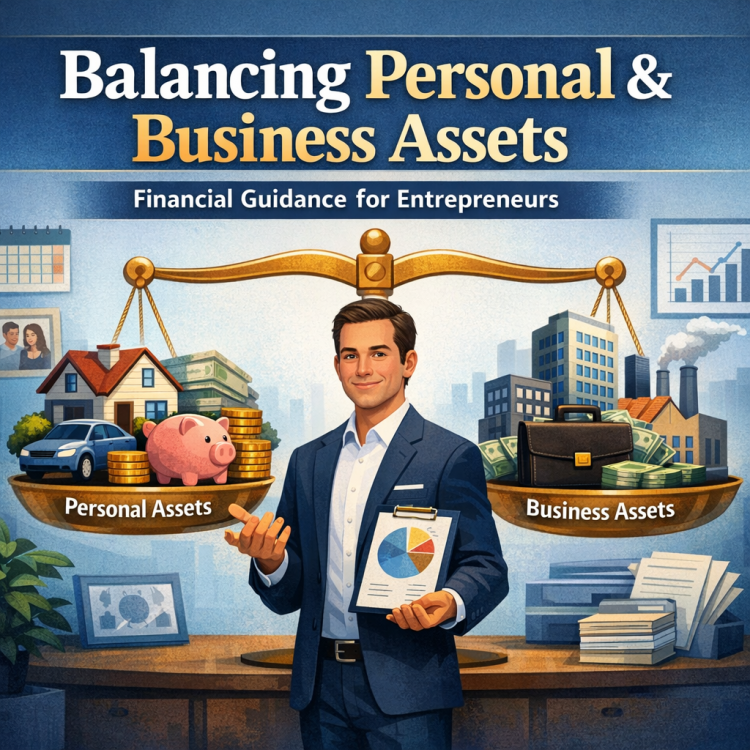
The journey of building a company is often romanticized as a path to ultimate freedom, but the reality for most founders is a constant tug-of-war between their business needs and their personal security. It is common for founders to pour every available dollar back into their company, viewing it as their primary investment vehicle. While this belief in one's own vision is necessary for success, it creates a dangerous lack of diversification. If the business hits a rough patch, personal stability often crumbles right along with it.
The Danger of the "All-In" Approach
The biggest mistake founders make is treating their business as their only retirement plan. This concentration of risk is where a financial advisor for entrepreneurs steps in to provide a reality check. The role of this advisor is distinct from a standard wealth manager because they understand the unique psychology of a founder. They know that you likely have an irregular income stream and that your "net worth" is tied up in illiquid assets (your company equity).
An advisor specializing in this niche will force you to draw a hard line between business capital and personal savings. They will help you determine a "safe salary" to pay yourself, ensuring that you are contributing to personal investment accounts consistently, regardless of how the business is performing in a given month. This ensures that you are building wealth outside of your company, protecting your family’s future even if the market shifts against your industry.

Holistic Wealth Management
Once the separation of assets begins, the focus shifts to growth. Wealth management for entrepreneurs is about more than just picking stocks; it is about tax efficiency and asset location. Entrepreneurs have access to different retirement vehicles than the average employee, such as SEP IRAs, Solo 401(k)s, or Defined Benefit Plans.
These tools allow for significantly higher contribution limits, which can serve a dual purpose: reducing your current taxable business income and supercharging your retirement savings. A specialized wealth manager will structure your portfolio to counterbalance the risks you take in your business. For example, if your business is in real estate, your personal portfolio shouldn't be heavy in REITs. If you are in tech, you might want to avoid overexposure to the technology sector in your personal stock holdings. This counter-cyclical approach ensures that a downturn in your industry doesn't wipe out your personal portfolio simultaneously.
Creating a Roadmap for the Future
Beyond stocks and bonds, the core of the relationship is financial planning for entrepreneurs. This involves mapping out the lifecycle of the business owner. Early in the journey, the plan focuses on cash flow management and risk mitigation (like Key Person Insurance or Buy-Sell Agreements). As the business matures, the plan shifts toward tax minimization and succession planning.
A robust financial plan answers the difficult questions: "What happens to my family if I can no longer run the business?" and "How do I extract value from the company without hurting its operations?" This planning is dynamic. As your business scales from a startup to a mature enterprise, your personal financial needs will change. You might need to fund a child’s education, purchase a second home, or support philanthropic causes. The plan bridges the gap between the cash your business generates and the life you want to live.
The Exit Strategy Connection
Ultimately, the goal of balancing assets is to prepare for the liquidity event-the sale of your business. When you sell, your wealth transforms from illiquid equity to liquid cash overnight. Without prior planning, this can trigger a massive tax bill and an existential crisis about how to manage the newfound capital.

By working with an advisor who understands the entrepreneurial journey, you can structure the sale (asset sale vs. stock sale) in a way that benefits your personal estate. They help you understand post-exit cash flow needs so you don't burn through your windfall.
Conclusion
Balancing a growing business with personal financial health is a high-wire act that requires professional support. You cannot be the CEO, the CMO, and the personal CFO all at once. By delegating your personal strategy to a professional, you protect the wealth you have already created while giving yourself the freedom to take calculated risks in your business.





